


Bathing Your Baby(Part2)
By: Dipesh Navsaria, MPH, MSLIS, MD, FAAP
Can my baby have a bath before the umbilical cord falls off?
Only give your newborn sponge baths until the stump of the umbilical cord falls off, which usually happens by about one or two weeks of age. If it remains beyond that time, there may be other issues at play. See the baby’s doctor if the cord has not dried up and fallen off by the time the baby is two months old. Learn more here.
How to give a sponge bath
A sponge bath is like a regular bath, except you don’t put your baby in the water.
Baby sponge bath safety tips:
- Get supplies ready before you begin.Have a basin of water, a damp washcloth rinsed in soap-free water, a dry towel, and anything else you might need within reach before you begin.
- Lay baby on a flat surface that is comfortable for both of you—a changing table, bed, floor, or counter next to the sink will do. Pad hard surfaces with a blanket or fluffy towel. If your baby is on a surface above the floor, always use a safety strap or keep one hand on her to prevent falls.
- Start washing the face first. Use the dampened cloth to wash her face, being careful not to get water into her eyes or mouth. Then, dip it in the basin of water before washing the rest of her body and, finally, the diaper area.
- Keep baby warm. During the sponge bath, wrap your baby in a dry towel and uncover only the parts of her body you are actively washing. Pay special attention to creases under the arms, behind the ears, around the neck, and, especially with a girl, in the genital area.
When is my baby ready for a regular bath?
Once the umbilical area is healed, you can try placing your baby directly in the water. His first baths should be as gentle and brief as possible. He may protest a little. (If this happens go back to sponge baths for a week or two, then try the bath again). Babies usually make it clear when they’re ready.
Baby bathtub safety tips:
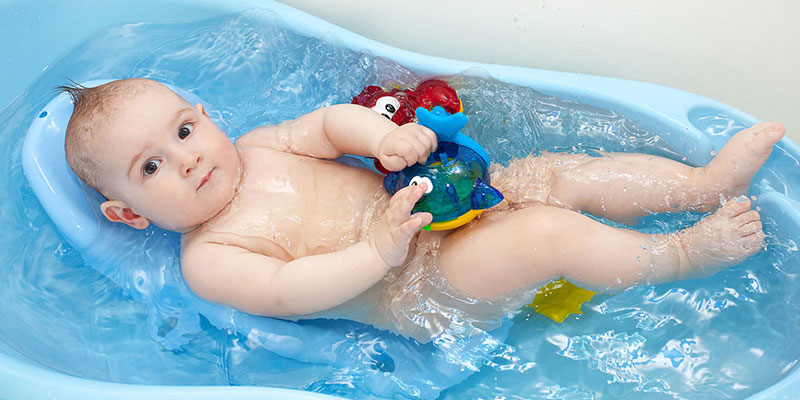
Use an infant tub or sink. The US Consumer Product Safety Commission recommends a hard plastic baby bathtub that has a sloped, textured surface or sling that keeps your baby from sliding. Only use an infant bath tub manufactured on or after October 2, 2017 so it meets current safety standards. Some parents find it easiest to bathe a newborn in a bathinette, sink, or plastic tub lined with a clean towel. Yes, a sink! Sometimes easiest is best; just be careful. Sinks are slippery and have all sorts of things sticking out like faucets and handles.
- Avoid using bath seats. These seats provide support so a child can sit upright in an adult bathtub. Unfortunately, they can easily tip over. A child can fall into the bathwater and drown.
Last Updated 3/3/2020
Source American Academy of Pediatrics (Copyright © 2019)
The information contained on this Web site should not be used as a substitute for the medical care and advice of your pediatrician. There may be variations in treatment that your pediatrician may recommend based on individual facts and circumstances.