What does newborn vision mean

Although the two eyeballs of normal newborns are formed, their vision is not fully developed. Will respond to light, but the development of the eyes is not complete, the visual structure and optic nerve are immature, and the vision is only 1/30 of that of an adult. He can follow the object in front of him to see, but his field of view is only about 45 degrees, and his vision is only 1/30 of that of an adult. And he can only follow people or things in the horizontal direction and 18 to 38 cm in front of him. Newborns prefer to look at more complex shapes and curves, as well as sharp contrasting colors.
Newborn hearing development indicators
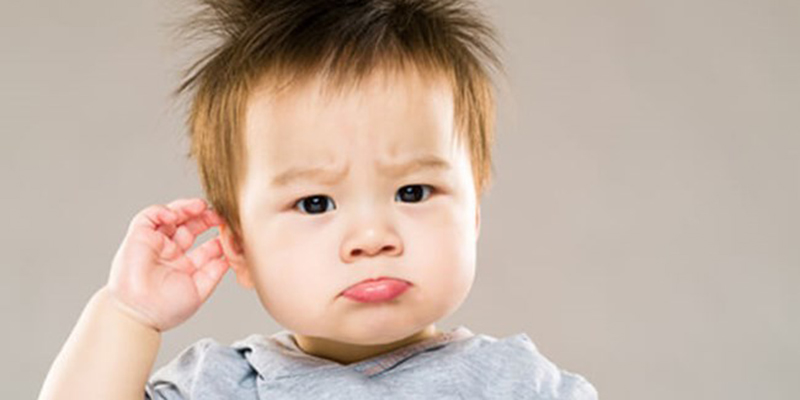
0-7 days baby’s vision development
Babies have a hearing ability. Most babies can react to hearing stimuli 1-2 times after they are born, and they are also very sensitive to the voice of adults. The adult speaks softly next to the baby and observes whether the baby responds differently to changes in voice.
8-30 days baby’s vision development status
Hearing is fully developed, he will pay close attention to human voices and be sensitive to noise. Talk next to your baby, turning his head to familiar sounds and languages.
What to do if the newborn’s hearing screening fails
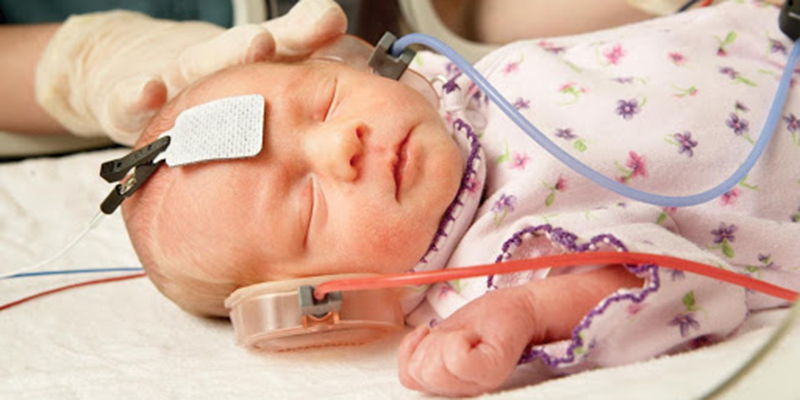
Infants and young children who have not passed the re-screening should receive audiology and medical evaluation at the age of 3 months to ensure that the presence of congenital or permanent hearing loss is determined within 6 months of age for intervention. Children who fail the re-screening should undergo otolaryngology examination and acoustic immittance, otoacoustic emission, auditory brainstem evoked potential testing, behavioral audiometry and other related examinations by hearing testing institutions. Medical and imaging should be performed if necessary Learn to evaluate and make a diagnosis.
For children with high risk factors for hearing loss, the time and frequency of individualized hearing reassessment should be established according to the possible delayed hearing loss. For infants and young children who have passed the newborn hearing screening but have high risk factors for hearing loss, at least 3 years of age, every 6 months, hearing follow-up, if hearing loss is suspected, audiology evaluation should be performed in time.
Benefits of newborn hearing screening
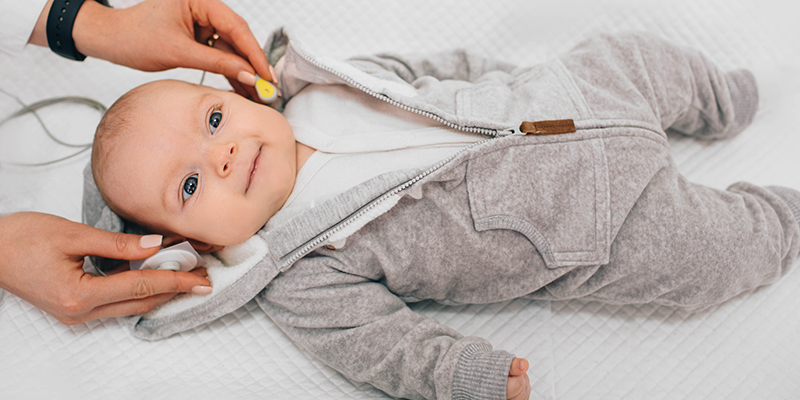
Hearing Test baby, Cortical auditory evoked potential analyzer. hearing screening
The reason for setting up a newborn hearing screening is that sometimes babies are not fully developed in many aspects, including vision and hearing, and cannot judge the inner development of the baby based on their own feelings. Hearing screening for newborns is helpful to get a clear understanding of the baby’s hearing and to find out whether the baby has hearing problems.
In addition, the recognition of hearing from an early age is also conducive to the healthy growth of the baby in the future, whether it is physical or psychological development. If the screening results are unsatisfactory, measures can be taken as soon as possible to prescribe the right medicine. In order to avoid the remaining problems, the more they develop, the more they are out of control.
When is the newborn hearing screening done

The initial screening process (primary screening) should be carried out during the hospitalization of newborns 3-5 days after birth.
If it is a baby within 42 days of birth that failed the initial screening, or the initial screening is “suspicious”; even the initial screening has been “passed”, but children at high risk of hearing loss, such as children in the intensive care unit, need to undergo hearing re-screening.
How to do newborn hearing screening

Newborn hearing screening is an objective, simple and fast method to screen out newborn babies who may have a hearing impairment, and further diagnose and follow up.
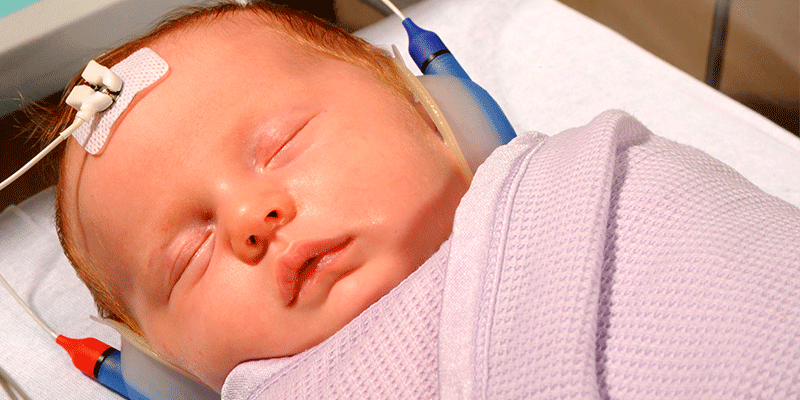
Commonly used methods for newborn hearing screening include otoacoustic emission (OAE) and automatic auditory brainstem response (AABR). Both technologies are currently internationally recognized and both are non-invasive. Most hospitals in my country use otoacoustic emission for hearing screening, and automatic auditory brainstem response (AABR) is mainly used for hearing screening of newborns in the intensive care unit (NICU).
The normal cochlea can produce a very soft sound, which is transmitted to the external auditory canal through the ossicular chain and tympanic membrane and can be detected. If the baby has cochlear hearing loss, it will not produce otoacoustic emissions, and the otoacoustic emission (OAE) test will fail. The automatic auditory brainstem response (AABR) can reflect the functions of the outer ear, middle ear, cochlea, and cochlear nerve pathways. The automatic auditory brainstem response fails, indicating that there may be problems in the auditory pathway.
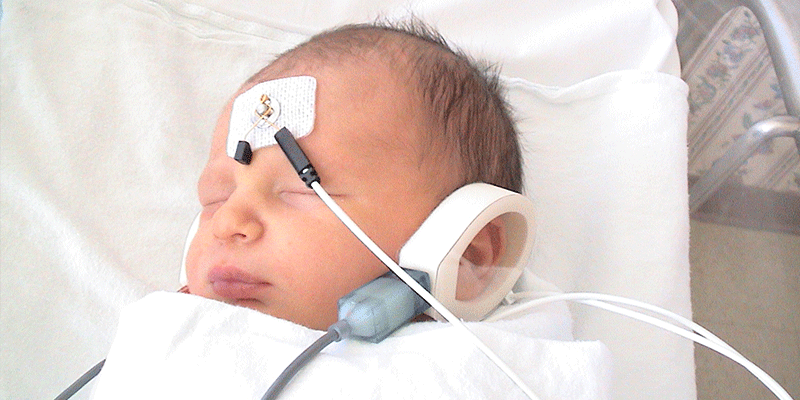
Generally, when the baby is sleeping or resting, place a suitable size probe or earmuff on one ear of the baby to start the test, and then do the other ear after finishing one ear. If OAE or AABR fails, rescreening or referral is required.
Newborn hearing screening test items include diagnostic OAE, 1kHz acoustic immittance test, short and short tone ABR, AERP, ASSR and bone conduction ABR, pediatric behavioral audiometry (BOA, VRA, PA, PTA), speech Testing and assessment of auditory and speech development, etc.
What is newborn hearing screening

Audiology shoot Sheffield August 2016 EXIF date not accurate. Taken in Aug 2016.
Modern science and technology can already perform early hearing detection and diagnosis for newborns and infants. If infants and young children who are clearly diagnosed as permanent hearing loss can be scientifically intervention and rehabilitation training within 6 months of birth, most of them can return to the mainstream society.
Newborn hearing screening is an objective, rapid and non-invasive examination performed by electrophysiological tests such as otoacoustic emission, automatic auditory brainstem response, and acoustic impedance when the newborn is born in a natural sleep or quiet state. Reports at home and abroad show that the incidence of hearing loss between normal newborns and those with high-risk factors is quite different. Normal newborns are about 1%o-3‰, and newborns with high-risk factors are about 2%-4%.
The inspection items include hearing screening, diagnosis, intervention, follow-up, rehabilitation training and effect evaluation. It is a systematic and socialized eugenics project that requires strict quality control.
Infant Vision Development: What Can Babies See?
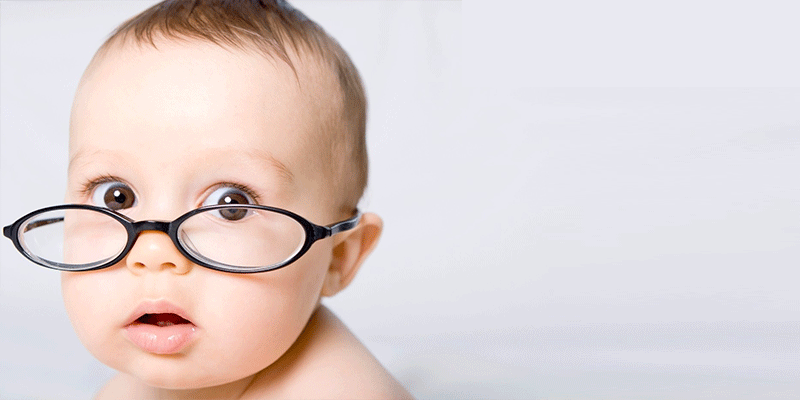
What can my baby see during the first year of life?
A baby’s vision develops quickly during the first year of life.
- Newborns: Can see large shapes and faces, as well as bright colors.
- By 3 to 4 months: Most babies can focus on a variety of smaller objects and tell the difference between colors (especially red and green).
- By 4 months: A baby’s eyes should be working together. This is when babies begin to develop depth perception (binocular vision).
- By 12 months: A child’s vision reaches normal adult levels while he continues to learn about and understand what he sees.
Keep in mind that each child’s vision develops at his or her own rate, but the overall pattern of development is the same. Because a baby’s vision develops quickly during the first year of life, your child’s doctor will check your baby’s eyes at each well-child visit.
Even after the first year, regular eye exams by your child’s doctor are important to identify problems that may arise later in childhood.
Last Updated 1/5/2012
Source Your Child’s Eyes (Copyright © 2011 American Academy of Pediatrics, Updated 05/2016)
The information contained on this Web site should not be used as a substitute for the medical care and advice of your pediatrician. There may be variations in treatment that your pediatrician may recommend based on individual facts and circumstances.
Newborn Eye Color(Part2)
Cross-Eyed?
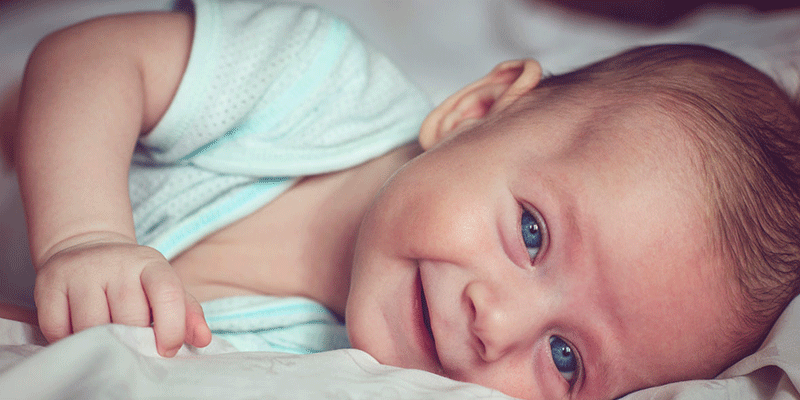
Parents also often note that their newborns’ eyes appear to cross from time to time. For the first 6 months of life this can be normal. To begin with, to look at something the brain has to know where to point the eyes. For the first 2 to 4 weeks of life vision is not accurate enough for the baby’s eyes to find a target a lot of the time. Parents often feel like their newborns are looking past them rather than at them, because they are. By the fourth week of life, however, your baby will focus on your face if you’re cradling him.
Most visual development occurs in the brain, not in the eyes themselves. One of the greatest challenges for the developing brain is to coordinate visual signals from one side to the other. Nerve signals from the eyes travel through optic nerves and split off to both sides of the brain. To make sense of those signals, the 2 sides of the brain have to cooperate, comparing information and coordinating eye movement in the desired direction. Until age 2 months you may notice your infant will follow your face or a toy a little way, then lose it as it crosses from one side to the other. By 2 months, however, he should be able to track from right to left and back again.
The next big visual milestone occurs at 6 months of age. By this time the 2 sides of the brain are on good terms with each other. Until this point the eyes track together as long as they both have something to look at, but if one is deprived of input (from being covered by a hat, for example), it might drift off in its own direction. By 6 months of age the eyes should continue looking the same direction even if one of them is covered temporarily. We test this in the clinic by covering 1 eye for 3 seconds, then suddenly uncovering it and looking to see if it’s still tracking with the opposite eye. We call this test the cover-uncover test.
Sometimes the shape of a child’s face makes it look as though the eyes are crossed even when they are not. A child with a broad nasal bridge may appear to have an inward-looking eye, when in fact he’s just looking off to the side. You can check this by watching the light reflection in your child’s eyes from a window or lamp; if it falls in the same place on each eye, the eyes are working together.
Even with office screening, however, we don’t always catch an eye that tends to deviate. Deviations occur more often when the child is tired. If you ever notice that your 6-month-old or older child has an eye that doesn’t always look the same way as its partner, alert his doctor. It’s critical that an eye specialist (ophthalmologist) examine the child. What some people call a lazy eye (amblyopia) may be a sign that one eye doesn’t see as clearly as the other. When the brain is forced to make 1 picture from 2 very different inputs, it starts to ignore the signals from the worse eye. Over time this process becomes irreversible, leading to partial blindness in the weaker eye. In most cases, you should address the problem before the child turns 3 to ensure he’ll grow up with normal depth perception. Treatments for amblyopia vary based on the cause and severity of the condition. Some children require glasses or patches that force the brain to pay attention to signals from the weaker eye. Other kids need surgery to shorten or lengthen certain muscles that control eye movement.
Author David L. Hill, MD, FAAP
Last Updated 6/8/2020
Source Dad to Dad: Parenting Like a Pro (Copyright © American Academy of Pediatrics 2012)
The information contained on this Web site should not be used as a substitute for the medical care and advice of your pediatrician. There may be variations in treatment that your pediatrician may recommend based on individual facts and circumstances.
Newborn Eye Color(Part1)
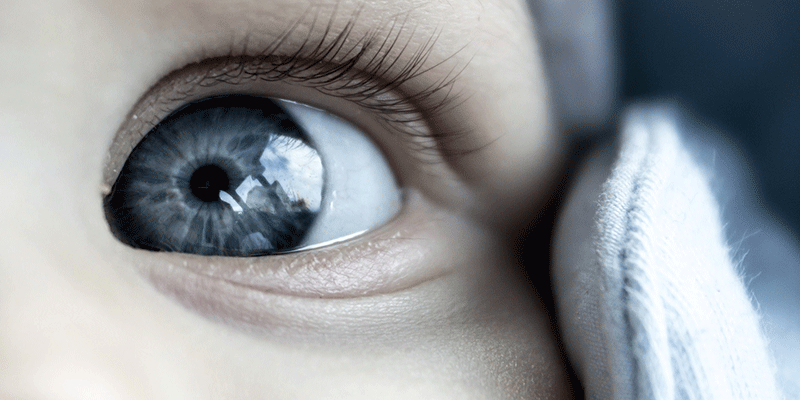
New parents often ask what color I think the baby’s eyes are going to be. I never answer this question until the child is at least 1 year old; I mean, what if the parents believe me and use my answer to make major life decisions? When we talk about eye color, we’re really talking about the appearance of the iris, the muscular ring around the pupil that controls how much light enters the eye. After all, the pupil will always be black, except in flash photos, and the whites (sclera) should stay pretty much white, although jaundice may turn them yellow and inflammation may make them look pink or red.
Eye Color Changes Over Time
Iris color, just like hair and skin color, depends on a protein called melanin. We have specialized cells in our bodies called melanocytes whose job it is to go around secreting melanin. Over time, if melanocytes only secrete a little melanin, your baby will have blue eyes. If they secrete a bit more, his eyes will look green or hazel. When melanocytes get really busy, eyes look brown (the most common eye color), and in some cases they may appear very dark indeed.
Because it takes about a year for melanocytes to finish their work it can be a dicey business calling eye color before the baby’s first birthday. The color change does slow down some after the first 6 months of life, but there can be plenty of change left at that point.
Eye color is a genetic property, but it’s not quite as cut-and-dried as you might have learned in biology class.
- Two blue-eyed parents are very likely to have a blue-eyed child, but it won’t happen every single time.
- Two brown-eyed parents are likely (but not guaranteed) to have a child with brown eyes.
If you notice one of the grandparents has blue eyes, the chances of having a blue-eyed baby go up a bit.
- If one parent has brown eyes and the other has blue eyes, odds are about even on eye color.
- If your child has one brown eye and one blue eye, bring it to your doctor’s attention; he probably has a rare genetic condition called Waardenburg syndrome.
Author David L. Hill, MD, FAAP
Last Updated 6/8/2020
Source Dad to Dad: Parenting Like a Pro (Copyright © American Academy of Pediatrics 2012)
The information contained on this Web site should not be used as a substitute for the medical care and advice of your pediatrician. There may be variations in treatment that your pediatrician may recommend based on individual facts and circumstances.
Newborn Hearing Screening FAQs(Part3)
If my baby passes the newborn hearing screening, does it mean he or she will not have hearing loss later?
Unfortunately, no. Some babies may develop hearing loss later in childhood. Causes of late onset or progressive hearing loss in children can include genetics, frequent ear infections, other infections like measles or meningitis, a head injury, exposure to damaging levels of loud noises, and secondhand smoke. Newborns who need an extended period of neonatal intensive care may also be at an increased risk for hearing loss later.
Even if your baby passes the newborn hearing screening, you should still watch for possible signs of hearing loss as your child grows. Talk with your pediatrician if your child:
- Doesn’t startle at loud noises by 1 month or turn toward sounds by 3-4 months of age.
- Doesn’t notice you until he sees you.
- Concentrates on vibrating noises more than other types of sounds.
- Doesn’t seem to enjoy being read to.
- Is slow to begin talking, hard to understand, or doesn’t say single words such as “dada” or “mama” by 12 to 15 months of age.
- Doesn’t always respond when called, especially from another room.
- Seems to hear some sounds but not others. (Some hearing loss affects only high-pitched sounds; some children have hearing loss in only one ear.)
- Has trouble holding his or her head steady or is slow to sit or walk unsupported. (In some children with sensorineural hearing loss, the part of the inner ear that provides information about balance and movement of the head is also damaged.)
- Wants the TV volume louder than other members of the family.
If my baby passes the first hearing test, why is more screening needed?
Even if your child shows no signs of hearing changes, the AAP recommends they be screened again at ages 4, 5, 6, 8 and 10. Additional screenings are recommended sometime between ages 11-14, 15-17, and 18-21–or any time there is a concern. More frequent follow-up screenings may be recommended for children who have a higher risk for hearing loss. Hearing loss sometimes is gradual and hard to notice at first. Routine screenings can catch hearing changes early, when providing support and resources can have the most impact on the child’s development.
Remember:
Timing is everything. The sooner hearing changes are identified in a baby, the more likely interventions can help her reach her full potential. Talk with your pediatrician if you have any concerns about your child’s hearing.
Additional Information & Resources:
- Newborn Screening Tests
- Early Hearing Detection and Intervention – A Program of the American Academy of Pediatrics
- Centers for Disease Control and Prevention (CDC) National Center on Birth Defects and Developmental Disabilities (NCBDDD) – Provides research, basic information and statistics regarding hearing loss, screening and diagnosis, as well as current articles and educational materials for clinicians and families.
Last Updated 12/28/2018
Source American Academy of Pediatrics Early Hearing Detection and Intervention (EHDI) Program (Copyright © 2018)
The information contained on this Web site should not be used as a substitute for the medical care and advice of your pediatrician. There may be variations in treatment that your pediatrician may recommend based on individual facts and circumstances.
Newborn Hearing Screening FAQs(Part2)
What if my baby does not pass the initial hearing screening?
If your baby does not pass the hearing screening at birth, it does not necessarily mean that she is deaf or hard of hearing. Fluid or vernix inside the baby’s ear, for example, or too much noise in the room can affect results. In fact, most babies who do not pass the newborn screening have typical hearing. But to be sure, it is extremely important to have further testing done.
About 1 or 2 in every 100 babies will not pass the initial hearing screening at birth and will need tests with an audiologist who has experience working with babies. This testing should include a more thorough hearing and medical evaluation.
Be sure to talk with your baby’s pediatrician about scheduling further tests if your baby does not pass the initial hearing screening at birth. The additional testing should be done as soon as possible, but before your baby is 3 months old.
Follow-up testing may start with one more screening similar to the type done in the hospital. Some hospitals or clinics may complete a diagnostic test at the time of follow-up, instead of re-screening. In young infants, the follow-up testing may be able to be completed while the baby naps.
If my baby is identified as deaf or hard of hearing, what are the treatment and intervention options?
If your baby’s audiologist confirms hearing changes, treatment and early intervention with a team of providers should start as soon as possible. Just like hearing children, children who are deaf or hard of hearing can achieve many things. Studies show your baby will have the best chance for spoken language development―on par with that of hearing peers―if any hearing changes are discovered, and support and intervention begins by 6 months of age. The earlier, the better.
In addition to your pediatrician and audiologist, every baby who is deaf or hard of hearing should be seen by a pediatric otolaryngologist who specializes in the mechanics of the ear. Your pediatrician should also recommend seeing a pediatric ophthalmologist, because some children can also have problems with their vision, and children who are deaf or hard of hearing are dependent on their vision for language input. Many children are also seen by a geneticist to determine if there is a hereditary cause of hearing changes.
Your state Early Hearing Detection and Intervention (EHDI) program can help provide you and your pediatrician with more information. Babies who are deaf or hard of hearing should be referred to Early Intervention for evaluation and services. Additionally, the Individuals with Disabilities Education Act (IDEA) supports intervention programs for children who are deaf or hard of hearing within early intervention and school programming.
The audiologist, together with the otolaryngologist, can tell you the type and degree of hearing change and what the next steps are. These next steps can vary depending on your family’s choices, as well as the type and degree of hearing change.
Last Updated 12/28/2018
Source American Academy of Pediatrics Early Hearing Detection and Intervention (EHDI) Program (Copyright © 2018)
The information contained on this Web site should not be used as a substitute for the medical care and advice of your pediatrician. There may be variations in treatment that your pediatrician may recommend based on individual facts and circumstances.


