Newborn Hearing Screening FAQs(Part1)

Before you bring your newborn home from the hospital, your baby needs to have a hearing screening.
From birth, one important way babies can learn is through listening and hearing. Although most infants can hear fine, 1 to 3 of every 1,000 babies born in the U.S. have hearing levels outside the typical range.
Newborn screening and diagnosis helps ensure all babies who are deaf or hard of hearing are identified as soon as possible. Then, they can receive early intervention services that can make a big difference in their communication and language development.
The American Academy of Pediatrics (AAP) recommends hearing screenings for all newborns. The goal is for all babies to have a newborn hearing screening by one month of age, ideally before they go home from the hospital; identified by 3 months of age and enrolled in early intervention or treatment, if identified as deaf or hard of hearing, by the age of 6 months.
Why do newborns need hearing screening?
The hearing screening is a first and important step in helping understand if your baby may be deaf or hard of hearing. Without newborn hearing screening, it is hard to know when there are hearing changes in the first months and years of your baby’s life.
Babies may respond to noise by startling or turning their heads toward the sound, for example. But this doesn’t necessarily mean they can hear all the sounds around them and everything we say. Babies who are deaf or hard of hearing may hear some sounds but still not hear enough to understand spoken language.
Infants who are deaf or hard of hearing need the right supports, care, and early intervention services to promote healthy development. If the hearing status is not identified, it may have negative effects on the baby’s communication and language skills. Longer term, a missed hearing loss can also impact the child’s academic achievement and social-emotional development.
How is the newborn hearing screening done?
According to the most recent Centers for Disease Control and Prevention (CDC) data, over 98% of newborns in the United States receive newborn hearing screening.
There are two screening methods that may be used:
- Automated Auditory Brainstem Response (AABR)—This screen measures how the hearing nerve and brain respond to sound. Clicks or tones are played through soft earphones into the baby’s ears. Three electrodes placed on the baby’s head measure the hearing nerve and brain’s response.
- Otoacoustic Emissions (OAE)—This screen measures sound waves produced in the inner ear. A tiny probe is placed just inside the baby’s ear canal. It measures the response (echo) when clicks or tones are played into the baby’s ears.
Both screens are quick (about 5 to 10 minutes), painless, and may be done while your baby is sleeping or lying still. One or both screens may be used.
Last Updated 12/28/2018
Source American Academy of Pediatrics Early Hearing Detection and Intervention (EHDI) Program (Copyright © 2018)
The information contained on this Web site should not be used as a substitute for the medical care and advice of your pediatrician. There may be variations in treatment that your pediatrician may recommend based on individual facts and circumstances.
Newborn Screening Tests

Shortly after birth, your baby will have screening tests to detect a variety of congenital conditions. These tests are designed to detect problems early in order to treat them promptly, prevent disabilities, and save lives.
Screening Tests
There is some variability between states for which tests are offered, but all states examine the baby’s blood for metabolic and genetic conditions. Newborns also have a hearing test done. A screening for critical congenital heart disease using pulse oximetry (measuring the oxygen in the infant’s blood) is now required in the hospital before newborn discharge.
Before Baby is Born
Before your baby is born, talk to your pediatrician about which screening tests your baby will undergo, including their benefits and any risks, and ask if it is necessary for you to consent to this testing.
Test Results
Ask when you can find out the test results, and what they mean if your newborn has a result that is out of the normal range. This may not necessarily mean that your baby actually has a congenital or genetic condition, so inquire about whether and when retesting would be done. Also, double-check to make certain the tests are actually performed before your baby leaves the hospital.
Last Updated 12/3/2015
Source Section on Genetics and Birth Defects (Copyright © 2014 American Academy of Pediatrics)
The information contained on this Web site should not be used as a substitute for the medical care and advice of your pediatrician. There may be variations in treatment that your pediatrician may recommend based on individual facts and circumstances.
Newborn Pulse Oximetry Screening to Detect Critical Congenital Heart Disease(Part2)

What happens a baby fails the pulse oximetry screening?
If the screening test suggests a problem, additional testing to evaluate for CHD or for other potential causes of low oxygen will be necessary before the baby will be discharged from the hospital.
Testing may include a chest radiography and bloodwork. A thorough ultrasound of the baby’s heart called an echocardiogram will be performed and read by a pediatric cardiologist. The echo will evaluate all the structures and function of the baby’s heart in detail. If the baby’s echo shows any problems, the baby’s medical team will discuss next steps with the parents in detail. See Common Types of Cardiac Testing for more information.
Note: As with any screening test, sometimes there can be times when the pulse oximetry screening test is not correct. Sometimes there can be false positives, meaning that while the pulse ox screen suggests a problem, the echo will be reassuring that the heart is normal. Just because a baby fails the pulse oximetry screening test does not mean that the baby has a heart defect. There are other reasons that a baby may have lower oxygen levels, such as infection or lung problems. These are also very helpful to be picked up early. As well, some healthy babies can have a low pulse oximetry reading while their heart and lungs are adjusting after birth.
If a baby passes the pulse oximetry screening, does it mean he or she has no heart defects?
Unfortunately, no. Pulse oximetry testing picks up only some types of CHD. Heart defects which are not causing a low blood oxygen level at the time of the screen are not picked up by the test.
Even if a baby passes the pulse oximetry screening, parents should watch:
- How well their baby is feeding
- Any difficulty in breathing
- Increased irritability
- Excessive sleepiness
- Bluish color to the lips or skin
- Grunting
- Fast breathing
- Poor weight gain
Parents are advised to contact their baby’s doctor right away if they notice any of these signs.
Last Updated 2/11/2019
Source AAP Section on Cardiology & Cardiac Surgery (Copyright @ 2019 American Academy of Pediatrics)
The information contained on this Web site should not be used as a substitute for the medical care and advice of your pediatrician. There may be variations in treatment that your pediatrician may recommend based on individual facts and circumstances.
Newborn Pulse Oximetry Screening to Detect Critical Congenital Heart Disease(Part1)
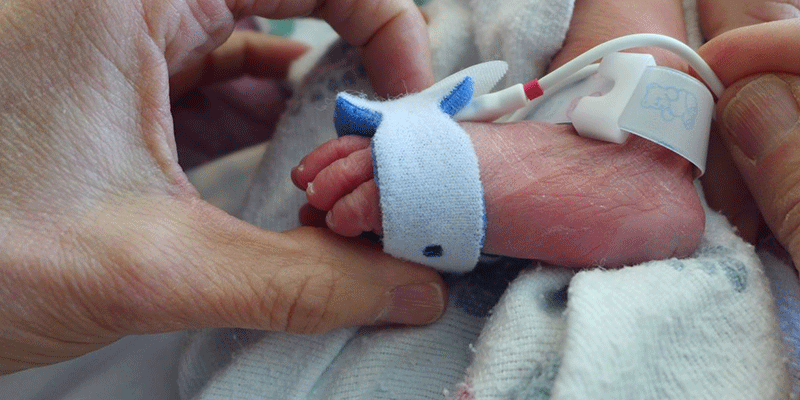
Most babies are born with healthy hearts and have enough oxygen in their blood. However, about 1 baby in every 100 is born with a congenital heart defect (CHD) and 25% of those babies with CHD will have a critical congenital heart defect (CCHD).
Babies with critical CHDs have low oxygen levels and usually require surgery or other procedures in the first year of life. Sometimes intervention must be done urgently, within the first days or weeks of a baby’s life. Some examples of critical CHDs include coarctation of the aorta, transposition of the great arteries, hypoplastic left heart syndrome, and tetralogy of Fallot.
What is pulse oximetry?
Pulse oximetry (also called pulse ox) is a simple and painless test that measures the level oxygen is in the blood.
There are types of CCHD that cause lower than usual blood oxygen levels and those can be picked up by pulse oximetry―even before a baby becomes sick. Early detection and appropriate management can then be provided and may improve a baby’s outcome.
The American Academy of Pediatrics (AAP) recommends pulse oximetry be performed at all newborn screenings to detect CCHD. As of 2018, policies for screening newborns have been implemented in all states in the U.S.
Fetal ultrasounds of the heart do not detect all types of heart defects.
While many problems in the fetal heart are now found early by fetal ultrasounds―and families are getting referred earlier to pediatric cardiologists for further care, there are still cases of CHD that can be missed.
Many newborns develop signs and symptoms of CCHD such as turning very blue or breathing fast right after birth. Those babies are diagnosed and treated before being discharged from the hospital. However, there are babies with certain types of CCHD who may look and act healthy for several days before becoming suddenly seriously ill at home.
How is this screening is done?
Newborn Pulse Oximetry Screening to Detect Critical Congenital Heart Disease – HealthyChildren.orgA small soft sensor is wrapped around the baby’s right hand and one foot. The sensor is hooked up to a monitor for about 5 minutes and measures the oxygen level in the blood and the heart rate. It is fast, easy, and does not hurt. Pulse oximetry screening is done after 24 hours after birth to allow the baby’s heart and lungs to fully adjust to life outside his or her mother. After the screening is completed, the doctor or nurse will go over the reading with the baby’s parents.
Last Updated 2/11/2019
Source AAP Section on Cardiology & Cardiac Surgery (Copyright @ 2019 American Academy of Pediatrics)
The information contained on this Web site should not be used as a substitute for the medical care and advice of your pediatrician. There may be variations in treatment that your pediatrician may recommend based on individual facts and circumstances.
Jaundice in Newborns: Parent FAQs(Part3)
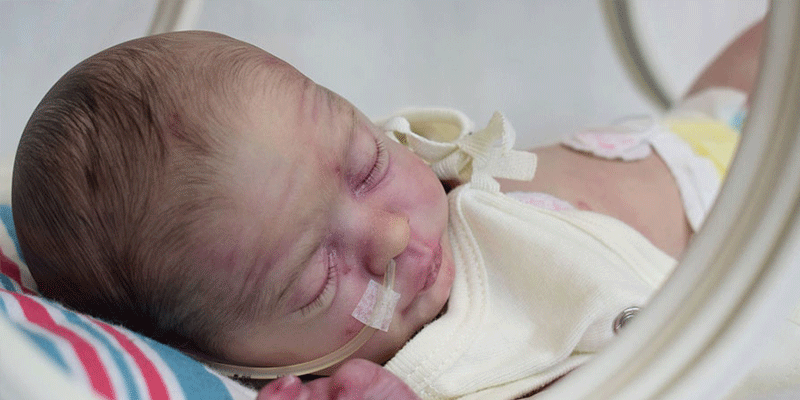
Q: When should I call my baby’s doctor?
A: Call your baby’s doctor if:
- Your baby’s skin turns more yellow.
- Your baby’s abdomen, arms, or legs are yellow.
- The whites of your baby’s eyes are yellow.
- Your baby is jaundiced and is hard to wake, fussy, or not nursing or taking formula well.
Q: How is harmful jaundice prevented?
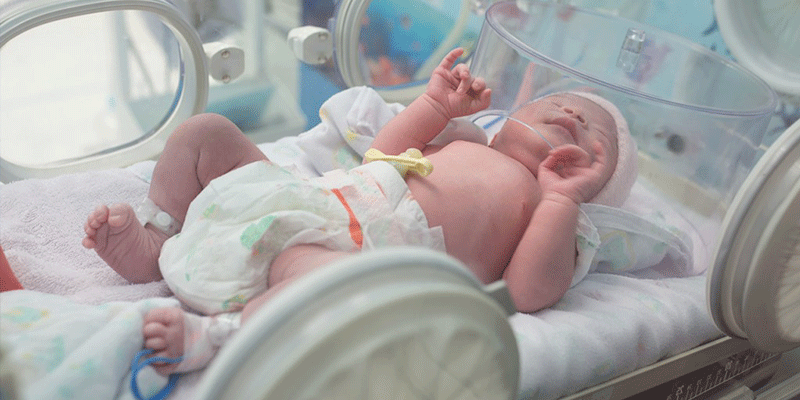
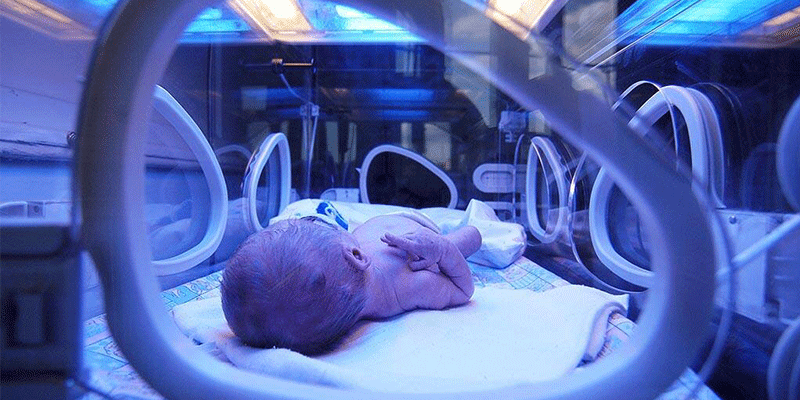
A: Most jaundice requires no treatment. When treatment is necessary, placing your baby under special lights while he or she is undressed will lower the bilirubin level. Depending on your baby’s bilirubin level, this can be done in the hospital or at home. Jaundice is treated at levels that are much lower than those at which brain damage is a concern. In some babies, supplementing breast milk with formula can also help to lower the bilirubin level and prevent the need for phototherapy. Treatment can prevent the harmful effects of jaundice.
Note: Exposing your baby to sunlight through a window might help lower the bilirubin level, but this will only work if the baby is undressed. Make sure the temperature in your home is comfortable and not too cold for your baby. Newborns should never be put in direct sunlight outside because they might get sunburned.
Q: When does jaundice go away?
A: In breastfed babies, it is common for jaundice to last 1 month or occasionally longer. In formula-fed babies, most jaundice goes away by 2 weeks. However, if your baby is jaundiced for more than 3 weeks, see your baby’s doctor.
Last Updated 6/19/2017
Source Jaundice and Your Newborn (© 2006 American Academy of Pediatrics, Updated 12/2016)
The information contained on this Web site should not be used as a substitute for the medical care and advice of your pediatrician. There may be variations in treatment that your pediatrician may recommend based on individual facts and circumstances.
Jaundice in Newborns: Parent FAQs(Part2)
Q: Does breastfeeding affect jaundice?
A: Breast milk (human milk) is the ideal food for your baby. Jaundice is more common in babies who are breastfed than babies who are formula-fed. However, this occurs more often in newborns who are not getting enough breast milk because their mothers are not producing enough milk (especially if the milk comes in late) or if breastfeeding is not going well, such as babies not latching on properly.
For the first 24 hours after birth, normal breastfed newborns receive only about 1 teaspoon of milk with each feeding. The amount of breast milk provided increases with each day. If you are breastfeeding, you should breastfeed your baby at least 8 to 12 times a day for the first few days. This will help you produce enough milk and will help keep the baby’s bilirubin level down. If you are having trouble breastfeeding, ask your baby’s doctor or nurse or a lactation specialist for help.
Q: When should my baby get checked after leaving the hospital?
A: It is important for your baby to be seen by a nurse or doctor when the baby is between 3 and 5 days old, because this is usually when a baby’s bilirubin level is highest. This is why, if your baby is discharged before age 72 hours, your baby should be seen within 2 days of discharge. The timing of this visit may vary depending on your baby’s age when released from the hospital and other factors.
Q: Why do some babies need an earlier follow-up visit after leaving the hospital?
A: Some babies have a greater risk for high levels of bilirubin and may need to be seen sooner after discharge from the hospital. Ask your doctor about an early follow-up visit if your baby has any of the following symptoms:
- A high bilirubin level before leaving the hospital
- Early birth (more than 2 weeks before the due date)
- Jaundice in the first 24 hours after birth
- Breastfeeding that is not going well
- A lot of bruising or bleeding under the scalp related to labor and delivery
- A parent, brother, or sister who had a high bilirubin level and received light therapy
Last Updated 6/19/2017
Source Jaundice and Your Newborn (© 2006 American Academy of Pediatrics, Updated 12/2016)
The information contained on this Web site should not be used as a substitute for the medical care and advice of your pediatrician. There may be variations in treatment that your pediatrician may recommend based on individual facts and circumstances.
Jaundice in Newborns: Parent FAQs(Part1)
Jaundice is the yellow color seen in the skin of many newborns. It happens when a chemical called bilirubin builds up in the baby’s blood. Jaundice can occur in babies of any race or color.
Q: Why is jaundice common in newborns?
A: Everyone’s blood contains bilirubin, which comes from red blood cells and is removed by the liver. Before birth, the mother’s liver does this for the baby. Most babies develop jaundice in the first few days after birth because it takes a few days for the baby’s liver to get better at removing bilirubin.
Q: How can I tell if my baby is jaundiced?
A: The skin of a baby with jaundice usually appears yellow. The best way to see jaundice is in good light, such as daylight or under fluorescent lights. Jaundice usually appears first in the face and then moves to the chest, abdomen, arms, and legs as the bilirubin level increases. The whites of the eyes may also be yellow. Jaundice may be harder to see in babies with darker skin color.
Q: Can jaundice hurt my baby?
A: Most babies have mild jaundice that is harmless, but in unusual situations the bilirubin level can get very high and might cause brain damage. This is why newborns should be checked carefully for jaundice and treated to prevent a high bilirubin level.
Q: How should my baby be checked for jaundice?
A: If your baby looks jaundiced in the first few days after birth, your baby’s doctor or nurse may use a skin or blood test to check your baby’s bilirubin level. However, because estimating the bilirubin level based on the baby’s appearance can be difficult, most experts recommend that a skin or blood test be done in the first 2 days even if your baby does not appear jaundiced. A bilirubin level is always needed if jaundice develops before the baby is 24 hours old. Whether a test is needed after that depends on the baby’s age, the amount of jaundice, and whether the baby has other factors that make jaundice more likely or harder to see.
Last Updated 6/19/2017
Source Jaundice and Your Newborn (© 2006 American Academy of Pediatrics, Updated 12/2016)
The information contained on this Web site should not be used as a substitute for the medical care and advice of your pediatrician. There may be variations in treatment that your pediatrician may recommend based on individual facts and circumstances.
Newborn Reflexes(Part2)

One of the more interesting automatic responses is the tonic neck reflex, otherwise known as the fencing posture. You may notice that when your baby’s head turns to one side, her arm on that side will straighten, with the opposite arm bent as if she’s fencing. Do not be surprised if you don’t see this response, however. It is subtle, and if your baby is disturbed or crying, she may not perform it. It disappears at five to seven months of age.
You’ll see still another reflex when you stroke the palm of your baby’s hand and watch her immediately grip your finger. Or stroke the sole of her foot, and watch it flex as the toes curl tightly. In the first few days after birth, your baby’s grasp will be so strong that it may seem she can hold her own weight—but don’t try it. She has no control over this response and may let go suddenly.
Aside from her strength, your baby’s other special talent is stepping. She can’t support her own weight, of course, but if you hold her under the arms (being careful to support her head, as well) and let her soles touch a flat surface, she’ll place one foot in front of the other and “walk.” This reflex will disappear after two months, then recur as the learned voluntary behavior of walking toward the end of the first year.
Although you may think of babies as utterly defenseless, they actually have several protective reflexes. For instance, if an object comes straight toward her, she’ll turn her head and try to squirm out of its way. (Amazingly, if the object is on a path that would make it a near miss instead of a collision, she will calmly watch it approach without flinching.) Yes, she’s very dependent on her mother and father at this age, but she’s not totally defenseless.
Newborn Reflexes
The following are some of the normal inborn reflexes you will see your baby perform during her first weeks. Not all infants acquire and lose these reflexes at exactly the same time, but this table will give you a general idea of what to expect.
Reflex Age When Reflex Appears Age When Reflex Disappears
Moro Reflex Birth 2 months
Walking/Stepping Birth 2 months
Rooting Birth 4 months
Tonic neck reflex Birth 5-7 months
Palmar grasp Birth 5-6 months
Plantar grasp Birth 9-12 Months
Last Updated 8/1/2009
Source Caring for Your Baby and Young Child: Birth to Age 5 (Copyright © 2009 American Academy of Pediatrics)
The information contained on this Web site should not be used as a substitute for the medical care and advice of your pediatrician. There may be variations in treatment that your pediatrician may recommend based on individual facts and circumstances.
Newborn Reflexes(Part1)

Much of your baby’s activity in her first weeks of life is reflexive. For instance, when you put your finger in her mouth, she doesn’t think about what to do, but sucks by reflex. When confronted by a bright light, she will tightly shut her eyes, because that’s what her reflexes make her do. She’s born with many of these automatic responses, some of which remain with her for months, while others vanish in weeks.
In some cases, reflexes change into voluntary behavior. For example, your baby is born with a “rooting” reflex that prompts her to turn her head toward your hand if you stroke her cheek or mouth. This helps her find the nipple at feeding time. At first she’ll root from side to side, turning her head toward the nipple and then away in decreasing arcs. But by about three weeks she’ll simply turn her head and move her mouth into position to suck.
Sucking is another survival reflex present even before birth. If you had an ultrasound test done during pregnancy, you may have seen your baby sucking her thumb. After birth, when a nipple (either breast or bottle) is placed in your baby’s mouth and touches the roof of her mouth, she automatically begins to suck. This motion actually takes place in two stages: First, she places her lips around the areola (the circular area of pigmented skin surrounding the nipple) and squeezes the nipple between her tongue and palate. (Called “expression,” this action forces out the milk.) Then comes the second phase, or the milking action, in which the tongue moves from the areola to the nipple. This whole process is helped by the negative pressure, or suction, that secures the breast in the baby’s mouth.
Coordinating these rhythmic sucking movements with breathing and swallowing is a relatively complicated task for a newborn. So even though this is a reflexive action, not all babies suck efficiently at first. With practice, however, the reflex becomes a skill that they all manage well.
As rooting, sucking, and bringing her hand to her mouth become less reflexive and more directed, your infant will start to use these movements to console herself. She also may be comforted when you give her a pacifier or when you help her find her thumb or her fingers.
Another, more dramatic reflex during these first few weeks is called the Moro reflex. If your baby’s head shifts positions abruptly or falls backward, or she is startled by something loud or abrupt, she will react by throwing out her arms and legs and extending her neck, then rapidly bringing her arms together and she may cry loudly. The Moro reflex, which may be present in varying degrees in different babies, peaks during the first month and then disappears after two months.
Last Updated 8/1/2009
Source Caring for Your Baby and Young Child: Birth to Age 5 (Copyright © 2009 American Academy of Pediatrics)
The information contained on this Web site should not be used as a substitute for the medical care and advice of your pediatrician. There may be variations in treatment that your pediatrician may recommend based on individual facts and circumstances.
States of Consciousness in Newborns

As you get to know your baby, you’ll soon realize that there are times when she’s very alert and active, times when she’s watchful but rather passive, and times when she’s tired and irritable. You may even try to schedule your daily activities to capitalize on her “up” times and avoid overextending her during the “down” periods. Don’t count on this schedule, however. These so-called states of consciousness will change dramatically in this first month.
There are actually six states of consciousness through which your baby cycles several times a day. Two are sleep states; the others are waking states.
State 1 is deep sleep, when the baby lies quietly without moving and is relatively unresponsive. If you shake a rattle loudly in her ear, she may stir a little, but not much. During lighter, more active sleep (State 2), the same noise will startle her and may awaken her. During this light sleep, you also can see the rapid movements of her eyes beneath her closed eyelids. She will alternate between these two sleep states, cycling through both of them within a given hour. Sometimes she’ll retreat into these sleep states when she’s over stimulated, as well as when she’s physically tired.
As your baby wakes up or starts to fall asleep, she’ll go through State 3. Her eyes will roll back under drooping eyelids and she may stretch, yawn, or jerk her arms and legs. Once awake, she’ll move into one of the three remaining states. She may be wide awake, happy, and alert but relatively motionless (State 4). Or she may be alert, happy, and very active (State 5). Or she may cry and flail about (State 6).
If you shake a rattle by your baby’s ear when she’s happy and alert (States 4 and 5), she’ll probably become quiet and turn her face to look for the source of this strange sound. This is the time when she’ll appear most responsive to you and the activity around her, and be most attentive and involved in play.
In general, it’s a mistake to expect much attention from a baby who is crying. At these times, she’s not receptive to new information or sensations; what she wants instead is to be comforted. The same rattle that enchanted her when she was happy five minutes earlier will only irritate her and make her more upset when she’s crying. As she gets older, sometimes you may be able to distract her with an attractive object or sound so that she stops crying, but at this young age, the best way to comfort her usually is to pick her up and hold her.
As your baby’s nervous system becomes more developed, she’ll begin to settle into a pattern of crying, sleeping, eating, and playing that matches your own daily schedule. She still may need to eat every three to four hours, but by the end of the month she’ll be awake for longer periods during the day and be more alert and responsive at those times.
Your Baby’s States of Consciousness
State Description What Your Baby Does
State 1 Deep Sleep Lies quietly without moving
State 2 Light Sleep Moves while sleeping; startles at noises
State 3 Drowsiness Eyes start to close; may doze
State 4 Quiet Alert Eyes open wide, face is bright; body is quiet
State 5 Active Alert Face and body move actively
State 6 Crying Cries, perhaps screams; body moves in very disorganized ways
Last Updated 11/2/2009
Source Caring for Your Baby and Young Child: Birth to Age 5 (Copyright © 2009 American Academy of Pediatrics)
The information contained on this Web site should not be used as a substitute for the medical care and advice of your pediatrician. There may be variations in treatment that your pediatrician may recommend based on individual facts and circumstances.
Newborn Smell & Touch

Just as babies prefer certain patterns and sounds, they are typically very particular about tastes and smells. They will breathe deeply to catch a whiff of milk, vanilla, banana, or sugar, but will turn up their nose at the smell of alcohol or vinegar.
By the end of their first week, if they’re nursing, they’ll turn toward their mother’s breast pad but will ignore the pads of other nursing mothers. This radar-like system helps direct them at feeding times and warn them away from substances that could harm them.
Babies are equally sensitive to touch and the way you handle them. They’ll nestle into a soft piece of flannel or satin, but pull away from scratchy burlap or coarse sandpaper. When they are stroked gently with a palm, they’ll relax and become quiet. If they’re picked up roughly, they’ll probably take offense and start to cry. If they’re picked up gently and rocked slowly, they’ll become quiet and attentive.
Holding, stroking, rocking, and cuddling will calm them when they’re upset and make them more alert when they’re drowsy. It also sends a clear message of a parent’s love and affection. Long before they understand a word that parents say, they’ll understand parental moods and feelings from the way they are touched.
Last Updated 11/2/2009
Source Caring for Your Baby and Young Child: Birth to Age 5 (Copyright © 2009 American Academy of Pediatrics)
The information contained on this Web site should not be used as a substitute for the medical care and advice of your pediatrician. There may be variations in treatment that your pediatrician may recommend based on individual facts and circumstances.
Physical Appearance and Growth: 1 To 3 Months

From months one through four, your baby will continue growing at the same rate he established during his first few weeks of life. In general, babies gain between 1 1⁄2 and 2 pounds (0.7 to 0.9 kg) and grow 1 to 1 1⁄2 inches (2.5 to 4 cm). Their head size will increase in circumference by about 1⁄2 inch (1.25 cm) each month. These figures are only averages, however, so keep track of your child’s development.
At two months, the soft spots on your baby’s head should still be open and flat, but by two to three months, the soft spot at the back should be closed. Also, his head is more likely to be proportionately larger as compared to his body because it is growing faster. This is quite normal; his body will soon catch up.
At two months, your baby will look round and chubby, but as he starts using his arms and legs more actively, muscles will develop. His bones also will grow rapidly, and as his arms and legs loosen up, his body and limbs will seem to stretch out, making him appear taller and leaner.
Last Updated 8/1/2009
Source Caring for Your Baby and Young Child: Birth to Age 5 (Copyright © 2009 American Academy of Pediatrics)
The information contained on this Web site should not be used as a substitute for the medical care and advice of your pediatrician. There may be variations in treatment that your pediatrician may recommend based on individual facts and circumstances.


