How to Prepare Twins for Preschool(Part2)

Look into your local park district youth offerings and recreational youth sports. Always ask if they offer a twin discount! Soccer is a great gender-neutral choice that boy-girl twins would enjoy. Park districts often offer a 3-year-old “class” specifically for a parent to drop the child off so that the child gets used to the idea of being on his own for a bit. To ease the transition, if your twins are in the same class, they can provide some comfort for each other when their parent leaves. At these types of classes, my twin boys were so excited to see new toys to play with that they didn’t mind at all that Mom was leaving for a while. I had tears myself, though, the first couple of times, and didn’t know if I felt better or worse that the boys weren’t crying at these goodbyes. With a little practice getting out there with your twins, you’ll all be ready to make the leap to 2 mornings a week of preschool quite smoothly.
Many parents of twins wonder if they should keep their twins in the same classroom for preschool, or separate them into 2 different classes. If your preschool is a small program, you may have no choice because all the 3-year-olds may be together in a single class. If there are 2 separate classrooms, you’ll have to decide for your family on the best strategy.
For our family’s situation, our decision for class placement was pretty straightforward. We felt that our identical twin sons looked so similar that the teachers and other students would be confused all year as to who each twin was. We didn’t want our sons to hear the question, “Which one are you?” all year long. I wanted to de-emphasize the boys’ “twinness” and give the boys a chance to show others who they are as a person, as an individual. I also felt that 2 mornings a week of being in 2 separate classrooms wouldn’t be that big of a deal, considering the boys are together the other 5 days a week, 24 hours a day. In addition, I felt that after some practice with separate preschool classrooms, the transition into separate classrooms in the higher grades should be a little easier. The issue of twin placement in classrooms is currently a very hot issue as many families feel that their kids would do better in school if their twins were in the same class. These families argue that the family, not the school, should make the final decision of class placement. New legislation has been popping up in various states giving families the final say in whether twins are placed together or separately. Each family must assess its own situation and decide what will work best for it. Some families find that keeping twins together in the early years helps smooth the way for eventual separation in the higher grades.
Author Shelly Vaziri Flais, MD, FAAP
Last Updated 3/27/2013
Source Raising Twins: From Pregnancy to Preschool (Copyright © 2010 American Academy of Pediatrics)
The information contained on this Web site should not be used as a substitute for the medical care and advice of your pediatrician. There may be variations in treatment that your pediatrician may recommend based on individual facts and circumstances.
How to Prepare Twins for Preschool(Part1)

The idea of your young twins spending a couple of hours in a classroom setting away from their parents, siblings, and possibly each other can be quite a change for everyone involved. If your twins have spent time in a child care setting, the transition may not be as dramatic as for those who have been cared for at home or in a smaller group setting. Our generation may or may not have attended preschool back when we were young. Today, however, education experts agree that the experience of a preschool program can help kids learn more effectively when kindergarten comes along. We’re talking about a fun, relaxed preschool atmosphere, and not any sort of rigorous academic curriculum! Three-year-old usually participate 2 or 3 half days a week, while 4-year-olds can participate 3 or 4 half days a week.
Preschool registration happens at different times depending on where you live. In general for most areas, looking at preschool options a year before you plan on enrolling your twins is a good idea. Busy urban settings can be more competitive, and infants on preschool waiting lists are not uncommon in big cities.
In the months leading up to preschool, you’ll want to provide your twins with some practice for the experience. Look around your community for options. Public libraries usually offer a story hour or craft sessions for each young age group. These story hours are a great way for your twins to practice sitting quietly in a group while listening to a story. The fact that these programs are usually free is a bonus. Your twins will learn some social etiquette by being in a room of 3-year-olds. Twins may be accustomed to close physical contact with one another—but they’ll need to learn that they can’t be quite so cozy with others around them.
Another way to get your twins ready for preschool is to visit your area’s public and school playgrounds after school hours. Get to know a variety of parks around your home to keep the trips interesting. Your twins will have fun on different types of equipment and feel quite comfortable at their preschool playground when the time comes. Your twins will also gain a little experience meeting and playing with other kids at the playground.
Author Shelly Vaziri Flais, MD, FAAP
Last Updated 3/27/2013
Source Raising Twins: From Pregnancy to Preschool (Copyright © 2010 American Academy of Pediatrics)
The information contained on this Web site should not be used as a substitute for the medical care and advice of your pediatrician. There may be variations in treatment that your pediatrician may recommend based on individual facts and circumstances.
Movement Milestones in Preschoolers(Part2)

Your Four to Five Year Old Child
Your preschooler now has the coordination and balance of an adult. Watch him walk and run with long, swinging, confident strides, go up and down stairs without holding the handrail, stand on his tiptoes, whirl himself in a circle, and pump himself on a swing. He also has the muscular strength to perform challenging activities such as turning somersaults and doing a standing broad jump.
It will be a toss-up as to who is excited more by his progress—you or him. In your child’s eagerness to prove just how capable and independent he is, he’ll often run ahead of you when out on a walk. His motor skills are still way ahead of his judgment, however, so you’ll need to remind him frequently to wait and hold your hand when crossing the street.
The need for vigilance is just as important when he is anywhere near water. Even if he can swim, he probably can’t swim well or consistently. And should he accidentally go under, he may become frightened and forget how to keep himself afloat. So never leave him alone in a pool or in the water at the beach.
Last Updated 11/2/2009
Source Caring for Your Baby and Young Child: Birth to Age 5 (Copyright © 2009 American Academy of Pediatrics)
The information contained on this Web site should not be used as a substitute for the medical care and advice of your pediatrician. There may be variations in treatment that your pediatrician may recommend based on individual facts and circumstances.
Movement Milestones in Preschoolers(Part1)

Your Child at Three Years
At age three, your preschooler no longer has to concentrate on the mechanics of standing, running, jumping, or walking. Her movements are now quite agile, whether she’s going forward, backward, or up and down stairs. While walking she stands erect, shoulders pulled back and belly held in by firm abdominal muscles. She uses a regular heel-toe motion, taking steps of the same length, width, and speed. She also can ride a tricycle with great ease.
However, not everything comes easily yet. Your child still may need to make a conscious effort while standing on tiptoes or on one foot, while getting up from a squatting position, or while catching a ball. But if she keeps her arms extended and stiffly forward, she can catch a large ball as well as throw a smaller one overhand quite smoothly.
Your three-year-old still may be as active as she was at two, but she’ll probably be more interested in structured games at this age. Instead of running aimlessly or flitting from one activity to another, she’ll probably ride her tricycle or play in the sandbox for long periods at a time. She also may enjoy active games such as tag, catch, or playing ball with other children.
Your preschooler may seem to be in constant motion much of the time. This is because she uses her body to convey thoughts and emotions that she still can’t describe through language. Moving her body also helps her better understand many words and concepts that are new to her.
For example, if you start talking about an airplane, she may spread her wings and “fly” around the room. While at times this level of activity may be annoying and distracting for you, it’s a necessary part of her learning process and her fun.
Because your child’s self-control, judgment, and coordination are still developing, adult supervision remains essential to prevent injuries. However, it’s a mistake to fuss too much over her. A few bumps and bruises are inevitable and even necessary to help her discover her limits in physical activity.
As a general rule, usually you can leave her alone when she’s playing by herself in her room. She’ll play at her own pace, attempting only those tasks that are within her abilities. Your concern and attention should be reserved for situations when she’s around other children, hazardous equipment or machinery, and especially traffic.
Other children may tease or tempt her to do things that are dangerous, while machines, equipment, and traffic defy her ability to predict their actions or speed. And she still cannot anticipate the consequences of actions such as chasing a ball into traffic or sticking her hand into the spokes of her tricycle, so you’ll have to protect her in these situations.
Last Updated 11/2/2009
Source Caring for Your Baby and Young Child: Birth to Age 5 (Copyright © 2009 American Academy of Pediatrics)
The information contained on this Web site should not be used as a substitute for the medical care and advice of your pediatrician. There may be variations in treatment that your pediatrician may recommend based on individual facts and circumstances.
Hand and Finger Skills of Your Preschooler(Part2)

Hand and Finger Skills of Your Four to Five-Year-Old
Your four-year-old’s coordination and ability to use his hands are almost fully developed. As a result, he’s becoming able to take care of himself. He now can brush his teeth and get dressed with little assistance, and he may even be able to lace up his shoes.
Notice how he uses his hands with far more care and attention when he draws. He’ll decide in advance what he wants to create and then go ahead with it. His figures may or may not have a body, and the legs may be sticking out of the head. But now they’ll have eyes, a nose, and a mouth, and, most important to your child, they are people.
Because of this growing control over his hands, arts and crafts in general are becoming more exciting for him now. His favorite activities may include:
Writing and drawing, holding the paper with one hand and the pencil or crayon with the other
Tracing and copying geometric patterns, such as a star or diamond
Card and board games
Painting with a brush and finger painting
Clay modeling
Cutting and pasting (using safe, nonpointed child’s scissors)
Building complex structures with many blocks
These kinds of activities will not only permit him to use and improve many of his emerging skills, but he’ll also discover the fun of creating. In addition, because of the success he’ll feel with these activities, his self-esteem will grow. You may even notice certain “talents” emerging through his work, but at this age it’s not advisable to push him in one direction over another. Just be sure to provide a broad range of opportunities so he can exercise all his abilities. He’ll take the direction he enjoys most.
Last Updated 11/2/2009
Source Caring for Your Baby and Young Child: Birth to Age 5 (Copyright © 2009 American Academy of Pediatrics)
The information contained on this Web site should not be used as a substitute for the medical care and advice of your pediatrician. There may be variations in treatment that your pediatrician may recommend based on individual facts and circumstances.
Hand and Finger Skills of Your Preschooler(Part1)
Your Three-Year-Old Child
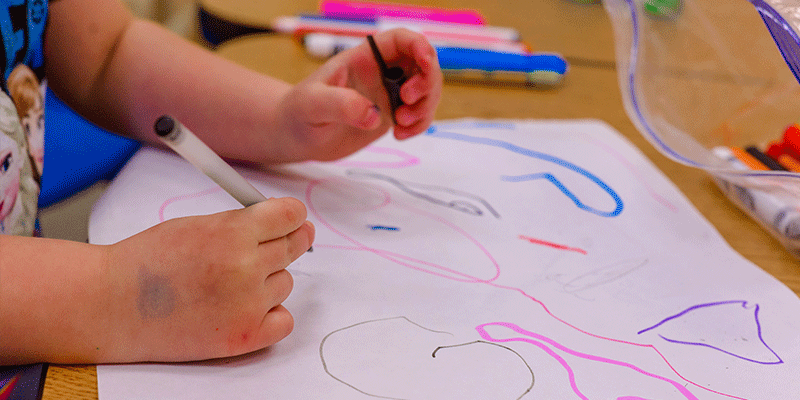
At age three, your child is developing both the muscular control and the concentration she needs to master many precision finger and hand movements. You’ll notice that now she can move each of her fingers independently or together, which means that instead of grasping her crayon in her fist she can hold it like an adult, with thumb on one side and fingers on the other. Now she will be able to trace a square, copy a circle, or scribble freely.
Because her spatial awareness has developed quite a bit, she’s more sensitive to the relationships among objects, so she’ll position her toys with great care during play and control the way she holds utensils and tools to perform specific tasks.
This increased sensitivity and control will allow her to build a tower of nine or more cubes, pour water from a pitcher into a cup (using two hands), unbutton clothes, possibly put large buttons into buttonholes, and use a fork and feed herself independently, spilling between the plate and her mouth only occasionally.
She’s also extremely interested in discovering what she can do with tools such as scissors and paper and with materials such as clay, paint, and crayons. She now has the skill to manipulate these objects and is beginning to experiment with using them to make other things. At first she’ll play randomly with craft materials, perhaps identifying the end product only after it’s completed.
Looking at her scribbles, for example, she might decide they look like a dog. But soon this will change, and she’ll decide what she wants to make before starting to work on it. This change in approach will motivate her to develop even more precision in moving and using her hands.
Quiet-time activities that can help improve your child’s hand abilities include:
- Building with blocks
- Solving simple jigsaw puzzles (four or five large pieces)
- Playing with pegboards
- Stringing large wooden beads
- Coloring with crayons or chalk
- Building sand castles
- Pouring water into containers of various sizes
- Dressing and undressing dolls in clothing with large zippers, snaps, and laces
You can encourage your child to use her hands by teaching her to use certain adult tools. She’ll be thrilled to progress to a real screwdriver, a lightweight hammer, an eggbeater, or gardening tools. You’ll need to supervise closely, of course, but if you let her help as you work, you may be surprised by how much of the job she can do herself.
Last Updated 11/2/2009
Source Caring for Your Baby and Young Child: Birth to Age 5 (Copyright © 2009 American Academy of Pediatrics)
The information contained on this Web site should not be used as a substitute for the medical care and advice of your pediatrician. There may be variations in treatment that your pediatrician may recommend based on individual facts and circumstances.
Cognitive Development In Preschool Children(Part2)
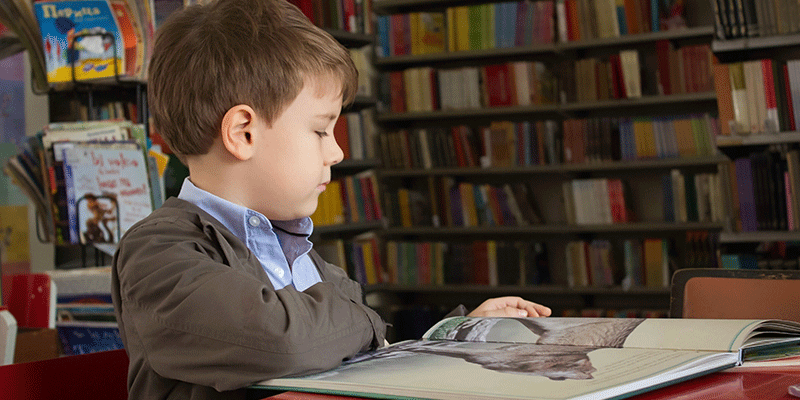
By age four, your child is beginning to explore many basic concepts that will be taught in greater detail in school. For example, he now understands that the day is divided into morning, afternoon, and night, and that there are different seasons. By the time he’s five and entering kindergarten, he may know some days of the week and that each day is measured in hours and minutes. He also may comprehend the essential ideas of counting, the alphabet, size relationships (big versus small), and the names of geometric shapes.
There are many good children’s books that illustrate these concepts, but don’t feel compelled to rush things. There’s no advantage to him learning them this early, and if he feels pressured to perform now, he actually may resist learning when he gets to school.
The best approach is to offer your child a wide range of learning opportunities. For instance, this is the perfect age to introduce him to zoos and museums, if you haven’t done so already. Many museums have special sections designed for children, where he can actively experience the learning process. At the same time, you should respect his special interests and talents. If your child seems very artistic, take him to art museums and galleries, or let him try a preschool art class. Also, if you know an artist, take him for a visit so he can see what a studio is like. If he’s most interested in machines and dinosaurs, take him to the natural history museum, help him learn to build models, and provide him with construction kits that allow him to create his own machines. Whatever his interests, you can use books to help answer his questions and open his horizons even further. At this age, then, your child should be discovering the joy of learning so that he will be self- motivated when his formal education begins.
You’ll also find that, in addition to exploring practical ideas, your four-year-old probably will ask many “universal” questions about subjects such as the origin of the world, death and dying, and the composition of the sun and the sky. Now, for example, is when you’ll hear the classic question “Why is the sky blue?” Like so many other parents, you may have trouble answering these questions, particularly in simple language your child will understand. As you grapple with these issues, don’t make up answers; rely instead on children’s books that deal with them. Your local library should be able to recommend age-appropriate books to help you.
Last Updated 11/2/2009
Source Caring for Your Baby and Young Child: Birth to Age 5 (Copyright © 2009 American Academy of Pediatrics)
The information contained on this Web site should not be used as a substitute for the medical care and advice of your pediatrician. There may be variations in treatment that your pediatrician may recommend based on individual facts and circumstances.
Cognitive Development In Preschool Children(Part1)

Your three-year-old will spend most of her waking hours questioning everything that happens around her. She loves to ask “Why do I have to … ?” and she’ll pay close attention to your answers as long as they’re simple and to the point. Don’t feel that you have to explain your rules fully; she can’t yet understand such reasoning and isn’t interested in it anyway. If you try to have this kind of “serious” conversation, you’ll see her stare into space or turn her attention to more entertaining matters, such as a toy across the room or a truck passing outside the window. Instead, telling her to do something “because it’s good for you” or “so you don’t get hurt” will make more sense to her than a detailed explanation.
Your child’s more abstract “why” questions may be more difficult, partly because there may be hundreds of them each day and also because some of them have no answers—or none that you know. If the question is “Why does the sun shine?” or “Why can’t the dog talk to me?” you can answer that you don’t know, or invite her to look into the question further by finding a book about the sun or about dogs. Be sure to take these questions seriously. As you do, you help broaden your child’s knowledge, feed her curiosity, and teach her to think more clearly.
When your three-year-old is faced with specific learning challenges, you’ll find her reasoning still rather one-sided. She can’t yet see an issue from two angles, nor can she solve problems that require her to look at more than one factor at the same time. For example, if you take two equal cups of water and pour one into a short, fat container and the other into a tall, skinny one, she’ll probably say the tall container holds more water than the short. Even if she sees the two equal cups to start with and watches you pour, she’ll come up with the same answer. By her logic, the taller container is “bigger” and therefore must hold more. At around age seven, children finally understand that they have to look at multiple aspects of a problem before arriving at an answer.
At about three years of age, your child’s sense of time will become much clearer. Now she’ll know her own daily routine and will try hard to figure out the routines of others. For example, she may eagerly watch for the mail carrier who arrives every day, but be perplexed that trash is picked up only one day out of seven. She’ll understand that certain special events, such as holidays and birthdays, occur every once in a while, but even if she can tell you how old she is, she’ll have no real sense of the length of a year.
But if you have any questions or concerns about your three-year-old’s development, you should discuss it with your pediatrician. If he agrees that there is reason for concern, he will refer your child for further testing.
Last Updated 11/2/2009
Source Caring for Your Baby and Young Child: Birth to Age 5 (Copyright © 2009 American Academy of Pediatrics)
The information contained on this Web site should not be used as a substitute for the medical care and advice of your pediatrician. There may be variations in treatment that your pediatrician may recommend based on individual facts and circumstances.
Emotional Development in Preschoolers(Part3)
At about the age of four and five, your preschooler also may begin to show an avid interest in basic sexuality, both his own and that of the opposite sex. He may ask where babies come from and about the organs involved in reproduction and elimination. He may want to know how boys’ and girls’ bodies are different. When confronted with these kinds of questions, answer in simple but correct terminology. A four-year-old, for example, doesn’t need to know the details about intercourse, but he should feel free to ask questions, knowing he’ll receive direct and accurate answers.
Along with this increased interest in sexuality, he’ll probably also play with his own genitals and may even demonstrate an interest in the genitals of other children. These are not adult sexual activities but signs of normal curiosity and don’t warrant scolding or punishment.
At what point should parents set limits on such exploration? This really is a family matter. It’s probably best not to overreact to it at this age, since its normal if done in moderation. However, children need to learn what’s socially appropriate and what’s not. So, for example, you may decide to tell your child:
- Interest in genital organs is healthy and natural.
- Nudity and sexual play in public are not acceptable.
- No other person, including even close friends and relatives, may touch his “private parts.”The exceptions to this rule are doctors and nurses during physical examinations and his own parents when they are trying to find the cause of any pain or discomfort he’s feeling in the genital area.
At about this same time, your child also may become fascinated with the parent of the opposite sex. A four-year-old girl can be expected to compete with her mother for her father’s attention, just as a boy may be vying for his mother’s attention. This so-called oedipal behavior is a normal part of personality development at this age and will disappear in time by itself if the parents take it in stride. There’s no need to feel either threatened or jealous because of it.
Last Updated 11/2/2009
Source Caring for Your Baby and Young Child: Birth to Age 5 (Copyright © 2009 American Academy of Pediatrics)
The information contained on this Web site should not be used as a substitute for the medical care and advice of your pediatrician. There may be variations in treatment that your pediatrician may recommend based on individual facts and circumstances.
Emotional Development in Preschoolers(Part2)
Back in real life; let your preschooler know that you’re proud of her new independence and creativity. Talk with her, listen to what she says, and show her that her opinions matter. Give her choices whenever possible—in the foods she eats, the clothes she wears, and the games you play together. Doing this will give her a sense of importance and help her learn to make decisions. Keep her options simple, however. When you go to a restaurant, for example, narrow her choices down to two or three items. Otherwise she may be overwhelmed and unable to decide. (A trip to an ice- cream store or frozen yogurt shop that sells several flavors can be agonizing if you don’t limit her choices.)
What’s the best approach? Despite what we’ve already said, one of the best ways to nurture her independence is to maintain fairly firm control over all parts of her life, while at the same time giving her some freedom. Let her know that you’re still in charge and that you don’t expect her to make the big decisions. When her friend is daring her to climb a tree, and she’s afraid, it will be comforting to have you say no, so that she doesn’t have to admit her fears. As she conquers many of her early anxieties and becomes more responsible in making her own decisions, you’ll naturally give her more control. In the meantime, it’s important that she feels safe and secure.
Just as it was when he was three, your four-year-old’s fantasy life will remain very active. However, he’s now learning to distinguish between reality and make-believe, and he’ll be able to move back and forth between the two without confusing them as much.
As games of pretend become more advanced, don’t be surprised if children experiment with make-believe games involving some form of violence. War games, dragon-slaying, and even games like tag all fall into this category. Some parents forbid their children to play with store-bought toy guns, only to find them cutting, pasting, and creating cardboard guns or simply pointing a finger and shouting “bang, bang.” Parents shouldn’t panic over these activities. This is no evidence that these children are “violent.” A child has no idea what it is to kill or die. For him, toy guns are an innocent and entertaining way to be competitive and boost his self-esteem.
If you want a gauge of your child’s developing self-confidence, listen to the way he talks to adults. Instead of hanging back, as he may have done at two or three, he now probably is friendly, talkative, and curious. He also is likely to be especially sensitive to the feelings of others—adults and children alike—and to enjoy making people happy. When he sees they’re hurt or sad, he’ll show sympathy and concern. This probably will come out as a desire to hug or “kiss the hurt,” because this is what he most wants when he’s in pain or unhappy.
Last Updated 11/2/2009
Source Caring for Your Baby and Young Child: Birth to Age 5 (Copyright © 2009 American Academy of Pediatrics)
The information contained on this Web site should not be used as a substitute for the medical care and advice of your pediatrician. There may be variations in treatment that your pediatrician may recommend based on individual facts and circumstances.
Emotional Development in Preschoolers(Part1)
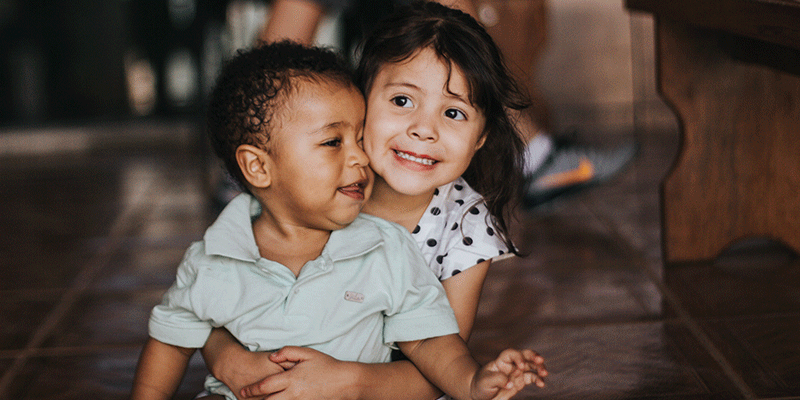
Your three-year-old’s vivid fantasy life will help her explore and come to terms with a wide range of emotions, from love and dependency to anger, protest, and fear. She’ll not only take on various identities herself, but also she’ll often assign living qualities and emotions to inanimate objects, such as a tree, a clock, a truck, or the moon. Ask her why the moon comes out at night, for example, and she might reply, “To say hello to me.”
From time to time, expect your preschooler to introduce you to one of her imaginary friends. Some children have a single make-believe companion for as long as six months; some change pretend playmates every day, while still others never have one at all or prefer imaginary animals instead. Don’t be concerned that these phantom friends may signal loneliness or emotional upset; they’re actually a very creative way for your child to sample different activities, lines of conversation, behavior, and emotions.
You’ll also notice that, throughout the day, your preschooler will move back and forth freely between fantasy and reality. At times she may become so involved in her make-believe world that she can’t tell where it ends and reality begins. Her play experience may even spill over into real life. One night she’ll come to the dinner table convinced she’s Cinderella; another day she may come to you sobbing after hearing a ghost story that she believes is true.
While it’s important to reassure your child when she’s frightened or upset by an imaginary incident, be careful not to belittle or make fun of her. This stage in emotional development is normal and necessary and should not be discouraged. Above all, never joke with her about “locking her up if she doesn’t eat her dinner” or “leaving her behind if she doesn’t hurry up.” She’s liable to believe you and feel terrified the rest of the day—or longer.
From time to time, try to join your child in her fantasy play. By doing so, you can help her find new ways to express her emotions and even work through some problems. For example, you might suggest “sending her doll to school” to see how she feels about going to preschool. Don’t insist on participating in these fantasies, however. Part of the joy of fantasy for her is being able to control these imaginary dramas, so if you plant an idea for make- believe, stand back and let her make of it what she will. If she then asks you to play a part, keep your performance low- key. Let the world of pretend be the one place where she runs the show.
Last Updated 11/2/2009
Source Caring for Your Baby and Young Child: Birth to Age 5 (Copyright © 2009 American Academy of Pediatrics)
The information contained on this Web site should not be used as a substitute for the medical care and advice of your pediatrician. There may be variations in treatment that your pediatrician may recommend based on individual facts and circumstances.
Nightmares and Night Terrors in Preschoolers(Part2)

Keep a Sleep Diary
If you are concerned about your child’s sleep habits, talk with your child’s doctor. Keep a sleep diary to help track your child’s problem that includes the following:
- Where your child sleeps
- How much sleep she normally gets at night
- What she needs to fall asleep (for example, a favorite toy or blanket)
- How long it takes her to fall asleep
- How often she wakes up during the night
- What you do to comfort and console her when she wakes up during the night
- The time and length of naps
- Any changes or stresses in the home
Track this information for 1 to 2 weeks and bring it with you when you talk with your child’s doctor. Keep in mind that sleep problems are very common, and with time and help from your child’s doctor, you and your child will overcome them.
Additional Information from HealthyChildren.org:
- Easing Infants & Toddlers into Halloween Fun: Tips from the AAP
- Brush, Book, Bed: How to Structure Your Child’s Nighttime Routine
- Toddler Bedtime Trouble: Tips for Parents
- Healthy Sleep Habits: How Many Hours Does Your Child Need
Last Updated 10/18/2018
Source Sleep Problems in Children (Copyright © 2007 American Academy of Pediatrics, Updated 04/2013)
The information contained on this Web site should not be used as a substitute for the medical care and advice of your pediatrician. There may be variations in treatment that your pediatrician may recommend based on individual facts and circumstances.


