Precautions for drinking yogurt
Yogurt has a delicious taste and a variety of flavors and many nutrients. Many people like to drink yogurt. However, despite the many benefits of yogurt, it is more beneficial to women and children. But how much do you know about the knowledge that should be paid attention to when drinking yogurt? Can yogurt be heated? The more yogurt you drink, the more beneficial? Let’s see.
1.The thicker the yogurt, the better?
In fact, the higher the consistency of yogurt is only because of the addition of various thickeners to make the taste richer, but it does not have much benefit to the human body.
2.Note that yogurt cannot be heated.
When the yogurt is just produced, the probiotics contained in it are all live bacteria. Only by refrigerating the yogurt can the live bacteria be preserved.
3.Drinking yogurt does not mean that the more the portion, the more beneficial.
Note that although yogurt and other health products are good for the body, you must control the amount of drinking.
4.Do not drink yogurt on an empty stomach.
The secretion of gastric acid on an empty stomach will increase, and stomach acid has a bactericidal function, so it is best not to drink yogurt when on an empty stomach, as this will reduce the activity of probiotics.
5.Do not drink yogurt immediately after meals.
Usually, after eating, it is not advisable to drink yogurt immediately, which will have adverse effects on gastrointestinal digestion. You should wait for the food to be digested before drinking yogurt.
What should babies pay attention to when drinking yogurt
There are many yogurt flavors and unique taste, which will attract many babies. But do mothers know what babies should pay attention to when drinking yogurt? How old can a baby drink yogurt? Is yogurt the live lactic acid bacteria drink that moms choose in the supermarket? If you don’t know much about it, come and take a look.

1.The expert’s suggestion is that it is best for babies over 6 months to drink yogurt. Babies under 6 months are not suitable for drinking yogurt, because the composition of yogurt and breast milk is still very different, so drink it too early , The baby may find it difficult to accept.
2.When giving yogurt to younger babies, pay attention to your baby’s reaction. Once the baby has symptoms such as allergies, please stop drinking yogurt for the baby immediately.
3.Babies who are allergic to milk protein and lactose intolerant should not drink yogurt.
4.In supermarkets, live lactic acid bacteria drinks and yogurt are not the same. Many mothers may confuse the two drinks, but in fact, the nutritional value of yogurt is much higher than that of live lactic acid bacteria drinks.
5. The calcium content in yogurt is much higher than that in milk. The baby’s regular drinking of yogurt is conducive to the intake and absorption of mineral elements in the baby’s body.
How about low sodium mineral water

Mineral water is hailed as “the universal Chinese medicine for curing diseases” in Europe. In the West, there are special mineral water therapy subjects and special methods of using mineral water for health care and treatment. Under the various effects of mineral water in relieving fatigue, improving constipation and body cold, preventing cardiovascular and cerebrovascular diseases and cancer, it is very particular about how to drink mineral water and what kind of mineral water to drink. Various types of mineral water are emerging in an endless stream, and the newly listed low-sodium mineral water has attracted strong attention from the industry and consumers. So, what is low-sodium mineral water? Is low sodium mineral water healthy drinking water?
Sodium is one of the essential macro elements for the human body, but the human body’s requirement for sodium is very low. When converted into salt, an adult only needs about 5 to 6 grams of salt per day. If too much intake is needed, it will easily cause heart failure and abnormal kidney function. Cure the disease. According to data from the National Nutrition Conference, 72.6% of people in Europe and the United States have daily salt intake of 10-15g, especially in some provinces and regions with a heavy taste. Excessive sodium intake has caused more and more patients with hypertension in my country in recent years, and they are becoming younger and younger. “Low-sodium diet” brooks no delay.
Sodium is an essential macro element for the human body. High-quality mineral water must contain sodium. However, if you drink mineral water with high sodium content for a long time, it will increase your sodium intake and increase your body burden. Therefore, in addition to a low-sodium diet, low-sodium drinking water is also an important part of the salt reduction action. The hot-selling low-sodium mineral water on the market on the one hand maintains the pharmacological and health-care effects of the mineral water, which is a “all-purpose Chinese medicine for curing diseases”. It also reduces the risk of high sodium.
According to European and American standards, mineral water with sodium content ≤20mg/L is called low-sodium mineral water. Low-sodium mineral water not only contains the advantages of the trace elements and macro elements of ordinary mineral water, but also has a lower sodium content, which reduces salt to the body, prevents the occurrence of high blood pressure, and reduces the incidence and death of heart disease and chronic kidney disease.
Philip Johnson, leader of the Global Drinking Water Sanitation Group, professor and doctoral supervisor of medical university, once said that mineral water can supplement the trace elements and macro elements needed by human body, regulate the balance of acid and base of human body, and is the champion of healthy drinking water. If mineral water is the first healthy water list, then low sodium mineral water is the best of best. For example, in the water with full marks of low sodium mineral water on the market, the sodium content is only 5.5-6.5mg/L, far better than the international low sodium standard ≤20mg/L, which can effectively control the intake of sodium. It is a rare natural low sodium high quality mineral water.
What does cold and have a fever have to the harm of the child?
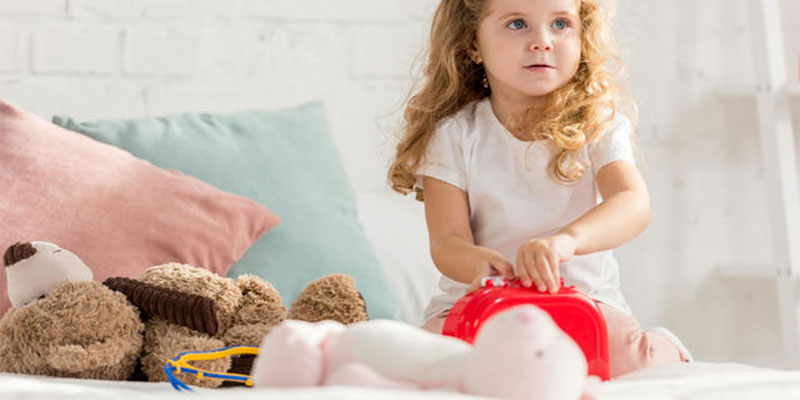
Children with a cold and fever are not a rare disease. Parents have become accustomed to this disease. The best thing in life is to improve children’s resistance. If people with colds appear around, it’s best to avoid children’s contact and don’t take them to some. In places that are too dense, avoid catching a cold. Children’s cold has an impact on the body
so what are the hazards of children’s cold and fever?
- Sinusitis
Children with cold and fever can cause many complications, and sinusitis is one of them. Common symptoms include headache,hyposphraesia, excessive purulent nasal discharge, memory loss and so on.
- Bronchial pneumonia
If a child develops symptoms such as an increased cough, loss of appetite, or trouble sleeping after catching a cold, they may develop a bronchopneumonia that requires immediate treatment.
- Otitis media
Children cold without timely treatment may also cause otitis media, parents should pay attention to whether the children have ear pain, lymph node enlargement and other symptoms, once the emergence of attention.
- Lymphadenitis
Lymphadenitis is also a common complication of colds. After the onset, symptoms such as redness, fever, swollen lymph nodes, pain, etc., must be treated in time, otherwise it will cause more serious symptoms.
Making Good Decisions About Television and Screen Time for Young Children(Part1)

By:ZerotoThree
Although children may learn some concepts from watching educational programming, they learn best from interactive, hands-on experiences with people they care about
The American Academy of Pediatrics recommends no television (or screen media such as computer games, videos, or DVD) for children under 2. For children over age 2, the recommendation is 1 to 2 hours per day for television (or any screen media).
For parents and caregivers who choose to allow their young children to watch some TV, consider the following research and guidance on viewing.
Television Plays a Limited Role in Learning
Although children may learn some concepts from watching educational programming, they learn best from interactive, hands-on experiences-touching, feeling, shaking, stacking, problem solving-with people they care about. Research has found that some children’s shows (such as Arthur, Clifford, Dragon Tales, Dora the Explorer, and Blue’s Clues) have positive effects on children’s learning, but other shows (like Teletubbies or Barney & Friends) do not. In general, it’s best to choose age-appropriate programs in which:
- television characters occasionally speak directly to children and
- television characters ask children to participate in the show in some way (e.g.repeating a word).
Children’s shows with a strong storyline and storybook structure (beginning, middle, end) are also good.
Making Good Decisions About Television and Screen Time for Young Children(Part2)

By:ZerotoThree
What You Can Do:
· Talk about the program. Ask 2- and 3-year-olds what they thought the show was about, which characters they liked and disliked, how it made them feel.
· Answer children’s questions. Children are still figuring out new ideas and concepts. Sometimes they need your help to make sense of what they’re seeing on the screen.
· Point out and name things they see on the screen.
· Be active while you watch. Dance to the music, hop around like the bunnies on the show, and so forth.
· Connect what children see on TV to children’s “real lives.” “Do you remember we watched a show about a mail carrier this morning? Here comes our mail carrier! Do you want to watch her deliver our mail?”
· When the show is over, turn off the TV and act out the story. Use puppets to tell the story, or make up your own story to act out together.
· Finally, do not use television shows or videos to put children to sleep. This makes it more difficult for them to learn to fall asleep on their own. Also, young children need the love, safety, and security that comes from naptime routines (story, back rub, song) shared with you.
How to Choose Quality Child Care(Part3)
By:ZerotoThree
Licensing Issues
Because the way children are treated by caregiving adults shapes their development in important ways, it is crucial to find a child care professional who both understands and nurtures children’s learning through the everyday moments they share.
For example, does the caregiver talk to your baby during a diaper change, comfort or sing to her if she is protesting? Or is the diaper change conducted silently, with little attention paid to the child’s experience? Responding to children, even when they are too young to understand the meaning of our words, lets them know that their feelings and experiences are important and respected.
Each state has different licensing requirements for programs and providers. Listed below are some initial questions to ask when selecting a child care program. For more information on license, you can visit Child Care Aware of America.
Here are the questions with a larger audience:
- Is the child care program licensed by the state or local government?
- Is the child care program accredited by the National Association for the Education of Young Children or the National Association of Family Child Care?
- Are the caregivers certified by the Council for Early Childhood Professional Recognition with a Child Development Associates degree credential for infant-toddler caregivers?
- Do caregivers possess an equivalent credential that addresses comparable competencies (such as an associate’s or bachelor’s degree)?
- Is there a primary caregiver for my child?
- Are the ratios and group size appropriate for my child’s age?
How to Choose Quality Child Care(Part2)

By:ZerotoThree
What to Look for in a Child Care Program?
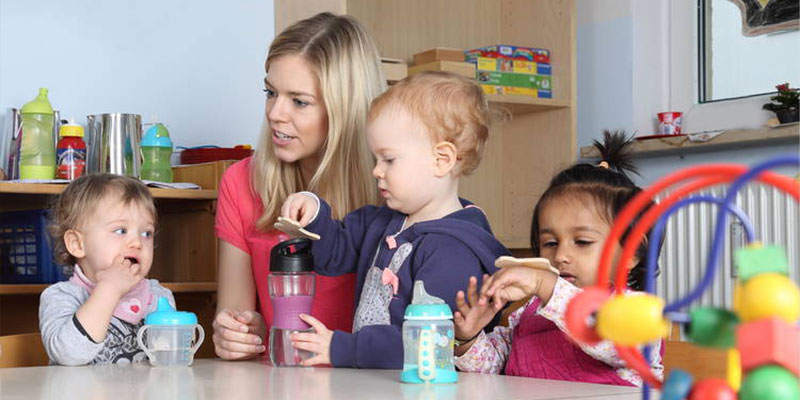
If at all possible, before making your program choice, observe caregivers interacting with children during the day. Parents can learn a lot about a program simply by watching. Here are some specific criteria to look for and ask about when visiting a child care program:
- What training do staff members have in infant-toddler development?
- Do caregivers speak to the children, even babies? Do they sing and read to the children?
- Do they answer children’s questions patiently? Do they ask children questions?
- Is each baby allowed to eat and sleep according to their own rhythms, and not based on a schedule imposed by the caregiver?
- For toddlers, is a daily schedule posted, using pictures and visuals, so that children can anticipate what will happen next?
- Are toys and materials well organized so that children can choose what interests them?
- Are caregivers able to accommodate the special needs of children?
- Does the environment accommodate the special needs of children?
- Do caregivers respect the language, culture, and values of families in the program?
- How does the caregiver feel about discipline? Weaning? Toilet training? Feeding? Do the caregiver’s beliefs match your own?
- Does the caregiver handle conflicts without losing patience, shaming a child, or frequently displaying anger?
- Does the caregiver seem to enjoy children?
- Are you welcome to drop in at any time?
- Would your child feel good about coming here? Would you feel good about leaving your child here?
- Is the environment sanitary and safe?
- Is the setting appealing with comfortable lighting and an acceptable noise level?
How to Choose Quality Child Care(Part1)

By:ZerotoThree
What are the hallmarks of quality child care?
More and more infants and toddlers are spending time each day in some type of child care setting. All children-especially infants and toddlers-need a child care setting where they can thrive with caregivers who understand how to promote their healthy growth and development. Young children need a schedule that is responsive to their needs, including appropriate stimulation and time to rest. They need to be talked to and played with. They need love and attention. And they need the opportunity to form the kind of comfortable, secure relationship with a caregiver that will nurture their healthy emotional development.
A Good Caregiver Is Loving and Responsive
One who hugs, rocks, cuddles, seeks eye contact and enjoys the child who responds to the baby’s smiles and emerging skills and interest who finds ways to expand upon children’s play to help them learn new skills who is sociable and interested in children. One who talks with the baby about what they do and see a playful partner who introduces new ideas, objects and games who supports children in building relationships with other children and adults.
Respects the baby’s individuality
One who understands and nurtures babies’ development who recognizes the baby’s personal rhythms, style, strengths, and limitations and tunes into these when planning the pace and time for eating, sleeping and playing one who is comfortable accommodating to children’s special needs or conditions.
Provides a stimulating and child-friendly environment
An area that is clean and safe so babies can explore their surroundings filled with interesting and stimulating things to explore set up to promote learning through free play changed regularly to accommodate the needs of growing infants and toddlers organized to have distinct eating and diapering areas and set up to be comfortable and practical for adults, allowing them to focus on the children.
Sleep Struggles? We’ve Got Resources(Part2)

By:Sarah S. MacLaughlin
Questions to Ask When Helping Children Learn to Sleep
Does the environment say “Sleep”?
Pay attention to your child’s sleep environment and bedtime routines. Is it adequately dark? Are toys covered or put away to reduce distractions? Is it fairly quiet? Is the TV off? If there is a nightlight, is it very dim? (Some recommend red as the best color to use). It also helps to have a predictable sleep routine your child can count on each night—such as bath, tooth-brushing, story, and special goodnight kiss—to cue your child that it’s time for sleep.
How do you help your child prepare for bedtime?
Let your child know when bedtime is approaching. Put on a timer to help your child prepare for the transition 5 minutes before it’s time to go to bed. It can also be helpful to create a ritual that signals a change, such as having your child “help” you switch off the light when it’s time get into bed. Creating a visual reminder of the bedtime routine can also work. Take photos of each step of your routine (bath, tooth-brushing, story, etc.) and put them up on the wall in your child’s room in order. Then point out the steps each night as you do them. Each of these strategies helps children begin to understand what will happen next, which can make bedtime easier.
(My son) goes to sleep by himself for his naps but he does not at night and if I get up he will wake up after half an hour and I have to lay with him again.
Sue in Costa Rica
What helps a child who has trouble separating at night-time?
Experiment with routines that help to ease separations: Try a stuffed toy or blanket as a transition object (for children 1-year-old and above); promise to come back and check in after 3 minutes for a last good-night kiss; or record yourself singing lullabies…switch them on as you leave the room. As a final send-off for older children, decide where the two of you might go during dreamtime that night, “Should we meet at the beach in our dreams? I will see you there.”
How do you set clear but gentle limits?
Be clear about the rules and expectations around sleep. Children whose parents establish and follow through on clear bedtime routines tend to learn to be good sleepers. Parents set the stage by making the expectations clear, “After bath, we will read three books, I will sing you a lullaby, give you our special kiss, and will say goodnight. Then I will see you in the morning.” Many young children use stalling tactics to delay bedtime—asking for snacks, water, and “just one more book.” When that happens, parents can matter-of-factly remind children of the routine (“We read our books and we sang our song. Now it’s time for bed. Do you want 1 kiss or 2 kisses?”) and stick to it.
Sleep Struggles? We’ve Got Resources(Part1)

By:Sarah S. MacLaughlin
Some parents say that their children “just slept well from the start.” Or that they learned to fall asleep fairly easily with parent support. And then there’s the rest of us.
Sleep is one of the first, and most challenging, issues that many parents face. A blog post can’t possibly address or solve all the complex challenges parents encounter around sleep.
Instead, here we focus on ways to establish healthy sleep habits from the start—to hopefully prevent situations like a baby who won’t fall asleep unless fed, held, or rocked; a toddler who comes into your room for a visit at 3:00 a.m,or a 2-year-old whose bedtime routine is now 75 minutes long and getting longer every night.
Ways to Nurture Healthy Sleep Habits from the Start
- Put yourself in your child’s shoes.
For babies and young children, bedtime can be a stressful experience, especially if it means separating from the people they love, and ending other fun activities (Baths! Stories! Songs!). It also means going to sleep, perhaps alone, in a darkened room, which can be scary. When you’re exhausted and frustrated, it can be hard to look at things from your child’s perspective. But learning to fall back to sleep in the middle of the night is a hard skill for many children to master. Despite all evidence to the contrary, your children are not trying to drive you crazy or manipulate you. Most of all, they need your patience and support to learn this new skill.
(My daughter) will be very obviously tired, but won’t let go and just go to sleep.
Kelly in Greensboro, North Carolina
- Take good care of yourself.
Don’t skimp on self-care keep your well-being at the top of your to-do list. This doesn’t mean weekend getaways and trips to the spa. It means making sleep a priority when you can, such as going to bed earlier and letting go of tasks that can wait. Your need for sleep is as important as your baby’s. You matter! You’ll have more patience if you take care of yourself too.
- Tune in to your unique child’s needs.
Every child is wired differently and has a different capacity for self-soothing, which means that there is a wide range of behavior in the sleep department. So avoid comparing what your child is doing to others. Don’t fall prey to the “shoulds.” Tune in to what your child is telling you through his behavior and let that be your guide. For example, you might find that your baby needs more time to transition from playtime to sleep, to help his body get into a more relaxed state, so the bedtime routine may need to be longer and more gradual.
How to Stay Calm When Baby Won’t Stop Crying(Part 2)

By:ZerotoThree
Calming yourself is job number one.
The first trick to calming your baby is to recognize that you yourself are anything but calm. Take a moment to name how you are feeling (frustrated, angry, sad, rejected, etc.). After that crucial first step, here are some additional strategies that may help:
Put your baby down in a safe place (like a crib) and take a break. Give yourself the gift of a few minutes to calm down and attend to your own needs. It’s just like when you’re on a plane and the flight attendant tells you to put on your own oxygen mask first before assisting your child. Make time throughout the day to feed yourself, drink enough water, shower, get some exercise, or call a friend. This kind of self-care will help you stay calm and self-regulated. When you are in a calmer state of mind, you are better able to help your baby.
Try taking deep, even breaths. People often breathe shallowly when stressed, so changing your breathing actually helps you feel calmer. Deep, even breathing sends the message to your nervous system that you are safe, which helps your body start to regulate. Breathe in through your nose and out through your mouth. Try counting to 10, or putting your hand on your stomach as you breathe to make sure you’re taking deep breaths.
Sleep. Not surprisingly, parents who report having a baby who cries a lot also tend to report being exhausted. Often, this exhaustion can’t be relieved by just one good night of sleep. Talk to your baby’s health care provider, or your own, if you are experiencing feelings of being overwhelmed, sad, depressed, or unable to care for your baby. New parents need and deserve support.
Remember that your baby loves you, but is having a tough time right now. Sometimes babies cry or are fussy for reasons we just can’t figure out. But this fussiness is no reflection on your baby’s feelings for you! Your baby loves you and is doing the best she can right now. So, take breaks when you can, ask for help when you need it, and consult with your health care provider if your baby’s fussiness causes concern.


