Cradle Cap

Your beautiful one-month-old baby has developed scaliness and redness on his scalp.You’re concerned and think maybe you shouldn’t shampoo as usual. You also notice some redness in the creases of his neck and armpits and behind his ears. What is it and what should you do?
When this rash occurs on the scalp alone, it’s known as cradle cap. But although it may start as scaling and redness of the scalp, it also can be found later in the other areas just mentioned. It can extend to the face and diaper area, too, and when it does, pediatricians call it seborrheic dermatitis (because it occurs where there are the greatest number of oil producing sebaceous glands). Seborrheic dermatitis is a noninfectious skin condition that’s very common in infants, usually beginning in the first weeks of life and slowly disappearing over a period of weeks or months. Unlike eczema or contact dermatitis, it’s rarely uncomfortable or itchy.
What Causes Cradle Cap?
No one knows for sure the exact cause of this rash. Some doctors have speculated that it may be influenced by the mother’s hormonal changes during pregnancy, which stimulate the infant’s oil glands. This overproduction of oil may have some relationship to the scales and redness of the skin.
How to Treat Your Baby’s Cradle Cap
If your baby’s seborrheic dermatitis is confined to his scalp (and is, therefore, just cradle cap), you can treat it yourself.
- Don’t be afraid to shampoo the hair; in fact, you should wash it (with a mild baby shampoo) more frequently than before. This, along with soft brushing, will help remove the scales. Stronger medicated shampoos (antiseborrhea shampoos containing sulfur and 2 percent salicylic acid) may loosen the scales more quickly, but since they also can be irritating, use them only after consulting your pediatrician.
- Some parents have found using petroleum jelly or ointments beneficial. But baby oil is not very helpful or necessary. In fact, while many parents tend to use unperfumed baby oil or mineral oil and do nothing else, doing so allows scales to build up on the scalp, particularly over the soft spot on the back of the head, or fontanelle.
- Your doctor also might prescribe a cortisone cream or lotion, such as 1 percent hydrocortisone cream. Once the condition has improved, you can prevent it from recurring, in most cases, by continuing with frequent hair washing with a mild baby shampoo.
Yeast Infections
Sometimes yeast infections occur on the affected skin, most likely in the crease areas rather than on the scalp. If this occurs, the area will become extremely reddened and quite itchy. In this case, your pediatrician might prescribe a medication such as an anti-yeast cream.
Outlook
Rest assured that seborrheic dermatitis is not a serious condition, or an infection. Nor is it an allergy to something you’re using, or due to poor hygiene. It will go away without any scars.
Last Updated 11/2/2009
Source Caring for Your Baby and Young Child: Birth to Age 5, 6th Edition (Copyright © 2015 American Academy of Pediatrics)
The information contained on this Web site should not be used as a substitute for the medical care and advice of your pediatrician. There may be variations in treatment that your pediatrician may recommend based on individual facts and circumstances.
How to Care for Your Baby’s Penis(Part2)
 The Uncircumcised Penis
In the first few months, you should simply clean and bathe your baby’s uncircumcised penis with soap and water, like the rest of the diaper area. Initially, the foreskin is connected by tissue to the glans, or head, of the penis, so you shouldn’t try to retract it. No cleansing of the penis with cotton swabs or antiseptics is necessary, but you should watch your baby urinate occasionally to make sure that the hole in the foreskin is large enough to permit a normal stream.
When to call the pediatrician:
If the stream consistently is no more than a trickle, or if your baby seems to have some discomfort while urinating, consult your pediatrician.
The doctor will tell you when the foreskin has separated and can be retracted safely. This will not be for several months or years, and should never be forced; if you were to force the foreskin to retract before it is ready, you could cause painful bleeding and tears in the skin. After this separation occurs, retract the foreskin occasionally to gently cleanse the end of the penis underneath.
What to do as your son gets older:
As your son gets older, you’ll need to teach him what he must do in order to urinate and wash his penis. Teach him to clean his foreskin by:
- Gently pulling it back away from the head of the penis.
- Rinsing the head of the penis and inside fold of the foreskin with soap and warm water.
- Pulling the foreskin back over the head of the penis.
Last Updated 11/23/2016
Source Caring for Your Baby and Young Child: Birth to Age 5, 6th Edition (Copyright © 2015 American Academy of Pediatrics)
The information contained on this Web site should not be used as a substitute for the medical care and advice of your pediatrician. There may be variations in treatment that your pediatrician may recommend based on individual facts and circumstances.
How to Care for Your Baby’s Penis(Part1)

The Circumcised Penis
If you chose to have your son circumcised, the procedure probably has been performed in the hospital on the second or third day after birth, but may be done after discharge during the first week of life. Ritual circumcisions for religious reasons are usually performed in the second week of life. Afterward, a light dressing such as gauze with petroleum jelly will have been placed over the head of the penis. The next time the baby urinates, this dressing usually will come off. Some pediatricians recommend keeping a clean dressing on until the penis is fully healed, while others advise leaving it off. The important thing is to keep the area as clean as possible. If particles of stool get on the penis, wipe it gently with soap and water during diaper changes.
What to expect:
The tip of the penis may look quite red for the first few days, and you may notice a yellow secretion. Both indicate that the area is healing normally. The redness and secretion should disappear gradually within a week.
When to call the pediatrician:
If the redness persists or there is swelling or crusted yellow sores that contain cloudy fluid, there may be an infection. This does not happen very often, but if you suspect that infection is present, consult your pediatrician.
After the circumcision has healed:
Usually, after the circumcision has healed, the penis requires no additional care. Occasionally a small piece of the foreskin remains. You should pull back this skin gently each time the child is bathed. Examine the groove around the head of the penis and make sure it’s clean.
Note: If circumcision is not performed within the baby’s first two weeks (perhaps for medical reasons), it is usually put off for several weeks or months. The follow- up care is the same whenever it is done. Should circumcision become necessary after the newborn period, general anesthesia is often used and requires a more formal surgical procedure necessitating control of bleeding and suturing of skin edges.
Last Updated 11/23/2016
Source Caring for Your Baby and Young Child: Birth to Age 5, 6th Edition (Copyright © 2015 American Academy of Pediatrics)
The information contained on this Web site should not be used as a substitute for the medical care and advice of your pediatrician. There may be variations in treatment that your pediatrician may recommend based on individual facts and circumstances.
Umbilical Cord Care
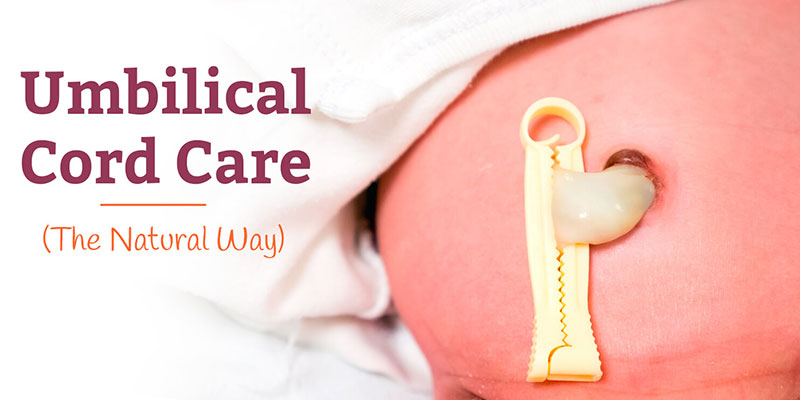
You’ll need to keep the stump of the umbilical cord clean and dry as it shrivels and eventually falls off. To keep the cord dry, sponge bathe your baby rather than submersing him in a tub of water. Also keep the diaper folded below the cord to keep urine from soaking it. You may notice a few drops of blood on the diaper around the time the stump falls off; this is normal. But if the cord does actively bleed, call your baby’s doctor immediately. If the stump becomes infected, however, it will require medical treatment. Although an infection is quite uncommon, contact your doctor if any of these signs is present:
- Foul-smelling yellowish discharge from the cord
- Red skin around the base of the cord
- Crying when you touch the cord or the skin next to it
The umbilical cord stump should dry up and fall off by the time your baby is about one or two weeks old. If it remains beyond that time, there may be other issues at play. See the baby’s doctor if the cord has not dried up and fallen off by the time the baby is two months old.
Umbilical Granuloma
Sometimes instead of completely drying, the cord will form a granuloma or a small reddened mass of scar tissue that stays on the belly button after the umbilical cord has fallen off. This granuloma will drain a light-yellowish fluid. This condition will usually go away in about a week, but if not, your pediatrician may need to burn off (cauterize) the granulamatous tissue.
Umbilical Hernia
If your baby’s umbilical cord area seems to push outward when he cries, he may have an umbilical hernia—a small hole in the muscular part of the abdominal wall that allows tissue to bulge out when there’s pressure inside the abdomen (e.g., when the baby cries). This is not a serious condition, and it usually heals by itself in the first twelve to eighteen months. (For unknown reasons it takes longer to heal in African American babies.) In the unlikely event that it doesn’t heal, the hole may need to be surgically closed. Taping this area or putting a “taped coin” over this area may be harmful.
Last Updated 3/3/2020
Source Caring for Your Baby and Young Child: Birth to Age 5 (Copyright © 2009 American Academy of Pediatrics)
The information contained on this Web site should not be used as a substitute for the medical care and advice of your pediatrician. There may be variations in treatment that your pediatrician may recommend based on individual facts and circumstances.
Breastfeeding After Cesarean Delivery

A common circumstance is a cesarean delivery, often referred to as a C-section, instead of a vaginal birth. If the C-section is done without prior planning, you may have endured a long and difficult delivery. If that’s the case, your doctor may be more worried about your rest and recovery and less likely to encourage you to breastfeed right after delivery. You may also feel disappointed by this unexpected turn of events, which may inhibit the let- down and flow of your breast milk. Women who have planned C-sections, on the other hand, often know what to expect and are fully prepared to breastfeed their newborn.
The good news is that the method of delivery has little effect on your ability to nurse your baby. Your breast milk will come in almost as readily as it would have if you had delivered vaginally. It is especially important to begin breastfeeding as soon as you are able and to continue breastfeeding your baby on a frequent basis to ensure a good milk supply. Even if you need a few hours to recover from your surgery, you will be able to breastfeed as soon as you feel up to it.
Use of Pain Medicines
Most drugs administered to mothers who give birth by cesarean delivery do not seriously affect the infant. You will probably receive a regional anesthetic, such as an epidural, rather than the general anesthesia that once made women unconscious during the delivery. Since less regional anesthesia gets into your bloodstream than with general anesthesia, it causes less sedation in the newborn. Some newborns tend to be a bit sleepy following an epidural and may suckle with less enthusiasm at first, but no long- term negative effects on full-term babies’ development or ability to breastfeed have been demonstrated. Even if you are given general anesthesia, you should be able to breastfeed as soon as you’re awake enough. When you are counseled about a cesarean delivery, it is a good idea to remind the obstetrician and anesthesiologist that you intend to breastfeed.
Following a cesarean delivery, your doctor will give you pain medications, initially through your IV and later in pill form, to help make you comfortable. In most cases, little of this medication passes through your breast milk to your baby. Some pain medications may temporarily make your newborn a little sleepy, but the benefits of breastfeeding far outweigh this potential drowsiness. Pain interferes with the release of oxytocin, a hormone which helps your milk to flow readily for your baby, so adequate control of your pain is important. If you have any concerns about the pain medication you are being offered, speak with your doctor or lactation specialist.
Getting Comfortable
Your abdominal incision may make finding a comfortable breastfeeding position a little more difficult at first. You might adjust some of the basic positions by sitting up in bed, using one or two extra pillows to support your baby on your lap and protect your incision, by lying down on your side with your baby facing you, or by using a football hold with enough pillows to raise your baby’s head to the level of the breast.
Make sure to get into a comfortable position before beginning to breastfeed, and don’t be shy about asking for help. As your incision heals and you are able to move about more readily, nursing will become much easier—but expect to need some extra rest and assistance until you are fully back on your feet again. Be grateful for the help of family and friends with household chores, so you can concentrate on recovery from surgery and breastfeeding your baby.
Last Updated 11/2/2009
Source New Mother’s Guide to Breastfeeding, 2nd Edition (Copyright © 2011 American Academy of Pediatrics)
The information contained on this Web site should not be used as a substitute for the medical care and advice of your pediatrician. There may be variations in treatment that your pediatrician may recommend based on individual facts and circumstances.
Breastfeeding as a Form of Contraception

Now that my baby is six months old, he‘s begun to eat a little cereal in addition to breastfeeding. Can I get pregnant now that my baby isn‘t breastfeeding exclusively?
Breastfeeding is a reliable form of contraception if you are exclusively breastfeeding, if your menstrual periods have not resumed, and if your baby is less than six months old.
Once your baby is six months old and has begun sampling solid foods, breastfeeding is no longer a reliable form of birth control.
If you do not want to become pregnant, you will need to consider what kind of contraception you will use. It’s best to consult your gynecologist for advice on which types to use while breastfeeding, but in general, condoms, a diaphragm, a cervical cap and spermicide are considered the most preferable forms of birth control for a breastfeeding mother, because they are least likely to interfere with milk supply. Low-dose birth-control pills should not have a significant impact on your milk supply when begun at this age.
Last Updated 11/2/2009
Source New Mother’s Guide to Breastfeeding, 2nd Edition (Copyright © 2011 American Academy of Pediatrics)
The information contained on this Web site should not be used as a substitute for the medical care and advice of your pediatrician. There may be variations in treatment that your pediatrician may recommend based on individual facts and circumstances.
Breastfeeding Mealtime Milestones

Breastfeeding throughout the first year includes many important mealtime milestones. Here’s what you can expect.
First Week
Catching On to Latching On
During the first week, focus on making sure your baby knows how to latch on correctly. This not only helps avoid sore, cracked, or blistered nipples, but ensures that your body will get the message to make more milk and cause your full milk supply to come in.
2 Weeks–2 Months
Keeping Up With Supply and Demand
A lot of changes take place over the first couple of months, not the least of which will include an impressive amount of growth and development, sleeping longer stretches during the night, and settling into more of a predictable breastfeeding routine. Along with these changes, be prepared for growth spurts that will inevitably result in your baby’s increased demand for more milk.
4–6 Months
Preparing for Firsts
Most notably first foods and first teeth, that is. Rest assured that babies don’t need teeth to start solid foods, and it’s entirely possible to continue breastfeeding babies comfortably even once teeth enter the picture! With the introduction of solid foods recommended at about 6 months*, now’s the time to add some baby cereal (which you’re welcome to mix with breast milk) along with pureed meats, fruits, and veggies to your baby’s mealtime menu. And while some babies hold off on first teeth until 9 to 12 months or even longer, this is also the time when you may start to see the first signs of front teeth popping through.
*Note: The American Academy of Pediatrics recommends breastfeeding as the sole source of nutrition for your baby for about 6 months. When you add solid foods to your baby’s diet, continue breastfeeding until at least 12 months. You can continue to breastfeed after 12 months if you and your baby desire. Check with your child’s doctor about vitamin D and iron supplements during the first year.
9 Months
Distracted Dining
Nine-month-olds are notoriously inquisitive. With a newly developing interest in the world around them, you may find that your child is more easily distracted and seems more frequently disinterested in breastfeeding. Don’t let this discourage you, but rather treat it as a temporary developmental bump in the road that may simply require you to breastfeed in a dedicated, quieter place with fewer distractions.
Last Updated 4/2/2012
Source Adapted from Food Fights, 2nd Edition (Copyright © 2012 American Academy of Pediatrics)
The information contained on this Web site should not be used as a substitute for the medical care and advice of your pediatrician. There may be variations in treatment that your pediatrician may recommend based on individual facts and circumstances.
Breastfeeding and Sexuality

It really shouldn’t be surprising that the experience of childbirth, a significant amount of sleep deprivation, and a radically new family structure can create some very strong shock waves in a couple’s relationship. Many parents are startled by the swings in their feelings about each other and their desire for sexual contact. Complicating things more is the fact that each parent’s experiences differ in such important ways at first—with mothers in almost constant physical contact with their babies while partners look on, desiring more closeness. At the end of the day, a new mother may have had so much “touching” that sex is the last thing on her mind, while the non-breastfeeding partner may feel especially in need of some physical sign of her affection.
This is not always the case, of course. Some breastfeeding mothers (and their partners) experience less sexual desire during certain phases of parenthood, while others experience more.
If you and your partner find that the intimacy of the breastfeeding period enhances your sexual life, or if you feel freed by the natural birth control benefits of exclusive breastfeeding during the first six months, take full advantage of it.
If, on the other hand, your desires conflict, try to remember that this stage will pass, and focus on keeping the lines of communication open in the meantime. Remember that intimacy is not equated with having sexual intercourse; rather, it’s important that you and your partner feel a closeness and bond with each other. Kisses, an occasional nuzzle, or a back rub may convey these feelings better than more intense physical contact. Sincere compliments can mean a lot to a new mother, who may feel less “put together” than she’s used to and may feel a little self-conscious about her postpartum shape.
While couples may feel that their sexual life has changed with the birth of the baby, studies have shown that most couples resume intercourse at about seven weeks postpartum, though breastfeeding couples’ sexual activity tends to resume more gradually than that of bottle-feeding couples throughout the first year. By taking into account this typical pattern of sexual activity and understanding that it’s a normal part of the transition from pregnancy to life as a family, you may be able to relax enough during this temporary glitch in your sex life to enjoy the wonderful changes that are happening in your family.
Your feelings about breastfeeding
In a recent study, pregnant women were asked to predict what their partners’ attitudes toward breastfeeding would be. Surprisingly, their responses were highly inaccurate (hardly better than random guessing). Most believed that their partners were far more negative about breastfeeding than they actually were.
For this reason, it’s important to share your feelings about breastfeeding and new parenthood with your partner whenever possible. Such conversations can help preserve the intimacy of your relationship during the physically challenging early months, while also supporting your partner in her breastfeeding efforts at a time when every encouraging word helps.
If you love the sight of her breastfeeding your baby, tell her how it makes you feel. If you consider her nursing mother’s figure just as sexy, let her know. Share with her your pride in her commitment to breastfeeding as she breastfeeds in public and makes herself available to satisfy your child’s hunger at all times.
Such words of support and affirmation can act as a highly effective aphrodisiac for many new mothers (if not now, then later) and may improve your relationship even as they ensure your child’s continued good health.
Last Updated 11/2/2009
Source New Mother’s Guide to Breastfeeding, 2nd Edition (Copyright © 2011 American Academy of Pediatrics)
The information contained on this Web site should not be used as a substitute for the medical care and advice of your pediatrician. There may be variations in treatment that your pediatrician may recommend based on individual facts and circumstances.
Benefits of Breastfeeding for Mom(Part2)

Practical Added Bonuses
- There are quite a few practical advantages to breastfeeding as well— bonuses the entire family can appreciate.
- Human milk is much less expensive than formula. During nursing you will need, at most, an extra 400 to 500 calories daily to produce sufficient milk for your baby, while formula can cost between $4 and $10 per day, depending upon the brand, type (powdered versus liquid), and amount consumed.
- At night, putting a baby to your breast is much simpler and faster than getting up to prepare or warm a bottle of formula. (Your partner can make night feedings even easier by changing the baby and bringing her to you for nursing.)
- It’s wonderful, too, to be able to pick up the baby and go out—whether around town or on longer trips—without having to carry a bag full of feeding equipment.
- Breastfeeding is also good for the environment, since there are no bottles to wash or formula cans to throw away.
The Top Benefit: Maternal Fulfillment
As welcome as all of these benefits are, though, most mothers put the feeling of maternal fulfillment at the top of their list of reasons for breastfeeding.
Breastfeeding provides a unique emotional experience for the nursing mother and the baby. Breastfeeding is the one parenting behavior that only the mother can do for her baby, creating a unique and powerful physical and emotional connection. Your partner, the baby’s siblings, and other relatives can all appreciate the new member of the family being welcomed in such a loving way.
Last Updated 7/25/2016
Source New Mother’s Guide to Breastfeeding, 2nd Edition (Copyright © 2011 American Academy of Pediatrics)
The information contained on this Web site should not be used as a substitute for the medical care and advice of your pediatrician. There may be variations in treatment that your pediatrician may recommend based on individual facts and circumstances.
Benefits of Breastfeeding for Mom(Part1)

Breastfeeding is a wonderful gift for you as well as your baby.
Release of Good Hormones
Many mothers feel fulfillment and joy from the physical and emotional communion they experience with their child while nursing. These feelings are augmented by the release of hormones, such as:
- Prolactin:Produces a peaceful, nurturing sensation that allows you to relax and focus on your child.
- Oxytocin:Promotes a strong sense of love and attachment between the two of you.
These pleasant feelings may be one of the reasons so many women who have breastfed their first child choose to breastfeed the children who follow.
Health Benefits
Breastfeeding provides health benefits for mothers beyond emotional satisfaction.
- Mothers who breastfeed recover from childbirth more quickly and easily. The hormone oxytocin, released during breastfeeding, acts to return the uterus to its regular size more quickly and can reduce postpartum bleeding.
- Studies show that women who have breastfed experience reduced rates of breast and ovarian cancer later in life.
- Some studies have found that breastfeeding may reduce the risk of developing type 2 diabetes, rheumatoid arthritis, and cardiovascular disease, including high blood pressure and high cholesterol.
- Exclusive breastfeeding delays the return of the mother’s menstrual period, which can help extend the time between pregnancies. (Note: Exclusive breastfeeding can provide a natural form of contraception if the mother’s menses have not returned, the baby is breastfeeding day and night, and the baby is less than six months old.)
Last Updated 7/25/2016
Source New Mother’s Guide to Breastfeeding, 2nd Edition (Copyright © 2011 American Academy of Pediatrics)
The information contained on this Web site should not be used as a substitute for the medical care and advice of your pediatrician. There may be variations in treatment that your pediatrician may recommend based on individual facts and circumstances.
Breastfeeding Benefits Your Baby’s Immune System

By: Claire McCarthy, MD, FAAP
Breast milk is the food naturally designed to best meet the needs of human babies. It has all the necessary nutrients, in just the right amounts, and is easy to digest. Beyond the nutritional benefits, here’s a great bonus: Breastmilk also helps build and support your baby’s immune system. Read on to learn how.
Breast milk: food & infection fighter
Breast milk contains antibodies that can fight infection. Those antibodies are present in high amounts in colostrum, the first milk that comes out of the breasts after birth. However, there are antibodies in breastmilk the entire time a mother continues to nurse. Through these antibodies, the mother can pass on some protection from infectious illness she had in the past, and those she gets while breastfeeding. Breast milk can literally give babies a head start in preventing and fighting infections.
Breast milk also is made up of other proteins, fats, sugars and even white blood cells that work to fight infection in many different ways. They are especially helpful in fighting gastrointestinal infections, since breast milk heads right to the stomach and intestine when your baby eats. The different factors in breast milk work directly within the intestine before being absorbed and reaching the entire body. This also sets the stage for a protective and balanced immune system that helps recognize and fight infections and other diseases even after breastfeeding ends.
Other factors in breast milk directly stimulate and support the immune system. These include lactoferrin and interleukin-6, -8 and -10. These proteins help to balance the immune system inflammatory response, which is needed for immune function but can be damaging in excess.
Is breastmilk probiotic?
Breast milk has “probiotic” factors, too. Some support the immune system and others serve as a nutrient source for healthy bacteria in the body, called the human microbiome. The healthy microbiome can play a lifelong role in not only preventing infection, but also in decreasing the risk of allergies, asthma, obesity and other chronic diseases.
With all these immunity-boosting factors in breast milk, it is not surprising that breastfed babies are less likely to suffer from ear infections, vomiting, diarrhea, pneumonia, urinary tract infections, and certain types of meningitis. Research also shows that children who nurse for more than six months are less likely to develop childhood leukemia and lymphoma than those who receive formula. This may be in part because these types of cancer are affected by disruptions to the immune system.
Remember
To help keep babies healthy, communities can take steps to support mothers who choose to breastfeed their babies. This can include offering paid leave and giving employees places and time to pump breast milk. If you’re breastfeeding your baby or have any questions, never hesitate to talk with your pediatrician. If you can’t breastfeed, or for personal reasons choose not to, talk to your pediatrician about the many other ways to support your baby’s health.
Last Updated 8/10/2020
Source American Academy of Pediatrics (Copyright © 2020)
The information contained on this Web site should not be used as a substitute for the medical care and advice of your pediatrician. There may be variations in treatment that your pediatrician may recommend based on individual facts and circumstances.
Breast milk and Your Diet

What affects the content of my breast milk?
Pregnant women usually pay close attention to their diet, since every food, beverage, and drug they ingest may make its way to their baby. Fortunately, this is not exactly the case with breast milk.
Breast milk is produced from the mammary glands in your breasts, not directly from the substances you ingest. These glands draw on the resources available in the form of nutrients from your diet and from your body’s stores of nutrients. If your diet contains insufficient calories or nutrients to fully sustain both you and your nursing child, your mammary glands will have “first shot” at your body’s available nutrients to produce highly nutritious breast milk, leaving you to rely on whatever is left over. So a less-than-ideal diet will probably not affect your breastfeeding child, but it may leave your body at nutritional risk. (If you have any concerns that you may not be getting the proper amount of nutrients, talk to your doctor or nutritionist about improving your diet or the possibility of taking supplements.)
The mammary glands and cells that produce milk also help regulate how much of what you eat and drink actually reaches your baby. Moderate consumption of coffee, tea, caffeinated sodas, and an occasional glass of wine or other alcoholic beverage are fine when you are breastfeeding. However, some babies are more sensitive than others, so keep a close eye on your baby to see how she reacts. It is also reassuring to know that the drugs injected for epidural blocks and other types of regional anesthesia during childbirth do not pass into breast milk sufficiently to cause longterm harm, though they may make your baby a little sleepy at first. In cases when general anesthesia is used, your anesthesiologist or obstetrician should be informed in advance of your plans to breastfeed.
Most medications are safe to take during breastfeeding, but there are a few—including some nonprescription substances— that may be harmful to the baby. These are not always the same medications that are dangerous for pregnant women to take, so be sure to get approval for all medications from your doctor and your baby’s pediatrician. Excessive alcohol or any kind of recreational drug or medication that has not been approved by your pediatrician should not be indulged in, since enough of it could be passed on to your baby and cause serious harm.

Last Updated 11/2/2009
Source New Mother’s Guide to Breastfeeding, 2nd Edition (Copyright © 2011 American Academy of Pediatrics)
The information contained on this Web site should not be used as a substitute for the medical care and advice of your pediatrician. There may be variations in treatment that your pediatrician may recommend based on individual facts and circumstances.


