Bringing Baby Home: How to Prepare for the Arrival of Your Newborn(Part1)

One of the most cautious drives you’ll ever take is the one bringing your baby home with you. Newborns look and feel fragile, and they represent a new of world of uncertainty. Here’s what you need to know to make your transition to parenthood easier.
It’s true: There’s no official instruction manual for becoming a parent.
But relax. You’re not the first parent to wonder why you’ve been entrusted with a little person without an instruction manual. The 40 weeks (give or take) of pregnancy allow time for more than just picking out names; it’s your opportunity to plan and prepare. The more you know about your newborn, the better equipped you’ll be when she arrives.
Once your baby is born, doctors will be looking for a few key signs that she is healthy and ready to go home, says Vinod K. Bhutani, M.D., FAAP, professor of pediatrics at Lucile Packard Children’s Hospital at Stanford University School of Medicine. “First they will want to see that the baby is able to breathe well and maintain her body temperature,” says Dr. Bhutani, who is also a member of the American Academy of Pediatrics (AAP) Committee on Fetus and Newborn.
Newborns must also demonstrate that they can feed well. Regardless of whether she’s breastfed or bottle-fed, all babies should be wetting at least three or four diapers in a 24-hour period, says Dr. Bhutani. And while many newborns have some jaundice — a yellowish tint to their skin — their jaundice will be evaluated before they’re sent home from the hospital. If necessary, your pediatrician will discuss a follow-up plan for monitoring your baby’s jaundice.
Healthy at Home
Most healthy newborns go home after two or three days, yet the transition for parents is just beginning. “It’s OK to be a little scared — the first week after babies are born is when they’re most vulnerable,” says Dr. Bhutani. “Newborns can have multiple medical problems that if left unattended can become serious.”
Dehydration is sometimes a concern for newborn babies that can continue once they’ve left the hospital. Your pediatrician will discuss dehydration with you so you’ll know what to look for, how to respond, etc.
Parents should also watch for signs of infection in their newborn. Infections can be picked up during birth or from people other than the parents handling the baby, such as visitors. “Most people think only of fevers, but newborns can have dropping temperatures or a low temperature that’s of concern,” says Dr. Bhutani. It’s always wise to watch for signs of infection around the belly button or circumcised foreskin, such as poor sucking during breastfeeding, a lack of appetite, poor weight gain, weak crying, and increasing irritability.
Jaundice happens in most every baby, peaking in the first week as newborns learn to excrete the yellow pigment called bilirubin in their stools. “Babies tend to have slow liver function at first and may have some evidence of jaundice as their livers quickly mature over the first several days,” write Drs. Laura Jana and Jennifer Shu in Heading Home With Your Newborn. “The bilirubin level generally peaks by about 5 days for term babies and about 1 week for those born prematurely.” If your baby continues to have signs of jaundice — very yellowish skin and eyes — after day four, consult your pediatrician.
Although most babies remain perfectly healthy after they’re discharged from the hospital, it’s important to watch for any signs of illness and take your child to the pediatrician for evaluation within a day or two of leaving the hospital. “Every baby needs to be seen by a pediatrician on day three, four, or five,” says Dr. Bhutani. “It’s a must.”
Last Updated 11/2/2009
Source Healthy Children Magazine, Back to School 2008
The information contained on this Web site should not be used as a substitute for the medical care and advice of your pediatrician. There may be variations in treatment that your pediatrician may recommend based on individual facts and circumstances.
Apgar Scores

As soon as your baby is born, a delivery nurse will set one timer for one minute and another for five minutes. When each of these time periods is up, a nurse or physician will give your baby her first “tests,” called Apgars.
This scoring system (named after its creator, Virginia Apgar) helps the physician estimate your baby’s general condition at birth.
What Does the Apgar Test Measure?
The test measures your baby’s:
- Heart rate
- Breathing
- Muscle tone
- Reflex response
- Color
It cannot predict how healthy she will be as she grows up or how she will develop; nor does it indicate how bright she is or what her personality is like. But it does alert the hospital staff if she is sleepier or slower to respond than normal and may need assistance as she adapts to her new world outside the womb.
How is the Apgar Test Scored?
Each characteristic is given an individual score; two points for each of the five categories if all is completely well; then all scores are totaled. For example, let’s say your baby has a heart rate of more than 100, cries lustily, moves actively, grimaces and coughs in response to the syringe, but is blue; her one minute Apgar score would be 8—two points off because she is blue and not pink. Most newborn infants have Apgar scores greater than 7. Because their hands and feet remain blue until they are quite warm, few score a perfect 10.
- If your baby’s Apgar scores are between 5 and 7 at one minute,she may have experienced some problems during birth that lowered the oxygen in her blood. In this case, the hospital nursing staff probably will dry her vigorously with a towel while oxygen is held under her nose. This should start her breathing deeply and improve her oxygen supply so that her five-minute Apgar scores total between 8 and 10.
- A small percentage of newborns have Apgar scores of less than 5. For example, babies born prematurely or delivered by emergency C-section are more likely to have low scores than infants with normal births. These scores may reflect difficulties the baby experienced during labor or problems with her heart or respiratory system.
What if Your Baby Scores Low?
If your baby’s Apgar scores are very low, a mask may be placed over her face to pump oxygen directly into her lungs. If she’s not breathing on her own within a few minutes, a tube can be placed into her windpipe, and fluids and medications may be administered through one of the blood vessels in her umbilical cord to strengthen her heartbeat. If her Apgar scores are still low after these treatments, she will be taken to the special-care nursery for more intensive medical attention.
Apgar Scoring System:

Last Updated 9/25/2015
Source Caring for Your Baby and Young Child: Birth to Age 5, 6th Edition (Copyright © 2015 American Academy of Pediatrics)
The information contained on this Web site should not be used as a substitute for the medical care and advice of your pediatrician. There may be variations in treatment that your pediatrician may recommend based on individual facts and circumstances.
Signs of Low Self-Esteem

What are the signs of low self-esteem?
To help you determine if your child has low self-esteem, watch for the following signals. They could be everyday responses to how your child relates to the world around him, or they might occur only occasionally in specific situations. When they become a repeated pattern of behavior, you need to become sensitive to the existence of a problem.
- Your child avoids a task or challenge without even trying. This often signals a fear of failure or a sense of helplessness.
- He quits soon after beginning a game or a task, giving up at the first sign of frustration.
- He cheats or lies when he believes he’s going to lose a game or do poorly.
- He shows signs of regression, acting babylike or very silly. These types of behavior invite teasing and name-calling from other youngsters, thus adding insult to injury.
- He becomes controlling, bossy, or inflexible as ways of hiding feelings of inadequacy, frustration, or powerlessness.
- He makes excuses (“The teacher is dumb”) or downplays the importance of events (“I don’t really like that game anyway”), uses this kind of rationalizing to place blame on others or external forces.
- His grades in school have declined, or he has lost interest in usual activities.
- He withdraws socially, losing or having less contact with friends.
- He experiences changing moods, exhibiting sadness, crying, angry outbursts, frustration, or quietness.
- He makes self-critical comments, such as “I never do anything right,” “Nobody likes me,” “I’m ugly,” “It’s my fault,” or “Everyone is smarter than I am.”
- He has difficulty accepting either praise or criticism.
- He becomes overly concerned or sensitive about other people’s opinions of him.
- He seems to be strongly affected by negative peer influence, adopting attitudes and behaviors like a disdain for school, cutting classes, acting disrespectfully, shoplifting, or experimenting with tobacco, alcohol, or drugs.
- He is either overly helpful or never helpful at home.
Last Updated 11/2/2009
Source Caring for Your School-Age Child: Ages 5 to 12 (Copyright © 2004 American Academy of Pediatrics)
The information contained on this Web site should not be used as a substitute for the medical care and advice of your pediatrician. There may be variations in treatment that your pediatrician may recommend based on individual facts and circumstances.
Finding a Breastfeeding Friendly Doctor

It is recommended that expectant parents begin interviewing pediatricians for their baby while they are pregnant. In addition to other questions you may be asking about the office, here are a few questions that you can ask about breastfeeding and hints about the responses you should look to receive.
- Are you and your staff knowledgeable about breastfeeding?
You want your pediatrician and those on his staff to be knowledgeable and supportive of breastfeeding. It would be ideal if he or she has received formal training about breastfeeding by attending continuing education conferences or educating themselves.
- What percentage of babies in your practice are breastfed? Of those, how many are exclusively breastfed?
It would be ideal for the pediatric practice that you join to have high breastfeeding rates, at least even with the national average of breastfeeding (approximately 75%). If the office does not know their breastfeeding rates or has a low rate, don’t be discouraged, just be sure that the pediatrician is dedicated to helping you to achieve your breastfeeding goals and is willing to research the subject if need be.
- Do you encourage exclusive breastfeeding for the first 6 months of life? When do you recommend solid foods be introduced?
The AAP recommends that babies be exclusively breastfed for the first 6 months of life. This means healthy babies do not need additional foods or formula. Your doctor should recommend that you introduce solid foods around 6 months.
- When do you recommend weaning?
Weaning should be recommended when the mother and/or baby are no longer interested and satisfied with breastfeeding. The AAP recommends that babies be breastfed for at least a year, and thereafter for as long as is mutually desired by the mother and child.
- Do you have a lactation consultant in the office that can help should problems arise? If you don‘t have one in the office is there one to which you refer?
It would be wonderful if all pediatric offices had a lactation consultant on staff, but unfortunately that is not often the case. Just be sure that the office has a way for you to get breastfeeding help through a lactation consultant should you need it.
- Do you observe breastfeeding in the office to identify any problems?
Pediatricians, or a nurse or lactation consultant in their office, should observe breastfeeding during the first 2 weeks of life to ensure that the baby is latching on well and milk-transfer is occurring. If problems are identified, further observation may be needed and a referral may be possible. Breastfeeding may be observed anytime should problems arise.
- Is your office supportive of mothers who return to work and desire to breastfeed? How can you support me in doing this?
Your pediatrician should be supportive of your desire to work and breastfeed and be educated about the use of pumps to make this possible. He or she may also be able to help with a note to your employer about your need to continue breastfeeding after returning to work. Your pediatrician could also help you to make sure that you have the necessary accommodations for return to work (place to pump, breast pump and accessories, appropriate breaks, etc.) through a letter to your employer.
- Are you familiar with resources available to determine the safety of medication use for the mother while breastfeeding?
There are several resources available that can help pediatricians to advise mothers about their medication use while breastfeeding. Mothers are often counseled to discontinue breastfeeding or “pump and dump” when it is sometimes not necessary.
Last Updated 6/19/2017
Source Section on Breastfeeding (Copyright © 2009 American Academy of Pediatrics)
The information contained on this Web site should not be used as a substitute for the medical care and advice of your pediatrician. There may be variations in treatment that your pediatrician may recommend based on individual facts and circumstances.
What to do if a two-month baby does not sleep well

Modern people’s lives are under great pressure, and the quality of insomnia is seriously reduced. This is a common fact. Many parents believe that poor sleep is only a problem faced by adults. As everyone knows, many babies also have poor sleep problems. So, what should I do if my 2-month-old baby Bo has poor sleep quality?
First, understand the reasons for your baby’s poor sleep
The so-called “the right medicine can be prescribed”. If it is found that the baby’s sleep is not good, parents should first find out the cause of this phenomenon, and then prescribe the right medicine according to the specific reason.
Second, let the baby get used to sleep at night
Some babies do not sleep well because the day and night of sleep are reversed. They like to sleep during the day but start to move at night. In order to avoid this situation, parents should let the baby sleep less during the day and let the baby develop the habit of sleeping at night.
Third, let the baby sleep alone
Many parents usually let their babies sleep with themselves for the convenience of taking care of their babies. However, when the baby and mother sleep together, it is easy to have milk sleep and coax sleep. Letting the baby sleep alone can not only avoid milk sleep, but also improve the baby’s sleep quality.
Fourth, eat less baby before going to bed
Whether it is drinking water or breastfeeding, do not spend too much at night to reduce the number of times your baby urinates at night, which is also one of the ways to improve your baby’s sleep quality.
What to Consider Before Accepting a Babysitting Job(Part2)

A Few Important Points
Let your parents or guardians know where and when you are sitting. Always leave the following information with them:
- Name, address, and phone number of the people for whom you are sitting.
- Time you will be brought home or need your parent, guardian, or other family member to pick you up from the sitting job.
- Arrange your own transportation to get to the location and to return home. If a family member is not picking you up, call home to let someone know that you are on your way.
- Never accept rides from people who have been drinking alcohol or using drugs.
- Consider creating an agreed-on code word with your family so that if you say, for example, “giggles,” they know to come get you right away.
- Be sure you have an escort home. This should be either a parent, guardian, or family member. Never go home alone from a night job.
- Learn how to use the electronic security system if the home has one.
- Let the parents or guardians for whom you are sitting know if you have a curfew. Ask them to call if they are running late.
- Call the child’s parents or guardians about a problem such as the following:
- If a child has been crying for longer than 20 minutes and you can’t figure out what’s wrong.
- If a child develops a fever, vomits, or is injured (more than a superficial scrape).
- Anytime a situation develops that you feel you can’t handle without help.
- Have a backup plan if you are unable to reach the child’s parent. You should also call your own parents or guardians for advice and assistance if something arises.
Last Updated 6/18/2015
Source BLAST! Babysitters Student Manual: Babysitter Lessons and Safety Training, 3rd Edition (Copyright © 2015 Jones & Bartlett Learning, LLC, an Ascend Learning Company)
The information contained on this Web site should not be used as a substitute for the medical care and advice of your pediatrician. There may be variations in treatment that your pediatrician may recommend based on individual facts and circumstances.
What to Consider Before Accepting a Babysitting Job(Part1)

Part of taking a sitting job seriously is protecting yourself as well as the children for whom you will be caring. Know the people you are sitting for before you take the job. Check references if this will be the first time working for this person.
Tips
- Get the parent’s or guardian’s name, address, and both home and cell phone numbers. Your parents or guardians may want to meet the people you are sitting for if they are not already acquainted.
- Get specific instructions about the number and ages of the children you will be sitting, their bed times, food allergies, medicines, and other information about their personal habits, and what is expected of you.
- Parents and guardians typically feel confident with a sitter who asks questions and is concerned about the care of their children. Discuss the information with your parents or guardians before accepting the job.
- Use the Sitter’s Checklist (see below).
Safety Cautions
You may find enough jobs simply by letting friends and neighbors know that you are available to babysit. It is not a good idea to post flyers on supermarket bulletin boards or on the street, to place a classified ad in newspapers, or to have a website. You may receive some unwelcomed responses, and it may not be safe. Although most people are nice, do not make it easy for a stranger to find out your age, where you live, or your email address.
Accept jobs only from people you already know or from those who are recommended to you. Accepting jobs from strangers is not as safe as sitting for a neighbor or a neighbor’s friend. If you do not know the person calling, ask who recommended you, and tell the caller that you will call him or her back. If you do not know the people you plan to sit for, bring a trusted adult (parent or guardians, adult friend, etc.) along for the interview. The adult is there for support and safety. You should answer any questions and be prepared to ask questions. If you have any doubt or feel uneasy or fearful about the person or situation, refuse the job. Other jobs will become available.
Last Updated 6/18/2015
Source BLAST! Babysitters Student Manual: Babysitter Lessons and Safety Training, 3rd Edition (Copyright © 2015 Jones & Bartlett Learning, LLC, an Ascend Learning Company)
The information contained on this Web site should not be used as a substitute for the medical care and advice of your pediatrician. There may be variations in treatment that your pediatrician may recommend based on individual facts and circumstances.
Parenting a Gender Diverse Child: Hard Questions Answered(Part2)

My gender-diverse child is still exploring their gender identity, but really distressed about puberty. What can we do?
- During puberty, hormone “blockers” can be used to delay physical development. This is reversable and gives an individual more time to explore their gender identity. Available data show that delaying puberty in transgender children generally leads to improved psychological functioning in adolescence and young adulthood. For those who were assigned female at birth, periods may be particularly distressing. Periods can be reduced or blocked with “blockers” or with certain contraceptive agents.
What treatments are available for children who identify as transgender? What does the process include?
- As gender-diverse individuals express their underlying gender identity, they engage in a gender affirmation process (sometimes referred to as “gender transition”). This process involves reflection, acceptance, and, for some, intervention. There is no prescribed path, sequence or endpoint, but the process may include any of the following components:
- Social Affirmation:This is a reversible intervention in which children and adolescents express their asserted gender identity by adapting hairstyle, clothing, pronouns, name, etc.
- Legal Affirmation:When elements of a social affirmation, such as name and gender marker, become official on legal documents (birth certificates, passports, school documents, etc.). The steps to doing this vary from state to state, and often specific documentation from the child’s health providers is required.
- Medical Affirmation:This is the process of using hormones to allow adolescents who have started puberty to develop characteristics of the opposite gender. Some changes are partially reversible if hormones are stopped, but others are not.
- Surgical Affirmation: Surgical approaches are used most often in adults, but occasionally on a case-by-case basis in older adolescents, to also modify certain characteristics, such as hair distribution, chest, or genitalia. These changes are not reversible..
The decision of whether and when to initiate gender-affirmative treatments is personal and involves careful consideration of the risks, benefits and other factors unique to each patient and family. The gender affirmation process is best when facilitated through collaboration between the patient, their family, their primary care provider, a mental health provider (preferably with expertise in caring for transgender and gender diverse youth), social supports, and a pediatric endocrinologist or adolescent medicine gender specialist, if available.
If my child says they are “gender fluid” does that just mean they are confused?
No. For some people gender identity can be fluid, shifting between more masculine, feminine, in between or something else, in different contexts or at different times. This may also be part of a person’s personal journey or exploration of gender.
Can my child become transgender because of their friends or things they see online? What if there were no earlier signs?
Being transgender is not contagious. Some children and teens may not have confronted or feel they have to suppress gender-diverse traits until they find nonjudgmental and affirming peers or online communities. If this is discovered by parents, or the child discloses such suppressed feelings, it may seem sudden and unexpected.
About Dr. Rafferty:
Last Updated 9/17/2018
Source American Academy of Pediatrics (Copyright © 2018)
The information contained on this Web site should not be used as a substitute for the medical care and advice of your pediatrician. There may be variations in treatment that your pediatrician may recommend based on individual facts and circumstances.
Parenting a Gender Diverse Child: Hard Questions Answered(Part1)

By: Jason Rafferty MD, MPH, EdM, FAAP
Parenting a gender-diverse child can leave some parents with a lot of questions and concerns for their child’s wellbeing. Research suggests that gender is something we are born with; it can’t be changed by any interventions. So, rather than predicting or preventing who a child may become, it is better to value them for who they are now, even at a young age. This approach fosters secure attachment and resilience.
The American Academy of Pediatrics recommends parents make their home a place where their child feels safe and loved unconditionally for who they are. Here are frequently asked questions from parents about topics related to gender identity.
Will my child grow up to be transgender?
- By preschool, kids start to recognize gender differences, both physically and socially. They also start to develop feelings, thoughts, and fantasy play that allows them to explore their gender. It is important to recognize that cross-gender preferences and play is a normal part of this exploration process, regardless of their future gender identity. However, research suggests that children who assert a gender-diverse identity know their gender as clearly and consistently as other kids do and benefit from the same level of support, love, and social acceptance.
It used to be the case that for children, gender-diverse assertions were seen as “possibly true” and not acknowledged until they were considered old enough to know for sure. This does not serve the child, because it increases discomfort without offering critical support and understanding. The best approach for parents is to love and appreciate their child as they are in the moment.
What caused my child to identify with a different gender?
- While we do not understand why some children identify as gender-diverse or transgender, research suggests that gender identity involves biology, development, socialization and culture. There is no evidence that parenting is responsible for a child having a gender identity that is not in line with his or her gender assigned at birth. Childhood trauma does not cause a child to become gender-diverse, transgender, or impact their sexual orientation. Variations in gender identity and expression are normal aspects of human diversity.
If a mental health issue exists, it most often stems from other factors, such as bullying, discrimination, and other negative experiences. Being seen as “different” is not easy, especially in childhood, and may contribute to teasing or bullying. If this is happening, speak with the child’s teacher and the school to create a plan to prevent bullying. The most important thing to remember is to support, love, and accept your child as he or she is.
Last Updated 9/17/2018
Source American Academy of Pediatrics (Copyright © 2018)
The information contained on this Web site should not be used as a substitute for the medical care and advice of your pediatrician. There may be variations in treatment that your pediatrician may recommend based on individual facts and circumstances.
What to do if the baby sleeps less for two months

The baby sleeps less time, it is more difficult for the mother, and for the baby, it is not conducive to development. In real life, many mothers have encountered situations where babies rarely sleep. If a 2-month-old baby sleeps too little, what should parents do?
First, let your baby move more during the day
Although a two-month-old baby sleeps most of the day, most of it sleeps at night. If you sleep too much during the day, you won’t sleep at night. Therefore, parents should let the baby play more during the day, and at night, the baby naturally wants to sleep.
Second, develop the habit of sleeping regularly
Let the baby have a scientific work and rest time from childhood. When the time comes, let the baby go to bed. After a long time, the baby’s biological clock will be formed, and at some point, he will want to sleep.
Third, play music before going to bed
If the baby is still excited and does not want to sleep when he arrives in bed, he can put some soothing music in the room at this time. The latter tells the baby a bedtime story. After the baby’s mood stabilizes, he will fall asleep slowly.
Fourth, let the baby sleep in the swaddle
If the baby is too young to adapt to the bed, you can let the baby sleep in the swaddle first, and then slowly transfer to the small bed to sleep.
Finding a Pediatrician(Part3)
Who “covers“ the practice when your pediatrician is unavailable?
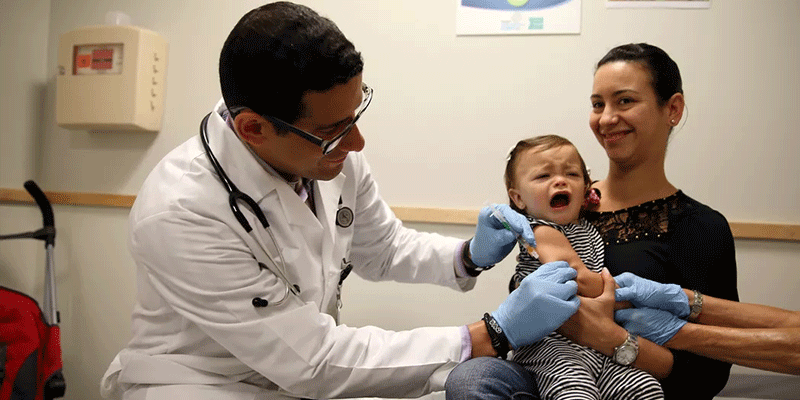
If your physician is in a group practice, it’s wise to meet the other doctors, since they may treat your child in your pediatrician’s absence. If your pediatrician practices alone, she probably will have an arrangement for coverage with other doctors in the community. Usually your pediatrician’s answering service will refer you to the doctor on call automatically, but it’s still a good idea to ask for the names and phone numbers of all the doctors who take these calls—just in case you have trouble getting through to your own physician.
If your child is seen by another doctor at night or on the weekend, you should check in by phone with your own pediatrician the next morning (or first thing Monday, after the weekend). Your doctor probably will already know what has taken place, but this phone call will give you a chance to bring her up to date and reassure you that everything is being handled as she would recommend.
How often will the pediatrician see your baby for checkups and immunizations?
The American Academy of Pediatrics recommends a checkup within forty-eight to seventy-two hours after your newborn is discharged from the hospital. This is especially important in breastfed babies to evaluate feeding, weight gain, and any yellow discoloration of skin (jaundice). Your pediatrician may adjust this feeding schedule, particularly in the first weeks of life, depending on how your newborn is doing.
During your baby’s first year of life, additional visits to your doctor’s office should take place at about two to four weeks of age, and then at two, four, six, nine, and twelve months of age as well. During your baby’s second year of life, she should be seen by your pediatrician at ages fifteen, eighteen, and twenty-four months, followed by annual visits from two to five years of age. If the doctor routinely schedules examinations more or less frequently than the Academy’s guidelines, discuss the differences with her. Additional appointments can be scheduled any time that you have a concern or if your child is ill.
What are the costs of care?
Your pediatrician should have a standard fee structure for hospital and office visits as well as after- hours visits and home visits (if she makes them). Find out if the charges for routine visits include immunizations. Be sure to familiarize yourself with the scope of your insurance coverage before you actually need services.
After these interviews, ask yourself if you are comfortable with the pediatrician’s philosophy, policies, and practice. You must feel that you can trust her and that your questions will be answered and your concerns handled compassionately. You also should feel comfortable with the staff and the general atmosphere of the office.
Once your baby arrives, the most important test of the pediatrician you have selected is how she cares for your child and responds to your concerns. If you are unhappy with any aspect of the treatment you and your child are receiving, you should talk to the pediatrician directly about the problem. If the response does not address your concerns, or if the problem simply cannot be resolved, seek out another physician.
Last Updated 11/12/2009
Source Caring for Your Baby and Young Child: Birth to Age 5 (Copyright © 2009 American Academy of Pediatrics)
The information contained on this Web site should not be used as a substitute for the medical care and advice of your pediatrician. There may be variations in treatment that your pediatrician may recommend based on individual facts and circumstances.
Finding a Pediatrician(Part2)
When will your baby‘s next exams take place?
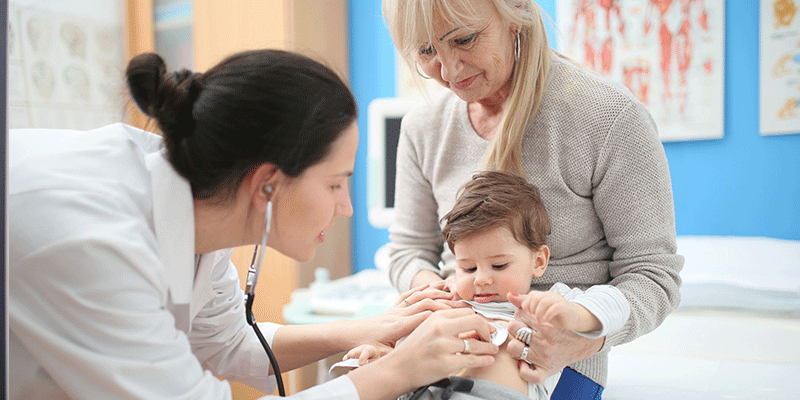
Pediatricians routinely examine newborns and talk with parents before the babies are discharged from the hospital. Many pediatricians will check the baby every day that the newborn is in the hospital, and then will conduct a thorough exam on the day of discharge. During these exams, the doctor can identify any problems that may have come up, while also giving parents a chance to ask questions that occurred to them during the hospital stay. Your pediatrician also will let you know when to schedule the first office visit for your baby and how to reach her if a medical problem develops before then.
All babies also should begin their immunizations before leaving the hospital. The first and most important “immunization” is starting to breastfeed your baby as soon as possible after the baby is born. This provides some early disease protection for your baby. The second recommended immunization is the first dose of the hepatitis B vaccine, which is given as a shot in the baby’s thigh. Your baby will receive the next series of vaccinations when he is six to eight weeks old.
When is the doctor available by phone? E-mail?
Some pediatricians have a specific call- in period each day when you can phone with questions, while others will return calls as they come in throughout the day. If members of the office staff routinely answer these calls, consider asking what their training is. Also ask your pediatrician for guidelines to help you determine which questions can be resolved with a phone call and which require an office visit. Some pediatricians prefer using e-mail to communicate. While you may have some concerns about discussing issues in this way, overall it can help foster your relationship with the doctor.
What hospital does the doctor prefer to use?
Ask the pediatrician where to go if your child becomes seriously ill or is injured. If the hospital is a teaching hospital with interns and residents, find out who would actually care for your child if he were admitted.
What happens if there is an after-hours (nighttime or weekend) concern or emergency?
Find out if the pediatrician takes her own emergency calls at night. If not, how are such calls handled? Also, ask if the pediatrician sees patients in the office after regular hours, or if you must take your child to an emergency department or urgent care center. When possible, it’s easier and more efficient to see the doctor in her office, because hospitals often require lengthy paperwork and extended waits before your child receives attention. However, serious medical problems usually are better handled at the hospital, where staff and medical equipment are always available.
Last Updated 11/12/2009
Source Caring for Your Baby and Young Child: Birth to Age 5 (Copyright © 2009 American Academy of Pediatrics)
The information contained on this Web site should not be used as a substitute for the medical care and advice of your pediatrician. There may be variations in treatment that your pediatrician may recommend based on individual facts and circumstances.


