These Hands Were Made for Talking(Part2)

Tips for Getting Started
While signing isn’t exactly a must for new parents, it isn’t exactly difficult to learn, either. Books and videos on baby signing abound, and it’s easy to see why so many parents swear by it, why child care centers include it in their infant and toddler classrooms, and why it has become so commonplace as an activity of daily learning. Here are some big-picture tips to get you started.
- Be patient. The baby-signing trend is based on the observation that babies taught simple signs at 6 or 7 months of age could begin using them to communicate at as early as 8 or 9 months. While there’s no reason you have to wait until your baby turns 6 months to get started, we encourage you to be realistic in your expectations for any true signs of success.
- Speak up.Be sure you don’t cut back on the amount of time you spend talking with your baby. As long as signing does not take the place of speaking, it won’t get in the way of your baby’s learning to talk with her words as well as her hands.
- Make it a habit. As with much of the learning your baby will be doing, repetition is key. For a better shot at success, make signing a daily habit, not a one-time lesson.
Sign it like you see it. Use signs to describe routine activities and common objects that make up your baby’s world.
- Don‘t be heavy handed.Don’t worry if your baby doesn’t get the signs quite right or doesn’t pick them up right away. Remember the goal here is to have fun communicating and lessen frustration, not add to it!
Share your signs. Be sure you share your signs with your baby’s other caregivers so that everyone can join in on (and understand) the conversation once your baby begins to sign. And if your baby’s child care provider is going to be the one teaching your baby sign language, be sure to ask for a quick tutorial so you will understand what your baby wants when she starts signing to you!
Last Updated 6/1/2010
Source Heading Home With Your Newborn, 2nd Edition (Copyright © 2010 American Academy of Pediatrics)
The information contained on this Web site should not be used as a substitute for the medical care and advice of your pediatrician. There may be variations in treatment that your pediatrician may recommend based on individual facts and circumstances.
These Hands Were Made for Talking(Part1)

While you may not have come across it just yet, baby sign language seems to have become a mainstay of mainstream parenting these days, at least among a significant handful of proactive parents and child care providers. As a trend that has been picking up momentum over the past 20 years, signing with babies is based on the simple observation that children can be taught to use their hands to “talk” long before their mouths can catch up. Sure, you’ve got a ways to go (ie, 8 or 9 months) before your newborn’s dexterity will let her fingers do the talking, but that doesn’t mean you can’t start learning some basic baby signs in the meantime. Here are a few reasons why we approve.
- Breaking the language barrier. From what we’ve seen in our own children and others (including in Laura’s educational child care center), infant sign language really does deliver on its promise of improved communication. This is a particularly appealing promise for new parents, given that there’s a well-recognized gap between what babies and toddlers want to say and what they are capable of saying. It only makes sense that young children who lack the verbal skills necessary to say what they want, feel, or need experience frustration—especially in the period between 8 or 9 months (when babies start to really know what it is they want) and 18 to 24 months (when they typically start to speak their mind). In other words, if basic sign language can help babies use their hands to better express themselves at as early as 8 or 9 months, it can mean the bridging of this otherwise months long communication gap.
- Fun for all. Signing with babies can also offer an opportunity for plenty of positive interaction, and anything that increases parent baby bonding is a good thing in our book. One creative idea we love: Start learning and adding signs to your musical repertoire of popular baby songs such as Twinkle Twinkle and Old MacDonald. Long story short, if you approach signing with your baby as an interactive and rewarding activity, then it’s guaranteed to be all for fun and fun for all. In fact, if it’s not fun, then you shouldn’t be doing it.
Signs of the Times
There’s nothing wrong with teaching young children to “recite” the ABCs of sign language, but the most useful signs—especially for infants and toddlers—are going to be those that convey more than just the letters of the alphabet. Signs you’ll want to start with are those that are the most meaningful or serve to describe the things your baby most often sees, does, or wants. The following is a list of favorites we’ve put together in order to give you a better feel for some common signs of the early childhood times. Start by learning these and you’re sure to get the conversation started: airplane, baby, ball, bird, blanket, book, cat, cup, cold, daddy, diaper, dog, done, drink, eat, go, good night, happy, help, hot, hurt, I love you, milk, mommy, more, nap, no, outside, please, sit, sleep, star, thank you, up, water.
Last Updated 6/1/2010
Source Heading Home With Your Newborn, 2nd Edition (Copyright © 2010 American Academy of Pediatrics)
The information contained on this Web site should not be used as a substitute for the medical care and advice of your pediatrician. There may be variations in treatment that your pediatrician may recommend based on individual facts and circumstances.
Gender-Diverse & Transgender Children(Part3)

By: Jason Rafferty MD, MPH, EdM, FAAP
Mental Health Support for Gender-Diverse Youth
Support or rejection ultimately has little influence on the gender identity of youth; however, it may strongly affect young person’s ability to openly share or discuss concerns about their identity and feelings. Gender-diverse identities and expressions are not mental disorders, but suppressing gender concerns can harm a child’s emotional health and development and possibly contribute to high rates of depression, anxiety, and other mental health issues.
A large proportion of teenage suicide attempts are linked to issues of gender and sexuality, particularly feelings of rejection. Many gay, lesbian, bisexual, and transgender individuals unfortunately attempt suicide during their lifetime. As a parent, even when you struggle to understand and may not see eye-to-eye, your most important role is to offer understanding, respect, and unconditional love for your child. This builds trust and puts you in a better position to help them through difficult times. Research has shown that if a transgender teen has even just one supportive person their life, it greatly reduce their risk of suicide.
Transgender and gender-diverse children – like all children – need support, love and care from family, school and society. When supported and loved as they grow and develop, kids mature into happy and healthy adults. Pediatricians stand ready to assist in the healthy development of transgender and gender-diverse children.
When to Talk with Your Child’s Pediatrician:
Talk to your child’s pediatrician early and often. It is recommended that pediatricians start conversations with children as young as preschool about their bodies, feelings, and relationships. Pediatricians can help them understand and appreciate difficult feelings and concerns.
It is important to recognize that cross-gender preferences and play is a normal part of exploring gender and relationships for children regardless of their future gender identity. Routine conversations about gender creates an environment of support and reassurance so that children feel safe bringing up questions and concerns. It is also good practice for continuing these discussions at home. The best approach, for parents or pediatricians, is to nonjudgmentally ask questions that allow the child to talk about their experience and feelings before applying any labels or assumptions.
If your child is struggling with symptoms of depression, anxiety, isolation, or other emotional concerns, then he or she may need to see a mental health professional who can offer additional support. If your child mentions any suicidal thinking, then it should be brought to the attention of your pediatrician or mental health professional right away.
For more information or help finding a support group for yourself or your child, please talk with your pediatrician.
About Dr. Rafferty:
RaffertyJason Rafferty, MD, MPH, EdM, FAAP, is a “Triple Board” residency graduate who is pediatrician and child psychiatrist at Thundermist Health Centers, a Patient-Centered Medical Home in Rhode Island. He specializes in adolescent substance use disorders and gender and sexual development, and also practices in related specialty clinics at Hasbro Children’s Hospital and Emma Pendleton Bradley Hospital. Dr. Rafferty is an advocate in his local community and on a national level through work with the American Academy of Pediatrics on issues including the emotional health of young men, access to care for LGBTQ youth, and prevention of childhood homelessness.
Last Updated 9/17/2018
Source American Academy of Pediatrics (Copyright © 2018)
The information contained on this Web site should not be used as a substitute for the medical care and advice of your pediatrician. There may be variations in treatment that your pediatrician may recommend based on individual facts and circumstances.
Gender-Diverse & Transgender Children(Part2)

By: Jason Rafferty MD, MPH, EdM, FAAP
What parents can do:
- When your child discloses his or her identity to you, respond in an affirming, supportive way. Understand that although gender identity is not able to be changed, it often is revealed over time as people discover more about themselves.
- Accept and love your child as they are. Try to understand what they are feeling and experiencing. Even if there are disagreements, they will need your support and validation to develop into healthy teens and adults.
- Stand up for your child when he or she is mistreated. Do not minimize the social pressure or bullying your child may be facing. See How You Can Help Your Child Avoid & Address Bullying.
- Make it clear that slurs or jokes based on gender, gender identity, or sexual orientation are not tolerated. Express your disapproval of these types of jokes or slurs when you encounter them in the community or media.
- Be on the look out for danger signs that may indicate a need for mental health support such as anxiety, insecurity, depression, low self-esteem, and any emotional problems in your child and others who may not have a source of support otherwise.
- Connect your child with LGBTQ organizations, resources, and events. It is important for them to know they are not alone.
- Celebrate diversity in all forms. Provide access to a variety of books, movies, and materials—including those that positively represent gender diverse individuals. Point out LGBTQ celebrities and role models who stand up for the LGBTQ community, and people in general who demonstrate bravery in the face of social stigma.
- Support your child’s self-expression. Engage in conversations with them around their choices of clothing, jewelry, hairstyle, friends, and room decorations.
- Reach out for education, resources, and support if you feel the need to deepen your own understanding of LGBTQ youth experiences. See Support Resources for Families of Gender Diverse Youth.
Gender Affirmative Care
Gender affirmative care is based on the belief that all children benefit from love and support. The goal of gender affirmative care is not treatment; it is to listen to a child and, with the help of parents and families, build understanding. Sometimes, disagreements can cause frustration. But, the conversation can remain respectful. Through strong, nonjudgmental partnerships with patients and their families, pediatricians create a safe environment in which complicated emotions, questions, and concerns related to gender can be appreciated and explored. Gender affirmative care is most effective in a collaborative system with access to medical, mental health, and social services, including specific resources for parents and families.
Last Updated 9/17/2018
Source American Academy of Pediatrics (Copyright © 2018)
The information contained on this Web site should not be used as a substitute for the medical care and advice of your pediatrician. There may be variations in treatment that your pediatrician may recommend based on individual facts and circumstances.
Gender-Diverse & Transgender Children(Part1)

By: Jason Rafferty MD, MPH, EdM, FAAP
Some children have a gender identity that is different from their gender assigned at birth, and many have interests and hobbies that may align with the other gender.
Some children, as the American Academy of Pediatrics explains, do not identify with either gender. They may feel like they are somewhere in between or have no gender. It is natural for parents to ask if it is “just a phase.” But, there is no easy answer.
Definitions
- Gender diverse:An umbrella term to describe an ever-evolving array of labels people may apply when their gender identity, expression, or even perception does not conform to the norms and stereotypes others expect.
- Gender identity:One’s internal sense of who one is, based on an interaction of biological traits, developmental influences, and environmental conditions. This may be male, female, somewhere in between, a combination of both or neither. Self-recognition of gender identity develops over time, much the same way a child’s physical body does.
- Sexual orientation: One’s sexual identity as it relates to who someone falls in love with or is attracted to. A person who is transgender still identifies as straight, gay, bisexual or something else. Like gender identity, an individual’s physical and emotional attraction to a member of the same or the opposite sex cannot be changed and is very difficult to predict early in childhood.
- Transgender: Usually used when gender diverse traits remain persistent, consistent, and insistent over time.
Accepting Your Child’s Gender-Diverse Identity
Research suggests that gender is something we are born with; it can’t be changed by any interventions. It is critically important that children feel loved and accepted for who they are. When disclosing their gender diverse identity, some kids might expect immediate acceptance and understanding. However, there is evidence that family members go through their own process of becoming more comfortable and understanding of a child’s gender identity, thoughts, and feelings. One model suggests the process resembles the stages of grief: shock, denial, anger, bargaining, and acceptance.
Just as gender diverse children do best when their feelings are explored and validated, some parents may need their own emotional supports. They may also have many questions along their child’s journey.
Last Updated 9/17/2018
Source American Academy of Pediatrics (Copyright © 2018)
The information contained on this Web site should not be used as a substitute for the medical care and advice of your pediatrician. There may be variations in treatment that your pediatrician may recommend based on individual facts and circumstances.
Friend or Foe?(Part2)

Communicate
While it’s important to talk about what makes a good friend, it’s also good to identify which behaviors are not welcome. Do not focus on specific children and why they are “bad” and others are “good.” Instead, explain the values that you live by in your home, such as positive language, respect for others, sharing, and fair play. It could be as simple as saying, “In our house, we have certain rules that we follow. When someone comes to visit and refuses to follow those rules, he is not showing respect, and that makes everyone sad.” You can balance that by saying, “We have so much more fun when we spend time with friends who do follow the rules.”
Facilitate
To encourage healthy relationships, create opportunities for your child to play with kids who you think have a positive influence on her. Set up play dates at your house where you can observe the children playing together, and then encourage repeat dates with the kids that you feel are good role models for your child.
“You ought to play an active role in choosing your children’s friends. Who better to do this than the parents?” notes Schor. “Know your children’s friends, observe what’s going on, and see if they demonstrate the values you desire.”
If possible, choose to live in a neighborhood with high-quality schools. An Ohio State University study found a direct correlation between school quality and the types of kids that adolescents choose as friends. Kids in better schools tend to choose friends with more “prosocial” characteristics, such as good grades, good attendance, and involvement in extracurricular activities.
Relate
Finally, focus on your relationship with your child. The Ohio State study found that teens are more likely to report positive friendships when they have a good relationship with their parents. (A “good relationship” was defined as one in which the child and parents get involved in activities together, talk frequently, and express affection for one another.)
The more involved you are in your child’s life, the more opportunity you have to help your child develop friendships that can stand the test of time.
The Bully Factor
No matter how many good friends your child has, there may still be times when he finds himself the target of a bully. Talk with him about bullying and share these five tips.
- Walk away: Bullies are generally looking for a reaction from those they target. When they don’t get one, they’re likely to move on.
- Speak up: If a bully keeps on bullying, stand tall, look him square in the eye, and say in a clear, loud voice, “I don’t like what you’re doing. Please stop it now.”
- Ask for help: Talk to a trusted adult about the problem. A teacher or parent can help make the situation better.
- Find good friends: A bully is only one person. Concentrate on making strong friendships with people who make you feel good.
- Keep having fun: Don’t let a bully stop you from being part of the activities you enjoy.
This article was featured in Healthy Children Magazine. To view the full issue, click here.
Last Updated 1/25/2016
Source Healthy Children Magazine, Back to School 2007
The information contained on this Web site should not be used as a substitute for the medical care and advice of your pediatrician. There may be variations in treatment that your pediatrician may recommend based on individual facts and circumstances.
Friend or Foe?(Part1)
Help your child navigate his social world by equipping him with the skills he needs to choose friends wisely.
I came to the realization this past year that the days of handpicking my son’s friends are officially over. As a kindergartner, Christian spent the better part of each weekday with 16 other kids, 14 of whom I had never met.
Being a high-energy kid himself, Christian was drawn to the other high-energy kids in class, some of whom didn’t always choose the best way to express that energy. After watching these little guys in action, I found myself wondering what I could do to help Christian choose some other friends that would bring out the best in him, rather than the worst. By reading up on the subject, discussing it with my pediatrician, and talking with parents who’ve already navigated these waters before, I’ve discovered there are some ways parents can help encourage healthier relationships in their children’s lives.
Educate
The best advice I received was to approach teaching Christian how to recognize a good friend, just as I would teach him about bike safety or stranger danger or any other important subject dealing with his health, safety, and well being. At 6, Christian is just beginning to learn how to build a relationship. The more I can guide him in this process, the better off he’ll be. Talk with your child often about how friends should treat one another. Explain that good friends respect others, follow the rules, and help those in need. The more children know about what makes a good friend, the easier it will be for them to recognize one when they meet that child — and to be one himself.
Emulate
As you strive to teach your child about healthy friendships, don’t forget to model them in your own life. Demonstrating good relationships skills with your spouse or partner, and taking time to nurture close friendships with others, is as important as simply talking about these skills if not more so.
“Children learn how to relate to people outside of their family from relationships within the family,” explains Ed Schor, M.D., FAAP, and editor of Caring for Your School-Age Child, Ages 5 to 12. “One would hope that the parents would be friends and would get along well, compromise, etc. Children learn from those exchanges.”
Last Updated 1/25/2016
Source Healthy Children Magazine, Back to School 2007
The information contained on this Web site should not be used as a substitute for the medical care and advice of your pediatrician. There may be variations in treatment that your pediatrician may recommend based on individual facts and circumstances.
Are You Ready to Be a Babysitter?(Part2)
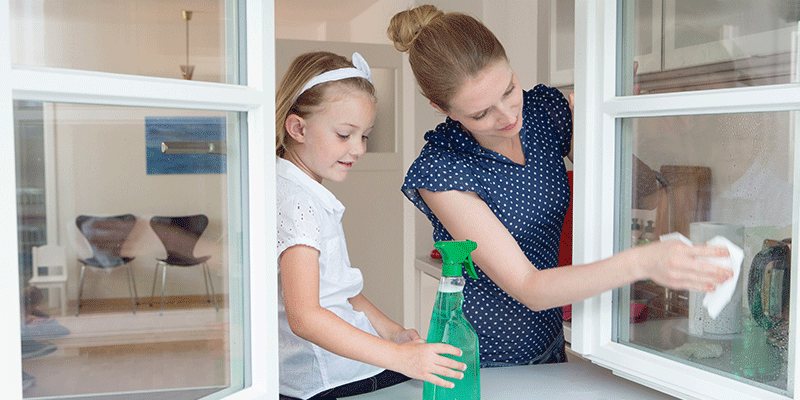
Be Prepared to Answer Questions
Responsible parents or guardians will interview sitters before hiring them. They want to feel confident that you can do the job.
Expect to be asked the following types of questions:
- Experience:How much babysitting have you done? Have you cared for other children the same age as theirs? Do you understand the importance of constantly supervising children?
- Training:What training do you have in babysitting and first aid? Do you know what to do in an emergency?
- References: Can you provide names and phone numbers of families who have hired you before? Are you responsible and trustworthy?
- Availability: When can you sit? How late can you sit? What ages of children can you sit for?
- Pay:Parents or guardians may ask you what you charge. You should be prepared to tell them a rate per hour that is similar to what other sitters are being paid. You need to determine what sitters are getting paid per hour in your neighborhood. Ask friends who sit and adults who hire sitters what a typical rate is. If the parents or guardians do not ask what you charge, you may politely ask them what they will be paying per hour. It is OK for you to ask how much they will pay you.
Be a Good Guest!
Remember that you are an invited guest in the house.
The following rules are good to remember when sitting:
- Only eat food if you have been given permission to do so. If you are welcome to eat, make sure to clean up and wash any dishes when you are done.
- Avoid “exploring” another person’s home, such as opening closets or drawers or looking through personal belongings.
- Avoid having friends visit you while you are sitting. This way your attention can always be on the child or children.
- Avoid personal calls or texts. The phone should be kept available for incoming calls from the child’s parents or guardians.
Last Updated 6/18/2015
Source BLAST! Babysitters Student Manual: Babysitter Lessons and Safety Training, 3rd Edition (Copyright © 2015 Jones & Bartlett Learning, LLC, an Ascend Learning Company)
The information contained on this Web site should not be used as a substitute for the medical care and advice of your pediatrician. There may be variations in treatment that your pediatrician may recommend based on individual facts and circumstances.
Are You Ready to Be a Babysitter?(Part1)
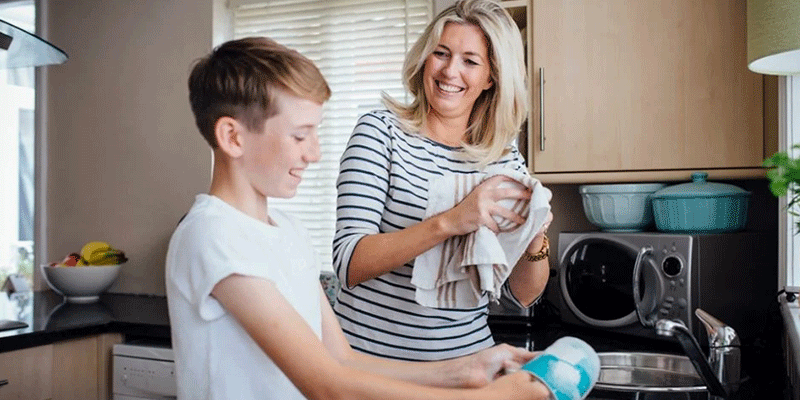
Have your parents or guardians help you decide if you are ready to take on this important job. With their help, you should think about what you will and won’t be able to handle as a babysitter. For example, you may decide to only watch children ages 3 and up or to only work on weekends.
- Are you mature enough to handle this job?A person must be at least a young adult (12–14 years old) to take on the responsibility of watching young children, and mature enough to handle common emergencies.
- How many children can you handle at one time? A new sitter should start with one child or even start as a mother’s helper. A more experienced sitter may handle several children of similar age. It takes a very experienced sitter to handle a mixed age group of children or more than three children at once. Watching too many children can challenge even a very experienced older teen sitter.
- Can you handle babies and young children? Younger teens should not sit for children younger than 6 months. Toddlers can also be challenging. Teens should only accept sitting for one child at a time if the child is three or younger.
- Have you been trained in how to care for small children? Have you received first aid and cardiopulmonary resuscitation (CPR) training from a nationally recognized organization? Discuss with parents or guardians the time frame during which they want you to watch their children, and whether it is proper. Leaving a young child in your care for a few hours is acceptable, but all day or a very late night may not be.
Sitter Qualities
Successful sitters have these qualities. Are you . . . ?
- Mature
- Trustworthy
- Patient
- Responsible
- Safety-conscious
- Fun-loving
- Punctual
- And do you like children?
Last Updated 6/18/2015
Source BLAST! Babysitters Student Manual: Babysitter Lessons and Safety Training, 3rd Edition (Copyright © 2015 Jones & Bartlett Learning, LLC, an Ascend Learning Company)
The information contained on this Web site should not be used as a substitute for the medical care and advice of your pediatrician. There may be variations in treatment that your pediatrician may recommend based on individual facts and circumstances.
Welcome To The World of Parenting!(Part3)

Information For Moms
Becoming a parent brings big changes to your life—more than you might have imagined!
You May Feel Tired Much of The Time
Your body is recovering from pregnancy and childbirth. At times, you may wonder if you will be able to make it through the first month. This is common and normal. Let family and friends help out with meals, shopping, cleaning, and if you have other children, taking care of them. Don’t feel that you need to entertain visitors as well!
You May Have Wild Mood Swings
As your body begins to adjust, you may go from great highs to hopeless lows. This is common during the first weeks after giving birth, but please let people know if you feel down or overwhelmed.
Your feelings deserve attention and support from your family and friends, and from your doctors. If you think you need help, ask for it. Taking care of your emotional and physical health also helps your baby.
You May Feel Lonely
Some of your links to family and friends will get stronger, while others may get weaker. Some people will understand what you are going through, and others won’t. Your baby needs and will demand much of your attention, time, and energy. If you are a mom who also works outside of the home, chances are you are not seeing friends from work at this time. Try reaching out to family and friends, or find other new mothers who live near you.
Last Updated 6/19/2017
Source Connected Kids: Safe, Strong, Secure (Copyright © 2006 American Academy of Pediatrics)
The information contained on this Web site should not be used as a substitute for the medical care and advice of your pediatrician. There may be variations in treatment that your pediatrician may recommend based on individual facts and circumstances.
Welcome To The World of Parenting!(Part2)

When Your Baby Cries A LOT
Sometimes, we just don’t know why babies are crying! So, what can you do? Think about what it was like when your baby was in the womb, and try to create a similar experience.
- Calmly hold your baby close to your shoulder or chest—inside the womb, it was warm and close.
- Swaddle (wrap) your baby in a blanket— toward the end of pregnancy, it was very crowded.
Quietly sing or talk to your baby, softly play calm music—voices heard through the womb were very comforting.
- Gently rock your baby or go for a quiet walk— before birth, your baby was used to quietly floating.
There will be a few times when babies will continue to cry until either sleep finally arrives or they become quiet yet alert. Comforting babies when they cry does not spoil them. In fact, many babies learn how to calm themselves just by knowing that someone will calm them.
Sometimes, babies will continue to fuss after parents have tried everything! They are crying because they have had all the excitement that they can handle for now. This is when it’s best to quietly hold your baby, or put your baby in a safe place, like the crib, and wait until all is calm.
Crying Babies Upset Parents
All parents get upset when their baby cries. With all this crying, try to stay patient. Your baby can sense when you are upset or tense.
After trying all the ways that usually calm your baby, it’s ok to let your baby cry. It’s ok to place your baby, face up, in the crib to calm down. It’s ok to let your baby cry sometimes and give yourself time to calm down. Do something that you enjoy and find calming—have a cup of tea or coffee, listen to music, call a friend or spouse, read, or meditate. These feelings of stress are natural and will pass.
If your baby’s crying is getting to be too much— and it does get to this point for many parents— reach out for help. Talk with a friend or relative who has been through this, or call your pediatrician.
Last Updated 6/19/2017
Source Connected Kids: Safe, Strong, Secure (Copyright © 2006 American Academy of Pediatrics)
The information contained on this Web site should not be used as a substitute for the medical care and advice of your pediatrician. There may be variations in treatment that your pediatrician may recommend based on individual facts and circumstances.
Welcome To The World of Parenting!(Part1)

Newborns Are Delightful—and Tiring
- Newborns may sleep only a few hours at a time.
- A newborn’s ability to hear, see, smell, and feel grows every day.
- Parents can help crying babies calm down by making them feel warm, close, and comfortable—just like it was in the womb.
- Since all parents can get upset from crying babies, it’s important to know when and how to ask for help.
- Friends and family can share the delight and the work of caring for newborns.
Your baby is finally here. Congratulations!
Baby‘s Sleep and Mother‘s Rest
Newborns usually sleep 16 to 17 hours a day, but they may sleep for only a couple of hours at a time.
- Many babies wake up every 2 to 4 hours, day or night.
- New mothers need plenty of rest after childbirth to get their strength and energy back.
- Mother and baby can take a nap at the same time.
- As the new father supports mom during her recovery, he can enjoy getting to know this new addition to the family!
Information For Dads
It‘s A New Life For You
Your role as a father will bring about some big changes in your life. The physical, emotional, and financial demands of being a dad can cause stress. You also may feel a little left out during the first few weeks, since much of the attention is on your new baby and the mom. By becoming actively involved with your new baby, feelings of stress and being left out will decrease. You will begin to:
- Enjoy the pleasure of being a dad.
- Strengthen your relationship with your baby’s mother.
- Contribute to the well-being of your baby.
Ways For You To Be Involved
Your baby already Knows Who You Are From Hearing Your Voice before birth.
- As you hold your baby in your arms, enjoy the feeling of your baby cuddling up to you.
Have fun as you spend time talking to your new baby.
- If you have older children, they will need your support now While their mother is tired and focused on the new baby.
Last Updated 6/19/2017
Source Connected Kids: Safe, Strong, Secure (Copyright © 2006 American Academy of Pediatrics)
The information contained on this Web site should not be used as a substitute for the medical care and advice of your pediatrician. There may be variations in treatment that your pediatrician may recommend based on individual facts and circumstances.


