Hearing and Making Sounds
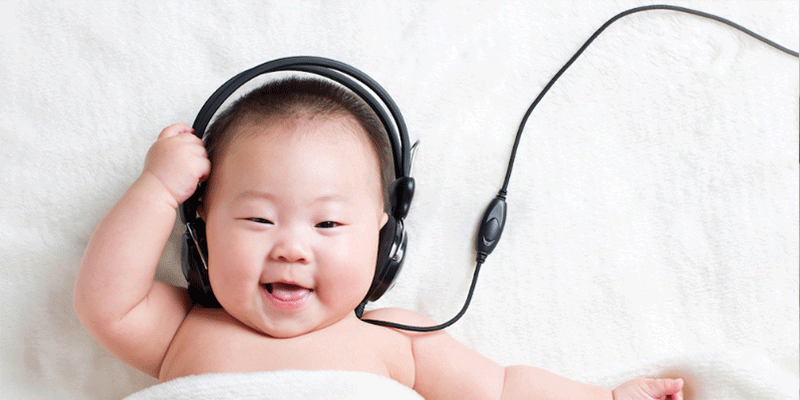
Just as your baby naturally prefers the human face over any other visual pattern, he also prefers the human voice to other sounds. His mother’s voice is his absolute favorite, because he associates it with warmth, food, and comfort. Babies like the high-pitched voices of women in general—a fact that most adults seem to understand intuitively and respond to accordingly, without even realizing it.
Just listen to yourself the next time you talk to your baby. You’ll probably notice that you raise the pitch of your voice, slow your rate of speech, exaggerate certain syllables, and widen your eyes and mouth more than normal. This dramatic approach is guaranteed to capture almost any baby’s attention—and usually make him smile.
By listening to you and others talk to him, your baby will discover the importance of speech long before he understands or repeats any specific words himself. By one month, he’ll be able to identify you by voice, even if you’re in another room, and as you talk to him, he’ll be reassured, comforted, and entertained. When he smiles and gurgles back at you, he’ll see the delight on your face and realize that talk is a two-way process. These first conversations will teach him many of the subtle rules of communication, such as turn-taking, vocal tone, imitation and pacing, and speed of verbal interaction.
At about two months, you may begin to hear your infant cooing and repeating some vowel sounds (ah-ah-ah, ooh-ooh-ooh). Go ahead and imitate his cooing, while also adding simple words and phrases to your “conversations” over the first four to six months. Along the way, it’s easy to fall into a habit of baby talk, but you should try to mix your conversations with adult language and eventually phase out the baby talk. During early infancy, you also should read to your baby, even though you may not think he comprehends what you’re reading.
By four months, your infant will babble routinely, often amusing himself for long periods by producing strange new sounds (muh-muh, bah-bah). He’ll also be more sensitive to your tone of voice and the emphasis you put on certain words or phrases. As you move through each day together, he’ll learn from your voice when you’re going to feed him, change his diapers, go out for a walk, or put him down to sleep. The way you talk will tell him a great deal about your mood and personality, and the way he responds will tell you a lot about him. If you speak in an upbeat or comforting way, he may smile or coo. Yell or talk angrily, and he’ll probably startle or cry.
Last Updated 8/1/2009
Source Caring for Your Baby and Young Child: Birth to Age 5 (Copyright © 2009 American Academy of Pediatrics)
The information contained on this Web site should not be used as a substitute for the medical care and advice of your pediatrician. There may be variations in treatment that your pediatrician may recommend based on individual facts and circumstances.
5 Secrets to a Smarter Baby: School Readiness Can Start Now

As parents, we all want happy, healthy babies. Not only that, we want them to be smart.
Growing research in early brain development shows there are some basic things you can do right now to start raising a child who is curious about the world and ready to learn. These early education activities we’re talking about are simple―and screen free!
The American Academy of Pediatrics (AAP) recommends parents talk with their pediatrician about how to create a supportive, stimulating environment for their baby―starting at birth―that promotes healthy brain development and builds the social and emotional skills necessary for school readiness.
Use the “5 Rs of Early Education” in your daily activities right from birth:
- READ together as a daily, fun, family activity.
The AAP recommends this to build language, literacy, and social-emotional skills that last a lifetime. It’s never too young to start reading with your baby. Reading to your child, research suggests, boosts activity in parts of the brain that form the building blocks of language, literacy skills and imagination.
- RHYME, play, talk, sing, and cuddle together often throughout the day.
The AAP encourages parents to use play to help meet their child’s health and developmental milestones, beginning from birth. Need ideas? Here are some great ways to do this based on your child’s age. Talk with them about things they see around them, at home, at the store, or while traveling. Enroll in quality early education programs and activities, take time to visit a children’s museum or local library, and enjoy story time.
- Build ROUTINES for meals, play, and sleep.
This helps children know what to expect and what is expected of them. Brush, Book, Bed, for example, is a great way to structure your child’s nighttime routine. Eating at least three family meals together each week is associated with healthier kids, according to a study published in Pediatrics.
- REWARD everyday successes (especially for effort toward goals like helping others).
Catch your child doing something good and praise them for it! Praise from those closest to a child is a very powerful reward. Talk with your pediatrician about how to shape and manage your child’s behavior, model the good behavior, and reinforce it by using positive discipline techniques that build a child’s self-regulation skills. Your child’s social, emotional, and behavior skills are equally critical to school success.
- Develop RELATIONSHIPS that are nurturing, respectful, and consistent.
A strong parent-child relationship helps protect against the lasting effects of adverse childhood experiences (ACEs), traumatic situations that can lower a child’s chance of doing well in school. As you strive to teach your child about healthy relationships and choosing friends wisely, don’t forget to model them in your own life. Demonstrating good relationships skills with your spouse or partner, and taking time to nurture close friendships with others, is as important as simply talking about these skills–if not more so.
You are your baby’s best teacher.
A certain toy is not necessary for your child to reach his or her next developmental milestone. There is no one app that will teach your child to read. While it’s easy to fall victim to the marketing, YOU are what your child needs to start on the path toward school readiness with daily reading, rhyming, routines, rewards, and relationship building.
Additional Information:
- Is Your Preschooler Ready for Kindergarten?
- The Power of Play – How Fun and Games Help Children Thrive
- Toy Buying Tips for Babies & Young Children: AAP Report Explained
- Toy Buying Tips for Children with Special Needs
- Healthy Digital Media Use Habits for Babies, Toddlers & Preschoolers
- School Readiness (AAP Technical Report)
Last Updated 7/23/2019
Source American Academy of Pediatrics (Copyright © 2019)
The information contained on this Web site should not be used as a substitute for the medical care and advice of your pediatrician. There may be variations in treatment that your pediatrician may recommend based on individual facts and circumstances.
How Your Newborn Behaves

Lying in your arms or in the crib beside you, your newborn makes a tight little bundle. Just as he did in the womb, he’ll keep his arms and legs bent up close to his body and his fingers tightly clenched, although you should be able to straighten them gently with your hands. His feet will naturally curve inward. It may take several weeks for his body to unfold from this preferred fetal position.
You’ll have to wait even longer for him to make the cooing or babbling sounds we generally think of as “baby talk.” However, from the beginning he’ll be very noisy. Besides crying when something is wrong, he’ll have a wide variety of grunts, squeaks, sighs, sneezes, and hiccups. (You may even remember the hiccups from pregnancy!) Most of these sounds, just like his sudden movements, are reactions to disturbances around him; a shrill sound or a strong odor may be all it takes for him to jump or cry.
These reactions, as well as more subtle ones, are signs of how well your baby’s senses are functioning at birth. After all those months in the womb, he’ll quickly recognize his mother’s voice (and possibly his father’s, as well). If you play soothing music, he may become quiet as he listens or he’ll move gently in time with it.
By using the senses of smell and taste, your newborn is able to distinguish breast-milk from any other liquid. Born with a sweet tooth, he’ll prefer sugar water to plain water and will wrinkle his nose at sour or bitter scents and tastes.
Your baby’s vision will be best within an 8 to 12 inch (20.3 to 30.5 cm) range, which means he can see your face perfectly as you hold and feed him. But when you are farther away, his eyes may wander, giving him a cross-eyed appearance. During the first couple of months of his life, don’t worry about this. As his eye muscles mature and his vision improves, both eyes will remain focused on the same thing at the same time. This usually occurs between two and three months of age. If it does not, bring it to the attention of your baby’s pediatrician.
While your infant will be able to distinguish light from dark at birth, he will not yet see the full range of colors. While young infants who are shown a pattern of black and white or sharply contrasting colors may study them with interest, they are not likely to respond at all when shown a picture with lots of closely related colors.
Perhaps the newborn’s most important sense is touch. After months of being bathed in warm fluid in the womb, your baby will now be exposed to all sorts of new sensations – some harsh, some wonderfully comforting. While he may cringe at a sudden gust of cold air, he’ll love the feel of a soft blanket and the warmth of your arms around him. Holding your baby will give him as much pleasure as it does you. It will give him a sense of security and comfort, and it will tell him he is loved. Research shows that close emotional bonding actually will promote his growth and development.
Last Updated 8/1/2009
Source Caring for Your Baby and Young Child: Birth to Age 5 (Copyright © 2009 American Academy of Pediatrics)
The information contained on this Web site should not be used as a substitute for the medical care and advice of your pediatrician. There may be variations in treatment that your pediatrician may recommend based on individual facts and circumstances.
How Active is Your Baby?

You might not think of the first few weeks of your baby’s life as being a time when she’s very physically active (although you will probably feel that you and your spouse are being run ragged in caring for her!). True, she’s certainly not able to run through the park or throw a ball to another child at this age, but there are still many opportunities for her to begin to develop motor skills that she can build on for a very active childhood and adult life.
For example, have you noticed that your infant has started kicking during the second month of life? Even though this movement is mostly reflective at this point, before long she’ll be able to flex and straighten her legs whenever she wants to. By the time she’s 3 months old, your infant may be able to start kicking herself over from her front to her back (later, by 6 months of age, she’ll start rolling from back to front). At about 3 to 4 months, when you hold her upright with her feet resting on the floor, she’ll push down and straighten her legs as though she were standing on her own, and she’ll probably discover that she can bend her knees and bounce.
Beginning at about 5 months of age, your infant will be able to raise her head while lying on her stomach and then push up on her arms to lift her chest off the floor or bed. Rocking on her tummy, she may kick her legs and move her arms as though she were swimming. Before long, your infant will be rolling over at will. At about 8 months, she’ll be able to sit without support and catch herself with her arms and hands if she starts to topple over. She’ll also pick up and move objects from one hand to the other.
In the last few months before her first birthday, your infant may seem like she’s in constant motion. She’ll grab her feet and try putting them in her mouth. She may fidget and kick throughout every diaper change. Between 7 and 10 months of age, she’ll begin experimenting with and then mastering the art of crawling. Next, right around the time of her first birthday, she’ll take her first steps (it may happen a little earlier or a little later from one child to the next, all within a normal range).
As your baby develops, take advantage of every opportunity to help stimulate her mind and body. From the earliest weeks of life, walk around the house while holding and interacting with your baby and say aloud the names of the objects that the 2 of you encounter. Before long, she’ll want to reach out, touch them, and pick them up. Also, talk to your baby whenever you’re with her. Whether you’re changing her diaper, bathing her, or driving with her in the car, keep the conversation going. Babies love the sound of their parents’ voices. See how she responds and how she communicates with sounds by moving her arms and legs.
Here are some other activities that you and your baby can do together.
- Read out loud to your baby.
- Play some music and gently dance with her in your arms.
- Sit and play with her on the floor. She will love interacting with you.
- Try teaching her peekaboo and patty-cake (they can be stimulating for your baby and will help her develop motor skills).
- Hug her frequently and provide her with loving physical contact.
- Hold your baby as often as you can.
- Put her in the stroller and take her for a walk. It’s a good way to expose your child to the world around her, and it’s great exercise for you.
As your baby continues to grow and develop, her level of activity will increase. Make sure she has safe and soft toys to play with. They should be small enough so she can pick them up, but large enough so she can’t put them in her mouth.
Last Updated 1/1/2006
Source A Parent’s Guide to Childhood Obesity: A Road Map to Health (Copyright © 2006 American Academy of Pediatrics)
The information contained on this Web site should not be used as a substitute for the medical care and advice of your pediatrician. There may be variations in treatment that your pediatrician may recommend based on individual facts and circumstances.
Baby’s First Days: Bowel Movements & Urination(Part2)
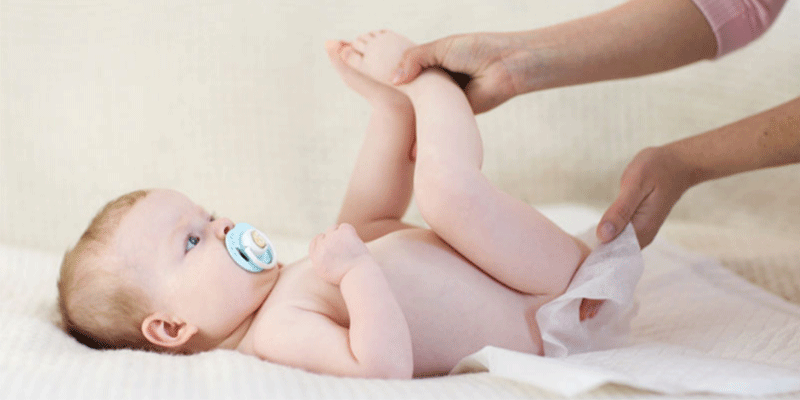
Here are some other important points to keep in mind about bowel movements:
- Occasional variations in color and consistency of the stools are normal. For example, if the digestive process slows down because the baby has had a particularly large amount of cereal that day or foods requiring more effort to digest, the stools may become green; or if the baby is given supplemental iron, the stools may turn dark brown. If there is a minor irritation of the anus, streaks of blood may appear on the outside of the stools. However, if there are large amounts of blood, mucus, or water in the stool, call your pediatrician immediately. These symptoms may indicate an intestinal condition that warrants attention from your doctor.
- Because an infant’s stools are normally soft and a little runny, it’s not always easy to tell when a young baby has mild diarrhea. The telltale signs are a sudden increase in frequency (to more than one bowel movement per feeding) and unusually high liquid content in the stool. Diarrhea may be a sign of intestinal infection, or it may be caused by a change in the baby’s diet. If the baby is breastfeeding, she can even develop diarrhea because of a change in the mother’s diet.
- The main concern with diarrhea is the possibility that dehydration can develop. If fever is also present and your infant is less than two months old, call your pediatrician. If your baby is over two months and the fever lasts more than a day, check her urine output and rectal temperature; then report your findings to your doctor so he can determine what needs to be done. Make sure your baby continues to feed frequently. As much as anything else, if she simply looks sick, let your doctor know.
The frequency of bowel movements varies widely from one baby to another. Many pass a stool soon after each feeding. This is a result of the gastrocolic reflex, which causes the digestive system to become active whenever the stomach is filled with food.
By three to six weeks of age, some breastfed babies have only one bowel movement a week and still are normal. This happens because breastmilk leaves very little solid waste to be eliminated from the child’s digestive system. Thus, infrequent stools are not a sign of constipation and should not be considered a problem as long as the stools are soft (no firmer than peanut butter), and your infant is otherwise normal, gaining weight steadily, and nursing regularly.
If your baby is formula-fed, she should have at least one bowel movement a day. If she has fewer than this and appears to be straining because of hard stools, she may be constipated. Check with your pediatrician for advice on how to handle this problem.
Last Updated 8/1/2009
Source Caring for Your Baby and Young Child: Birth to Age 5 (Copyright © 2009 American Academy of Pediatrics)
The information contained on this Web site should not be used as a substitute for the medical care and advice of your pediatrician. There may be variations in treatment that your pediatrician may recommend based on individual facts and circumstances.
Baby’s First Days: Bowel Movements & Urination(Part1)
Urination
Your baby may urinate as often as every one to three hours or as infrequently as four to six times a day. If she’s ill or feverish, or when the weather is extremely hot, her usual output of urine may drop by half and still be normal. Urination should never be painful. If you notice any signs of distress while your infant is urinating, notify your pediatrician, as this could be a sign of infection or some other problem in the urinary tract.
In a healthy child, urine is light to dark yellow in color. (The darker the color, the more concentrated the urine; the urine will be more concentrated when your child is not drinking a lot of liquid.) Sometimes you’ll see a pink stain on the diaper that you may mistake for blood. In fact, this stain is usually a sign of highly concentrated urine, which has a pinkish color. As long as the baby is wetting at least four diapers a day, there probably is no cause for concern, but if the pinkish staining persists, consult your pediatrician.
The presence of actual blood in the urine or a bloody spot on the diaper is never normal, and your pediatrician should be notified. It may be due to nothing more serious than a small sore caused by diaper rash, but it also could be a sign of a more serious problem. If this bleeding is accompanied by other symptoms, such as abdominal pain or bleeding in other areas, seek medical attention for your baby immediately.
Bowel Movements
Beginning with the first day of life and lasting for a few days, your baby will have her first bowel movements, which are often referred to as meconium. This thick black or dark-green substance filled her intestines before birth, and once the meconium is passed, the stools will turn yellow-green.
If your baby is breastfed, her stools soon should resemble light mustard with seedlike particles. Until she starts to eat solid foods, the consistency of the stools may range from very soft to loose and runny. If she’s formula-fed, her stools usually will be tan or yellow in color. They will be firmer than in a baby who is breastfed, but no firmer than peanut butter.
Whether your baby is breastfed or bottle-fed, hard or very dry stools may be a sign that she is not getting enough fluid or that she is losing too much fluid due to illness, fever, or heat. Once she has started solids, hard stools might indicate that she’s eating too many constipating foods, such as cereal or cow’s milk, before her system can handle them. (Whole cow’s milk is not recommended for babies under twelve months.)
Last Updated 8/1/2009
Source Caring for Your Baby and Young Child: Birth to Age 5 (Copyright © 2009 American Academy of Pediatrics)
The information contained on this Web site should not be used as a substitute for the medical care and advice of your pediatrician. There may be variations in treatment that your pediatrician may recommend based on individual facts and circumstances.
First Month: Physical Appearance and Growth(Part2)

To your dismay, you may discover that the fine hair that covered your child’s head when she was born soon begins falling out. If she rubs the back of her head on her sleep surface, she may develop a temporary bald spot there, even if the rest of her hair remains. This loss is not medically significant. The bare spots will be covered with new hair in a few months.
Another normal development is baby acne—pimples that break out on the face, usually during the fourth or fifth week of life. They are thought to be due to stimulation of oil glands in the skin by hormones passed across the placenta during pregnancy. This condition may be made worse if the baby lies in sheets laundered in harsh detergents or soiled by milk that she’s spit up. If your baby does have baby acne, place a soft, clean receiving blanket under her head while she’s awake and wash her face gently once a day with a mild baby soap to remove milk or detergent residue.
Your newborn’s skin also may look blotchy, ranging in color from pink to blue. Her hands and feet in particular may be colder and bluer than the rest of her body. The blood vessels leading to these areas are more sensitive to temperature changes and tend to shrink in response to cold. As a result, less blood gets to the exposed skin, causing it to look pale or bluish. If you move her arms and legs, however, you should notice that they quickly turn pink again.
Your baby’s internal “thermostat,” which causes her to sweat when she’s too hot or shiver when she’s too cold, won’t be working properly for some time. Also, in these early weeks, she’ll lack the insulating layer of fat that will protect her from sudden temperature shifts later on. For these reasons, it’s important for you to dress her properly—warmly in cool weather and lightly when it’s hot. A general rule of thumb is to dress her in one more layer of clothing than you would wear in the same weather conditions. Don’t automatically bundle her up just because she’s a baby.
Between ten days and three weeks after birth, the stump from the umbilical cord should have dried and fallen off, leaving behind a clean, well-healed area. Occasionally a raw spot is left after the stump is gone. It may even ooze a little blood-tinged fluid. Just keep it dry and clean (using a cotton ball dipped in rubbing alcohol) and it will heal by itself. If it is not completely healed and dry in two weeks, consult your pediatrician.
Last Updated 8/1/2009
Source Caring for Your Baby and Young Child: Birth to Age 5 (Copyright © 2009 American Academy of Pediatrics)
The information contained on this Web site should not be used as a substitute for the medical care and advice of your pediatrician. There may be variations in treatment that your pediatrician may recommend based on individual facts and circumstances.
First Month: Physical Appearance and Growth(Part1)

When your baby was born, her birth weight included excess body fluid, which she lost during her first few days.
Most babies lose about one-tenth of their birth weight during the first five days, then regain it over the next five, so that by about day ten they usually are back to their original birth weight. Most babies grow very rapidly after regaining their birth weight, especially during growth spurts, which occur around seven to ten days and again between three and six weeks. The average newborn gains weight at a rate of 2⁄3 of an ounce (20–30 grams) per day and by one month weighs about ten pounds (4.5 kg). She grows between 1 1⁄2 and 2 inches (4.5 to 5 cm) during this month. Boys tend to weigh slightly more than girls (by less than 1 pound, or approximately 350 grams). They also tend to be slightly longer than girls at this age (by about 1⁄2 inch, or 1.25 cm).
Your pediatrician will pay particular attention to your child’s head growth, because it reflects the growth of her brain. The bones in your baby’s skull are still growing together, and the skull is growing faster during the first four months than at any other time in her life. The average newborn’s head circumference measures about 13 3⁄4 inches (35 cm), growing to about 15 inches (38 cm) by one month. Because boys tend to be slightly larger than girls, their heads are larger, though the average difference is less than 1⁄2 inch (1 cm).
During these first weeks your baby’s body gradually will straighten from the tightly curled position she held inside the uterus during the final months of pregnancy. She’ll begin to stretch her arms and legs and may arch her back from time to time. Her legs and feet may continue to rotate inward, giving her a bowlegged look. This condition usually will correct itself gradually over the first year of life. If the bowlegged appearance is particularly severe or associated with pronounced curving of the front part of the foot, your pediatrician may suggest a splint or a cast to correct it, but in most instances these circumstances are extremely unusual.
If your baby was born vaginally and her skull appeared misshapen at birth, it soon should resume its normal shape. Any bruising of the scalp or swelling of the eyelids that occurred during birth will be gone by the end of the first week or two. Any red spots in the eyes will disappear in about three weeks.
Last Updated 8/1/2009
Source Caring for Your Baby and Young Child: Birth to Age 5 (Copyright © 2009 American Academy of Pediatrics)
The information contained on this Web site should not be used as a substitute for the medical care and advice of your pediatrician. There may be variations in treatment that your pediatrician may recommend based on individual facts and circumstances.
Movement and Coordination

At this age, your child will seem to be continually on the go—running, kicking, climbing, jumping. His attention span, which was never particularly long, may now seem even shorter. Try starting a game with him, and he’ll immediately change to a different one. Head in one direction, and he’ll quickly detour to another. This yearlong energy spurt between ages two and three certainly will keep you on the go. But take heart—his activity level will strengthen his body and develop his coordination.
In the months ahead, your child’s running will become smoother and more coordinated. He’ll also learn to kick and direct the motion of a ball, walk up and down steps by himself while holding on, and seat himself confidently in a child-size chair. With a little help, he’ll even be able to stand on one leg.
Watch your two-year-old walk, and you’ll see how he has cast aside the stiff, spread-legged gait of a young toddler, replacing it with a more adult, heel-to-toe motion. In the process, he has become much more adept at maneuvering his body, capable of walking backward and turning corners that are not too sharp. He also can do other things as he moves, such as using his hands, talking, and looking around.
Don’t worry about finding activities that will help your child develop his motor skills. He’ll probably be able to do that himself. When you are able to join in the fun, bear in mind that children this age love piggyback rides, rolling on mats, going down small slides, and climbing (with help) on the floor-level balance beam. The more running and climbing your games involve, the better.
If you can, set aside specific times during the day when he can go outside to run, play, and explore. This will help minimize wear and tear on the inside of the house as well as on your nerves. It’s also safer for him to run around in the open than to bump into walls and furniture inside. While outdoors, let him use the yard, playground, or park—whichever is most available and safe for him. But be aware that since his self-control and judgment lag considerably behind his motor skills, you must remain vigilant and keep safety and injury prevention high on your priority list at all times.
Last Updated 8/1/2009
Source Caring for Your Baby and Young Child: Birth to Age 5 (Copyright © 2009 American Academy of Pediatrics)
The information contained on this Web site should not be used as a substitute for the medical care and advice of your pediatrician. There may be variations in treatment that your pediatrician may recommend based on individual facts and circumstances.
Language Delays in Toddlers: Information for Parents(Part4)

Programs that help children and families
If your child has delays or suspected delays, your child’s doctor will probably refer you to an early intervention program in your area. The staff there might do additional evaluations and reassure you that your child’s development is normal or tell you that your child would benefit from some type of intervention. Your child does not need to have a diagnosis of a developmental problem to receive services through this program.
If your child is younger than 3 years, the referral may be to an early intervention program in your area. Early intervention programs are sometimes called “Part C” or “Birth to Three” programs. Early intervention is a federal- and state-funded program that helps children and their families. You may also contact the early intervention program yourself (see Resources to find a contact in your state).
If your child qualifies for services, a team of specialists will work with you to develop an Individual Family Service Plan (IFSP). This plan becomes a guide for the services your child will receive until 3 years of age. It may include parent training and support, direct therapy, and special equipment. Other services may be offered if they benefit your child and family. If your child needs help after 3 years of age, the early intervention staff will transition your child to services through your local school district.
If your child is 3 years or older, the referral may be to your local public school. You may also contact the local public school directly. If your child is eligible, the school district staff will, with your input, develop an Individual Education Plan (IEP). This plan may provide some of the same services as the early intervention program but focus on school services for your child. The level of services also may be different. If your child continues to need special education and services, the IEP will be reviewed and revised from time to time.
Last Updated 8/24/2020
Source Is Your Toddler Communicating With You? (Copyright © 2011 American Academy of Pediatrics)
The information contained on this Web site should not be used as a substitute for the medical care and advice of your pediatrician. There may be variations in treatment that your pediatrician may recommend based on individual facts and circumstances.
Language Delays in Toddlers: Information for Parents(Part3)

What your child’s doctor might do
Sometimes more information is needed about your child before your child’s doctor can address your concerns. The doctor may
- Ask you some questions or ask you to fill out a questionnaire.
- Interact with your child in various ways to learn more about his or her development.
- Order a hearing test and refer you to a speech and language therapist for testing. The therapist will evaluate your child’s speech (expressive language) and ability to understand speech and gestures (receptive language).
- Refer your child for evaluation through an early intervention program.
What to expect after the doctor’s visit
- If your child’s doctor tells you not to worry (that your child will “catch up in time”) but you are still concerned, it’s OK to get a second opinion. You can ask your child’s doctor for a referral to a developmental specialist or a speech and language therapist. You may also contact an early intervention program for an evaluation if your child is younger than 3 years, or your local school district if he or she is 3 or older.
- If what your child says (expressive language) is the only delay, you may be given suggestions to help your child at home. Formal speech therapy may also be recommended.
- If both what your child understands (receptive language) and what he or she says are delayed and a hearing test is normal, your child will need further evaluation. This will determine whether the delays are caused by a true communication disorder, generalized developmental delays, an ASD, or another developmental problem.
When an ASD is the reason for language delays, your child will also have difficulty interacting with other people and may show some or all of the concerning behaviors listed previously. If there is concern your child might have an ASD, your child will usually be referred to a specialist or a team of specialists for evaluation and treatment of an ASD or a related disorder. The specialist(s) may then recommend speech therapy and may suggest other ways to improve social skills, behavior, and the desire to communicate.
Remember
As a parent, follow your instincts. If you continue to have concerns about your child’s development, ask for a reevaluation or referral for additional formal testing.
Listing of resources does not imply an endorsement by the American Academy of Pediatrics (AAP). The AAP is not responsible for the content of the resources mentioned on this page. Web site addresses are as current as possible, but may change at any time.
Last Updated 8/24/2020
Source Is Your Toddler Communicating With You? (Copyright © 2011 American Academy of Pediatrics)
The information contained on this Web site should not be used as a substitute for the medical care and advice of your pediatrician. There may be variations in treatment that your pediatrician may recommend based on individual facts and circumstances.
Language Delays in Toddlers: Information for Parents(Part2)

When milestones are delayed
If your child’s development seems delayed or shows any of the behaviors in the following list, tell your child’s doctor. Sometimes language delays occur along with these behaviors. Also, tell your child’s doctor if your baby stops talking or doing things that he or she used to do.
- Doesn’t cuddle like other babies
- Doesn’t return a happy smile back to you
- Doesn’t seem to notice if you are in the room
- Doesn’t seem to notice certain noises (for example, seems to hear a car horn or a cat’s meow but not when you call his or her name)
- Acts as if he or she is in his or her own world
- Prefers to play alone; seems to “tune others out”
- Doesn’t seem interested in or play with toys but likes to play with objects in the house
- Has intense interest in objects young children are not usually interested in (for example, would rather carry around a flashlight or ballpoint pen than a stuffed animal or favorite blanket)
- Can say the ABCs, numbers, or words to TV jingles but can’t use words to ask for things he or she wants
- Doesn’t seem to be afraid of anything
- Doesn’t seem to feel pain in a typical fashion
- Uses words or phrases that are unusual for the situation or repeats scripts from TV
Delays in language
Delays in language are the most common types of developmental delay. One out of 5 children will learn to talk or use words later than other children their age. Some children will also show behavioral problems because they are frustrated when they can’t express what they need or want.
Simple speech delays are sometimes temporary. They may resolve on their own or with a little extra help from family. It’s important to encourage your child to “talk” to you with gestures or sounds and for you to spend lots of time playing with, reading to, and talking with your infant or toddler. In some cases, your child will need more help from a trained professional, a speech and language therapist, to learn to communicate.
Sometimes delays may be a warning sign of a more serious problem that could include hearing loss, developmental delay in other areas, or even an autism spectrum disorder (ASD). Language delays in early childhood also could be a sign of a learning problem that may not be diagnosed until the school years. It’s important to have your child evaluated if you are concerned about your child’s language development.
Last Updated 8/24/2020
Source Is Your Toddler Communicating With You? (Copyright © 2011 American Academy of Pediatrics)
The information contained on this Web site should not be used as a substitute for the medical care and advice of your pediatrician. There may be variations in treatment that your pediatrician may recommend based on individual facts and circumstances.


