Social Development in Preschoolers(Part3)
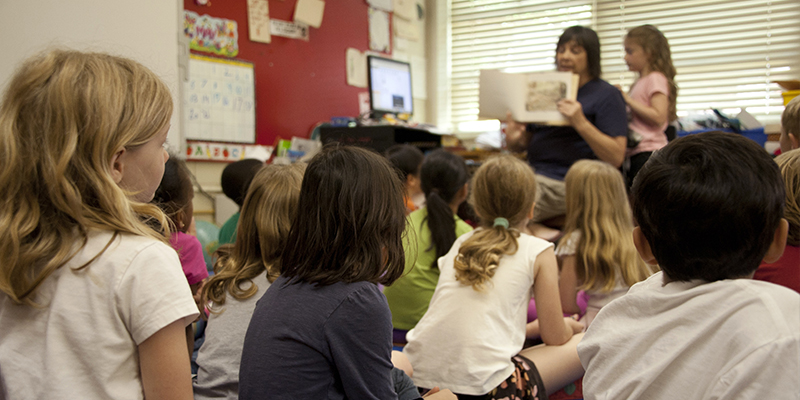
As your child develops her own identity during these early years, she’s bound to experiment with attitudes and behaviors of both sexes. There’s rarely any reason to discourage such impulses, except when the child is resisting or rejecting strongly established cultural standards. For instance, if your son wanted to wear dresses every day or your daughter only wants to wear sport shorts like her big brother, allow the phase to pass unless it is inappropriate for a specific event. If he persists, however, discuss the issue with your pediatrician. Your child also may imitate certain types of behavior that adults consider sexual, such as flirting. If she’s very dramatic and expressive, you may be concerned by these “suggestive” looks and movements, but often the suggestions are just an adult way of looking at the situation, while the child is just playing and is not aware of her actions. At this age, she has no mature sexual intentions, and her mannerisms are merely playful mimicry, so don’t worry. If, however, she may have been personally exposed to sexual acts, you should discuss this with your pediatrician, as it could be a sign of sexual abuse.
By age four, your child should have an active social life filled with friends, and he may even have a “best friend” (usually, but not always, of his own sex). Ideally, he’ll have friends in the neighborhood or in his preschool that he sees routinely.
But what if your child is not enrolled in preschool and doesn’t live near other families? And what if the neighborhood children are too old or too young for him? In these cases, you’ll want to arrange play sessions with other preschoolers. Parks, playgrounds, and preschool activity programs all provide excellent opportunities to meet other children.
Once your preschooler has found playmates he seems to enjoy, you need to take some initiative to encourage their relationships. Encourage him to invite these friends to your home. It’s important for him to “show off” his home, family, and possessions to other children. This will help him establish a sense of self-pride. Incidentally, to generate this pride, his home needn’t be luxurious or filled with expensive toys; it needs only to be warm and welcoming.
It’s also important to recognize that at this age his friends are not just playmates. They also actively influence his thinking and behavior. He’ll desperately want to be just like them, even during those times when their actions violate rules and standards you’ve taught him from birth. He now realizes that there are other values and opinions besides yours, and he may test this new discovery by demanding things that you’ve never allowed him—certain toys, foods, clothing, or permission to watch certain TV programs.
Don’t despair if your child’s relationship with you changes dramatically in light of these new friendships. For instance, he may be rude to you for the first time in his life. When you tell him to do something that he objects to, he may occasionally tell you to “shut up” or even swear at you. Hard as it may be to accept, this sassiness actually is a positive sign that he’s learning to challenge authority and test the limits of his independence. Once again, the best way to deal with it is to express disapproval, and you might want to discuss with him what he really means or feels. The more emotionally you react, the more you’ll encourage him to continue behaving badly. But if the subdued approach doesn’t work, and he persists in talking back to you, a time-out is the most effective form of punishment.
Last Updated 11/2/2009
Source Caring for Your Baby and Young Child: Birth to Age 5 (Copyright © 2009 American Academy of Pediatrics)
The information contained on this Web site should not be used as a substitute for the medical care and advice of your pediatrician. There may be variations in treatment that your pediatrician may recommend based on individual facts and circumstances.
Social Development in Preschoolers(Part2)
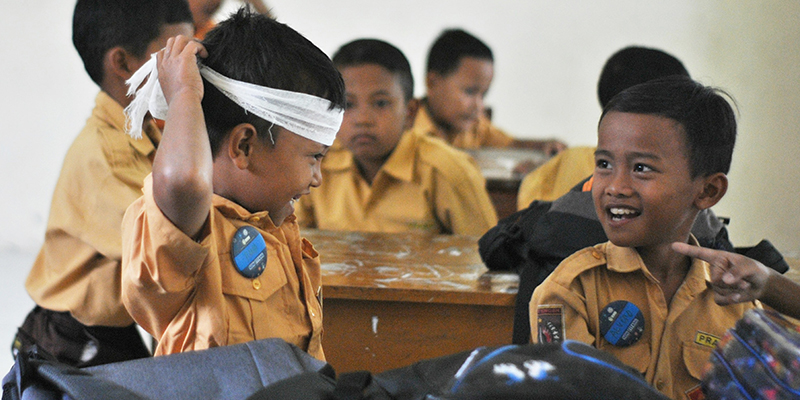
Actually, the normal interests of three-year-old will help keep fights to a minimum. They spend much of their playtime in fantasy activity, which tends to be more cooperative than play that’s focused on toys or games. As you’ve probably already seen, your preschooler and her playmates enjoy assigning different roles to one another and then launching into an elaborate game of make-believe using imaginary or household objects. This type of play helps them develop important social skills, such as taking turns, paying attention, communicating (through actions and expressions as well as words), and responding to one another’s actions. And there’s still another benefit: Because pretend play allows children to slip into any role they wish—including Batman, Wonder Woman, Superman, or the Fairy Godmother—it also helps them explore more complex social ideas.
By watching the role-playing that goes on during your child’s make-believe games, you’ll also see that she’s beginning to identify with her own sex. While playing house, boys naturally will adopt the father’s role and girls the mother’s, reflecting whatever differences they’ve noticed in their own families and in the world around them. At this age, your son also may be fascinated by his father, older brothers, or other boys in the neighborhood, while your daughter will be drawn to her mother, older sisters, and other girls.
Research shows that a few of the developmental and behavioral differences that typically distinguish boys from girls are biologically determined. For instance, the average preschool boy tends to be more aggressive, while girls generally are more verbal. However, most gender-related characteristics at this age are more likely to be shaped by cultural and family influences. Even if both parents work and share family responsibilities equally, your child still will find conventional male and female role models in television, magazines, books, billboards, and the families of friends and neighbors. Your daughter, for example, may be encouraged to play with dolls by advertisements, gifts from well-meaning relatives, and the approving comments of adults and other children. Boys, meanwhile, are generally guided away from dolls (although most enjoy them during the toddler years) in favor of more rough-and-tumble games and sports. Often, the girl who likes to roughhouse is called a tomboy, but the boy who plays that way is called tough or assertive. Not surprisingly, children sense the approval and disapproval in these labels and adjust their behavior accordingly. Thus, by the time they enter kindergarten, children’s gender identities are well established.
Children this age often will take this identification process to an extreme. Girls may insist on wearing dresses, nail polish, and makeup to school or to the playground. Boys may swagger, be overly assertive, and carry their favorite ball, bat, or truck wherever they go. This behavior reinforces their sense of being male or female.
Last Updated 11/2/2009
Source Caring for Your Baby and Young Child: Birth to Age 5 (Copyright © 2009 American Academy of Pediatrics)
The information contained on this Web site should not be used as a substitute for the medical care and advice of your pediatrician. There may be variations in treatment that your pediatrician may recommend based on individual facts and circumstances.
Social Development in Preschoolers(Part1)
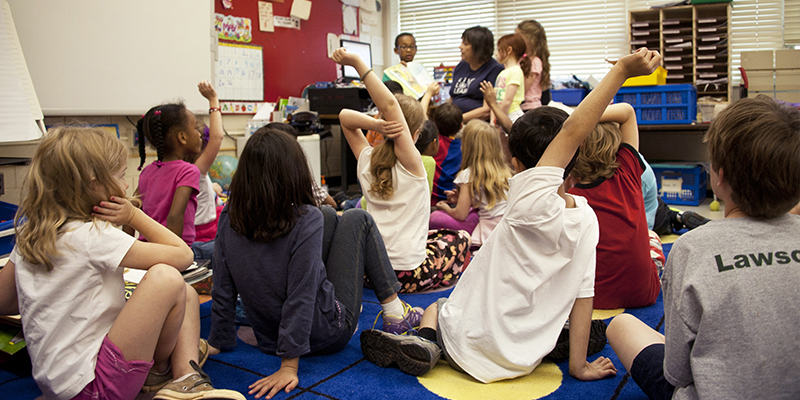
At age three, your child will be much less selfish than she was at two. She’ll also be less dependent on you, a sign that her own sense of identity is stronger and more secure. Now she’ll actually play with other children, interacting instead of just playing side by side. In the process, she’ll recognize that not everyone thinks exactly as she does and that each of her playmates has many unique qualities, some attractive and some not. You’ll also find her drifting toward certain children and starting to develop friendships with them. As she creates these friendships, she’ll discover that she, too, has special qualities that make her likable—a revelation that will give a vital boost to her self-esteem.
There’s some more good news about your child’s development at this age: As she becomes more aware of and sensitive to the feelings and actions of others, she’ll gradually stop competing and will learn to cooperate when playing with her friends. She’ll be capable of taking turns and sharing toys in small groups, even if she doesn’t always do it. Instead of grabbing, whining, or screaming for something, she’ll actually ask politely much of the time. As a result, you can look forward to less aggressive behavior and calmer play sessions. Often three-year-old are able to work out their own solutions to disputes by taking turns or trading toys.
However, particularly in the beginning, you’ll need to encourage this type of cooperation. For instance, you might suggest that she “use her words” to deal with problems instead of violent actions. Also, remind her that when two children are sharing a toy, each gets an equal turn. Suggest ways to reach a simple solution when she and another child want the same toy, perhaps drawing for the first turn or finding another toy or activity. This doesn’t work all the time, but it’s worth a try. Also, help her with the appropriate words to describe her feelings and desires so that she doesn’t feel frustrated. Above all, show her by your own example how to cope peacefully with conflicts. If you have an explosive temper, try to tone down your reactions in her presence. Otherwise, she’ll mimic your behavior whenever she’s under stress.
No matter what you do, however, there probably will be times when your child’s anger or frustration becomes physical. When that happens, restrain her from hurting others, and if she doesn’t calm down quickly, move her away from the other children. Talk to her about her feelings and try to determine why she’s so upset. Let her know that you understand and accept her feelings, but make it clear that physically attacking another child is not a good way to express these emotions.
Help her see the situation from the other child’s point of view by reminding her of a time when someone hit or screamed at her, and then suggest more peaceful ways to resolve her conflicts. Finally, once she understands what she’s done wrong—but not before—ask her to apologize to the other child. However, simply saying “I’m sorry” may not help your child correct her behavior; she also needs to know why she’s apologizing. She may not understand right away, but give it time; by age four these explanations will begin to mean something to her.
Last Updated 11/2/2009
Source Caring for Your Baby and Young Child: Birth to Age 5 (Copyright © 2009 American Academy of Pediatrics)
The information contained on this Web site should not be used as a substitute for the medical care and advice of your pediatrician. There may be variations in treatment that your pediatrician may recommend based on individual facts and circumstances.
Your Preschooler’s Physical Appearance and Growth
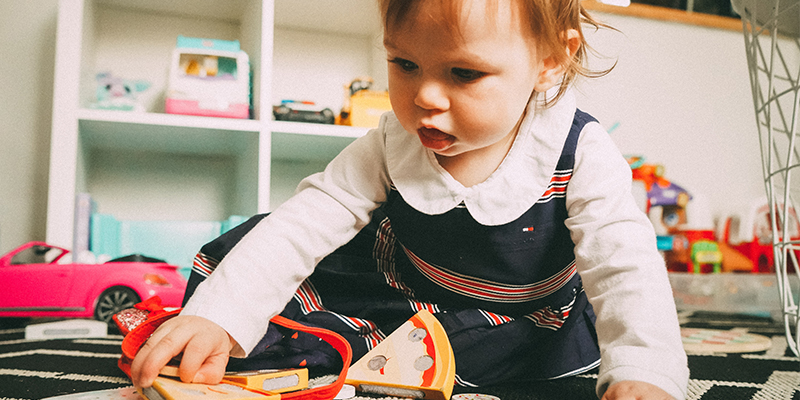
Your child’s body should continue to lose baby fat and gain muscle during this time, giving her a stronger and more mature appearance. Her arms and legs will become more slender and her upper body more narrow and tapered.
In some children, gains in height occur so much more quickly than gains in weight and muscle that they may begin to look quite skinny and fragile. But this doesn’t mean they are unhealthy or that anything is wrong; such children fill out gradually as their muscles develop.
In general, a preschooler’s growth gradually will begin to slow this year and in the subsequent ones—from about a 5-pound (2.3-kg) gain and about a 3 1⁄2 inch (8.9 cm) increase in height during the third year, and then decreasing to about 4 1⁄2 pounds or 2 kg, and 2 1⁄2 inches or 6.4 cm during the fifth.
However, after age two, children of the same age can vary noticeably in size and weight, so try not to spend too much time comparing your child’s measurements with those of her playmates. As long as she’s maintaining her own individual rate of growth, there’s no reason to worry.
Measure your child twice a year and record her measurements on her growth chart. If her weight seems to be rising faster than her height, she may become overweight, or if her height does not increase at all in six months, she may have a growth problem. In either case, discuss this with your pediatrician.
Your child’s face also will mature during these years. The length of her skull will increase slightly, and the lower jaw will become more pronounced. At the same time, the upper jaw will widen to make room for her permanent teeth. As a result, her face actually will become larger and her features more distinct.
Last Updated 2/29/2012
Source Caring for Your Baby and Young Child: Birth to Age 5 (Copyright © 2009 American Academy of Pediatrics)
The information contained on this Web site should not be used as a substitute for the medical care and advice of your pediatrician. There may be variations in treatment that your pediatrician may recommend based on individual facts and circumstances.
Sexual Behaviors in Young Children: What’s Normal, What’s Not?(PART3)

- Review this information regularly with your children.Some good times to talk to your children about personal safety are during bath time, bedtime, and before any new situation. From child care to sports practices to dance classes, not to mention camps and after-school programs, children are meeting and interacting with many different adults and children on a daily basis.
- Expect questions. The questions your child asks and the answers that are appropriate to give will depend on your child’s age and ability to understand. The following tips might make it easier for both of you:
- Don’t laugh or giggle, even if the question is cute. Don’t react with anger. Your child shouldn’t be made to feel ashamed for his or her curiosity.
- Be brief. Don’t go into a long explanation. Answer in simple terms. For example, your preschooler doesn’t need to know the details of intercourse.
- See if your child wants or needs to know more. Follow up your answers with, “Does that answer your question?”
- Listen to your child’s responses and reactions.
- Be prepared to repeat yourself.
Talk with Your Child’s Pediatrician
If you are currently dealing with any of these issues or have additional questions, talk with your child’s pediatrician. He or she can work with you to distinguish age-appropriate and normal sexual behaviors from behaviors that are developmentally inappropriate or signal potential abuse. Asking for help simply means you want what is best for your child, and you will do whatever you can to help him or her succeed.
Additional Information & Resources:
- Potty Talk: How Parents Can Discourage the Behavior
- How to Shape & Manage Your Young Child’s Behavior
- Gender Identity Development in Children
- Sexual Abuse
- Child Abuse and Neglect
- The Evaluation of Sexual Abuse in Children (AAP Policy Statement)
Last Updated 4/1/2019
Source American Academy of Pediatrics (Copyright © 2016)
The information contained on this Web site should not be used as a substitute for the medical care and advice of your pediatrician. There may be variations in treatment that your pediatrician may recommend based on individual facts and circumstances.
Sexual Behaviors in Young Children: What’s Normal, What’s Not?(PART2)

Body Safety Teaching Tips for Parents
Parents should begin to teach their children about body safety between the ages of 3 to 5.
- Use appropriate language. Teach children proper names for all body parts, including names such as genitals, penis, vagina, breasts, buttocks, and private parts. Making up names for body parts may give the idea that there is something bad about the proper name. Understand why your child has a special name for the body part but teach the proper name, too. Also, teach your child which parts are private (parts covered by a swimming suit).
- Evaluate your family’s respect for modesty.While modesty isn’t a concept most young children can fully grasp, you can still use this age to lay a foundation for future discussions and model good behavior. If you have children of various ages, for example, it’s important to teach your younger children to give older siblings their privacy. Usually, older siblings will teach the younger ones to get their clothes on, for example, because they might have friends over or because they are maturing and feel modest even in front of their younger brothers and sisters.
- Don’t force affection.Do not force your children to give hugs or kisses to people they do not want to. It is their right to tell even grandma or grandpa that they do not want to give them a kiss or a hug goodbye. Inappropriate touching—especially by a trusted adult—can be very confusing to a child. Constantly reinforce the idea that their body is their own, and they can protect it. It is very important that your child knows to tell you or another trusted grown-up if they have been touched. That way, your child knows it’s also your job to protect them.
- Explain what a good vs. bad touches are. You can explain a “good touch” as a way for people to show they care for each other and help each other (i.e., hugging, holding hands, changing a baby’s diaper). A “bad touch” is the kind you don’t like and want it to stop right away (i.e., hitting, kicking, or touching private parts). Reassure your child that most touches are okay touches, but that they should say “NO” and need to tell you about any touches that are confusing or that scare them.
- Give your children a solid rule.Teach them it is NOT okay for anyone to look at or touch their private parts, or what is covered by their swimsuits. It is easier for a child to follow a rule, and they will more immediately recognize a “bad touch” if they have this guideline in mind. Reassure your children that you will listen to them, believe them, and want to keep them protected.
- Control media exposure. Get to know the rating systems of video games, movies, and television shows and make use of the parental controls available through many internet, cable, and satellite providers. Providing appropriate alternatives is an important part of avoiding exposure to sexual content in the media. Be aware that children may see adult sexual behaviors in person or on screens and may not tell you that this has occurred.
Last Updated 4/1/2019
Source American Academy of Pediatrics (Copyright © 2016)
The information contained on this Web site should not be used as a substitute for the medical care and advice of your pediatrician. There may be variations in treatment that your pediatrician may recommend based on individual facts and circumstances.
Sexual Behaviors in Young Children: What’s Normal, What’s Not?(PART1)
It can be easy for parents to talk with their children about the differences between right and wrong, but it is often more difficult for parents to talk with their children about sexual development.
At a very young age, children begin to explore their bodies by touching, poking, pulling, and rubbing their body parts, including their genitals. As children grow older, they will need guidance in learning about these body parts and their functions.
Here’s some information and tips from the American Academy of Pediatrics (AAP) to help you tell the difference between “normal” sexual behaviors and behaviors that may signal a problem.
What’s Normal?
Here’s a list of what pediatricians say is normal, common sexual behavior in 2 through 6-year-olds.
When these behaviors happen, try to redirect your child’s attention to more appropriate behavior by saying something such as, “Grown-ups do that in private, and you should, too.” Reinforce that children should respect each other, and it is not OK to touch anyone else’s private parts. Also, remind your child to always tell you or another trusted grown-up if anyone ever touches his or her private parts.
- Touching/masturbating genitals in public or private
- Looking at or touching a peer’s or new sibling’s genitals
- Showing genitals to peers
- Standing or sitting too close to someone
- Trying to seepers or adults naked

Red Flag Behaviors
Parents also need to know when a child’s sexual behavior appears more than harmless curiosity. Sexual behavior problems may pose a risk to the safety and well-being your child and other children and can signal physical or sexual abuse or exposure to sexual activity.
Sexual behavior problems in young children include any act that:
- Occurs frequently and cannot be redirected
- Causes emotional or physical pain or injury to themselves or others
- Is associated with physical aggression
- Involves coercion or force
- Simulates adult sexual acts
Last Updated 4/1/2019
Source American Academy of Pediatrics (Copyright © 2016)
The information contained on this Web site should not be used as a substitute for the medical care and advice of your pediatrician. There may be variations in treatment that your pediatrician may recommend based on individual facts and circumstances.
Talking to Your Young Child About Sex(Part3)

School-age Children
“How old do girls have to be before they can have a baby?”
“Why do boys get erections?”
“What is a period?”
“How do people have sexual intercourse?”
“Why do some men like other men?”
5 to 7 years of age. Your child is learning much more about how people get along with each other. He may become interested in what takes place sexually between adults. His questions will become more complex as he tries to understand the connection between sexuality and making babies. He may come up with his own explanations about how the body works or where babies come from. He may also turn to his friends for answers.
It is important to help your child understand sexuality in a healthy way. Lessons and values he learns at this age will stay with him as an adult. It will encourage meaningful adult relationships later.
8 to 9 years of age. Your child probably already has developed a sense of right and wrong. She is able to understand that sex is something that happens between two people who love each other. She may begin to become interested in how mom and dad met and fell in love. As questions about romance, love, and marriage arise, she may also ask about homosexual relationships. Use this time to discuss your family’s thoughts about homosexuality. Explain that liking or loving someone does not depend on the person’s gender and is different from liking someone sexually.
At this age, your child will be going through many changes that will prepare her for puberty. As she becomes more and more aware of her sexuality, it is important that you talk to her about delaying sexual intercourse until she is older. You should also talk about contraception and sexually transmitted diseases (STDs), especially AIDS. Be sure she understands how these diseases can spread and how she can protect herself from them and from pregnancy. Teaching your child to be sexually responsible is one of the most important lessons in her life.
Remember:
Talking about sex and sexuality gives you a chance to share your values and beliefs with your child. Sometimes the topic or the questions may seem embarrassing, but your child needs to know there is always a reliable, honest source she can turn to for answers—you.
Last Updated 11/12/2009
Source Caring for Your School-Age Child: Ages 5 to 12 (Copyright © 2004 American Academy of Pediatrics)
The information contained on this Web site should not be used as a substitute for the medical care and advice of your pediatrician. There may be variations in treatment that your pediatrician may recommend based on individual facts and circumstances.
Talking to Your Young Child About Sex(Part2)

Questions to Expect:
The questions your child asks and the answers that are appropriate to give will depend on your child’s age and ability to understand. Following are some of the issues your child may ask about and what he should know at each stage:
Preschool Children
“How did I get in your tummy?”
“Where was I before I got in your tummy?”
“How did I get out?”
“Where do babies come from?”
“How come girls don’t have a penis?”
18 months to 3 years of age. Your child will begin to learn about his own body. It is important to teach your child the proper names for body parts. Making up names for body parts may give the idea that there is something bad about the proper name. Also, teach your child which parts are private (parts covered by a bathing suit).
4 to 5 years of age. Your child may begin to show an interest in basic sexuality, both her own and that of the opposite sex. She may ask where babies come from. She may want to know why boys’ and girls’ bodies are different. She may also touch her own genitals and may even show an interest in the genitals of other children. These are not adult sexual activities, but signs of normal interest. However, your child needs to learn what is all right to do and what is not. Setting limits to exploration is really a family matter. You may decide to teach your child the following:
- Interest in genital organs is healthy and natural.
- Nudity and sexual play in public are not all right.
- No other person, including even close friends and relatives, may touch her “private parts.” The exceptions are doctors and nurses during physical exams and her own parents when they are trying to find the cause of any pain in the genital area.
Last Updated 11/12/2009
Source Caring for Your School-Age Child: Ages 5 to 12 (Copyright © 2004 American Academy of Pediatrics)
The information contained on this Web site should not be used as a substitute for the medical care and advice of your pediatrician. There may be variations in treatment that your pediatrician may recommend based on individual facts and circumstances.
Talking to Your Young Child About Sex(Part1)

At what age should I start talking to my child about sex?
Sexuality is part of every person’s life, no matter what the age. As your child grows and develops, she may giggle with friends about “private parts,” share “dirty” jokes, and scan through dictionaries looking up taboo words. Her curiosity is natural, and children of all ages have questions. When she is ready to ask you, as a parent you should be ready to answer.
Where to Begin:
Everyday events will give you plenty of chances to teach your child about topics related to sex. These are called teachable moments. For example, talking about body parts during bath time will be much more effective than talking about body parts during dinner. A pregnancy or birth in the family is a good time to discuss how babies are conceived and born. Watching television with your child may also be a good time to discuss sexuality issues.
Teachable moments can happen anywhere—while shopping, at the movies, or even at the park. Use them when they happen. You won’t need to make a speech. First, find out what your child already knows. Let your child guide the talk with her questions. Some children may not ask for information if they think you might be uneasy with it. Others might test you by asking embarrassing questions. Talk openly, and let your child know she can ask you about anything.
When your child begins to ask questions, the following might make it easier for both of you:
- Don’t laugh or giggle, even if the question is cute. Your child shouldn’t be made to feel ashamed for her curiosity.
- Try not to appear overly embarrassed or serious about the matter.
- Be brief. Don’t go into a long explanation. Answer in simple terms. Your 4-year old doesn’t need to know the details of intercourse.
- Be honest. Use proper names for all body parts.
- See if your child wants or needs to know more. Follow up your answers with, “Does that answer your question?”
- Listen to your child’s responses and reactions.
- Be prepared to repeat yourself.
If you are uneasy talking about sex or answering certain questions, be honest about that too. Consider asking a relative, close family friend, or your pediatrician to help talk to your child.
Last Updated 11/12/2009
Source Caring for Your School-Age Child: Ages 5 to 12 (Copyright © 2004 American Academy of Pediatrics)
The information contained on this Web site should not be used as a substitute for the medical care and advice of your pediatrician. There may be variations in treatment that your pediatrician may recommend based on individual facts and circumstances.
Factors affecting the body temperature of newborns

Although the body temperature of the newborn will change according to the activity status of the newborn, it will also be affected by external factors. Such as:
1. When the external environment temperature is too high (especially in summer). If the baby stays in the arms of Ma Ma for too long, the body temperature will also rise. But this kind of fever will not last too long, just put the baby in a cool place and fan with a fan.
2. When the baby wears a lot (especially in winter). In the changing seasons, Ma Ma often wears a lot of clothes for the baby to avoid the baby from getting cold. At this time, the baby’s body temperature will also increase. At this time, Ma Ma needs to appropriately reduce the clothes for the baby.
3. A small number of newborns will have the so-called “dehydration fever” or “one-off fever” within 3-5 days after birth. The body temperature can rise to 39℃-40℃, which often lasts for several hours or even 1-2 days. Newborns may be accompanied by facial redness, dry skin, crying, and restlessness, etc., which are caused by too little water intake, high room temperature, or thick clothing. After breastfeeding or feeding some warm plain water, the body temperature will drop quickly.
How to measure the temperature of a newborn

Under normal circumstances, we feel the baby’s body temperature change by touching the baby’s body with hands. Once we find that the baby has a slight fever, we will consider using a thermometer to measure the baby’s body temperature. At this time, we must pay attention to the method of measuring the body temperature. If the method is improper, the measured data must have errors. So how to measure the body temperature of a newborn?
1. Head temperature sticker. For babies who don’t cooperate, ordinary thermometers must not be able to measure properly, and the head temperature sticker, just stick it on the baby’s head, it is very convenient to use, but if the baby does not like someone to press the head However, this method doesn’t work anymore.
2. Temperature measurement under the armpit. This is the same as our usual temperature measurement. First loosen the baby’s clothes, then put the mercury tip of the thermometer in the middle of the baby’s armpit, and then pay attention to the baby’s arm not to move, and be sure to help the baby to clamp the thermometer properly. Take out the reading after 5 minutes, and be careful not to let your baby catch a cold during this period. In addition, if your baby has sweat under his armpits, please wipe it dry before taking the measurement.
3. Neck temperature measurement method: place the mercury end of the thermometer on the skin folds of the neck, adjust the head part, hold the fixed thermometer, and measure the temperature for at least 5 minutes, preferably 10 minutes. The neck temperature measurement is not easy to fix, and it is also greatly affected by the temperature. The accuracy is worse than that of the armpit temperature measurement.
4. Method of temperature measurement in the anus: first disinfect the mercury end of the anal surface with an alcohol cotton ball, then apply a little cooking oil (to cool after boiling), lubricate it, slowly insert the baby’s anus about 3 cm, continue to measure the temperature for 3 minutes, The normal value of the measured body temperature is about 37.5C, and the body temperature of the anal surface of newborns with insufficient body temperature in winter can be about 36C.
5. Using infrared probe to measure ear temperature, it only takes 1 second to get a more accurate body temperature, which can be used for the promotion and application of newborns.


