The newborn’s body temperature is normal
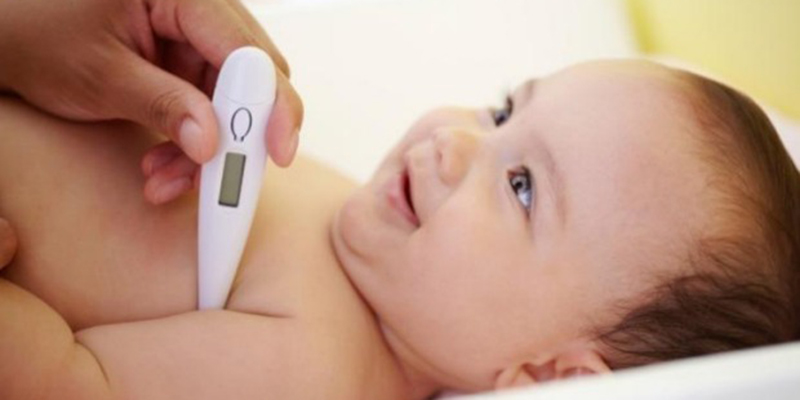
What is the normal body temperature of the newborn? The normal value of the newborn’s body temperature has a great relationship with the measurement site because there will be some small differences in the body temperature of different sites. Common temperature measurement sites include the mouth, axilla, and anus.
The normal value of the newborn’s body temperature in the oral cavity is between 36.2°C and 37.3°C; in the armpits, it is between 35.9°C and 37.2°C; in the anus, it is between 36.5°C and 37.5°C. When the measurement result exceeds the normal range of 0.5°C, it can be judged that the baby has a slight fever and is fresh. It is called low fever if it does not exceed 38°C, and high fever if it exceeds 39°C.
When taking the baby’s body temperature, we often find that the baby’s body temperature is different at different times, sometimes high and sometimes low, which also makes our hearts hang up and down, for fear that the baby might have something in the case. Did not dare to relax at all.
Don’t worry too much at this time. This is normal. When the baby is quiet, the body temperature is relatively low, such as when sleeping at night; and when the baby is active, the body temperature is relatively high, such as walking around in the afternoon during the day. Time.
However, it must be noted that what we mean by normal means that the baby’s body temperature is kept in a relatively stable state. You can check the baby’s body temperature record curve to see if the baby’s body temperature fluctuation is normal.
What to pay attention to when newborns take a bath
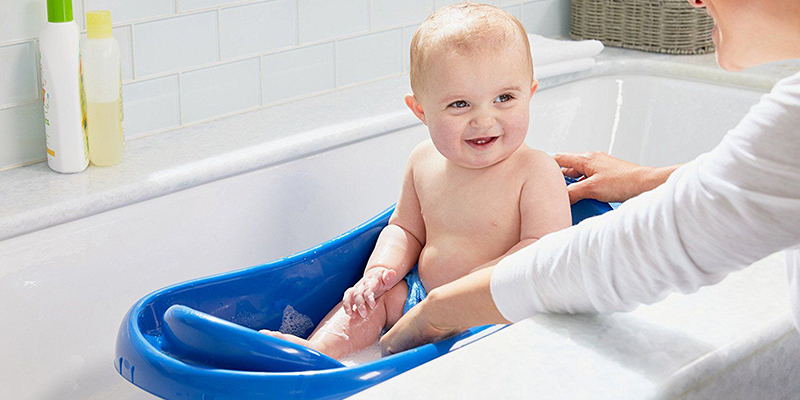
Bathing a newborn baby is a work that requires careful attention, because the newborn baby is very delicate and some small details may be detrimental to it. Let’s take a look at the specific precautions for bathing the newborn.
1. Before bathing the newborn baby, clean your hands and don’t leave dirt in the nails. Washing your hands with soap can better prevent the spread of bacteria.
2. It is not necessary to take a bath for the newborn, because the sweat excreted by the newborn is limited, and there is no need to bathe every day, just wash it every other day in hot weather and every two days in cold weather.
3. The pH of the newborn’s skin is 6.5-7.5, which is alkalescent. When bathing for premature babies and newborns with damaged skin, just scrub with clean water at a suitable temperature to avoid increasing the alkalinity of the skin.
4. When bathing the newborn, the baby should not be in contact with water for more than 5 minutes. After washing, use a soft, absorbent towel to gently dry the newborn’s body, and then apply the baby’s special moisturizing oil before putting it on. Clean clothing.
5. Remember to hold your baby’s head with your hands when taking a bath to prevent cervical accidents.
6. Do not take a bath after breastfeeding, it is easy to spit up.
7. Don’t give your baby a shower, because the water temperature in the shower is not easy to control, and you will regret it when you get it hot.
8. The towel used for the baby’s bathing must be a soft cotton towel. The baby’s tender skin can’t stand the rough cloth.
Newborn bathing equipment and preparations
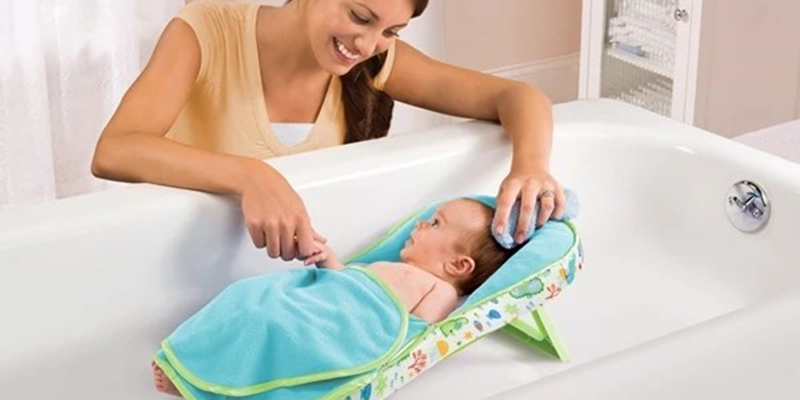
Bathing a newborn baby is different from an adult. The delicate newborn baby needs more comprehensive care, so some preparations are needed before bathing. First, prepare the items needed for the baby’s bathing, such as disinfection of the umbilical cord (before the newborn’s umbilical cord is dropped), pre-changed baby blankets, clothes, diapers, and small towels, large bath towels, bathtub, cold water, and hot water, Baby powder, etc., but also check your fingernails. Don’t scratch your baby. After checking, wash it with soap to avoid spreading bacteria.
It should also be noted that before bathing the baby, the room temperature should be adjusted if possible, preferably between 26~28℃, and the water temperature should be kept at 37℃~42℃. You can use your own wrist to test The water temperature.
How to bathe a newborn
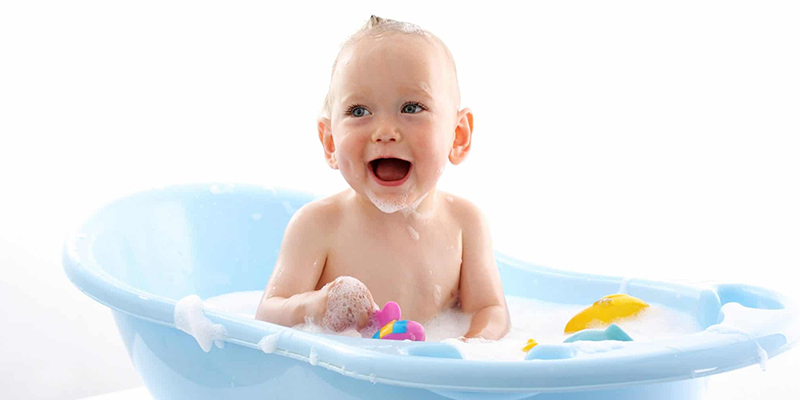
After the preparations for bathing the newborn are completed, the formal bath is about to start. Bathing is mainly divided into washing hair, washing face, and washing the body. Let’s see how the newborn baby should be bathed.
1. Wash your hair and face
Just like us adults, the baby should wash his hair and face first in the bath. Don’t put them aside after taking off the baby’s clothes, but wrap them around the baby’s chest and abdomen to keep warm. Then you can start washing your face, head, and neck. Clamp your baby’s buttocks with your left elbow and waist, hold your baby’s head with your left palm and arm, and slowly wash with your right hand. Wipe gently with a small towel dipped in water on your face, and pay attention to your ears. Use your fingers to wrap the towel and gently wipe the auricle and the back of the ears. Do not let water in.
The shampoo is also a big project, you should use baby-specific shampoo, pour an appropriate amount on your hands, and then gently rub and wash on your baby’s head. Do not touch your baby’s scalp with your nails. Before washing your hair, you can put some baby oil on your baby’s head, so that dandruff will be softened and cleaned better. After washing, rinse off the shampoo with clean water.
2. Wash the body
If the newborn’s umbilical cord has not fallen off, wash the body separately when taking a bath. Do not wet the umbilical cord, which may cause inflammation. Wash the upper body first, take the same posture as washing the hair, wash the newborn’s neck, armpits, chest, back, arms and hands in turn, and then wash the lower body, leaning the baby’s head against the left elbow and holding the left hand Live the left thigh of the newborn, and wash the genitals, buttocks, thighs, calves, and feet of the newborn in turn.
If the baby’s umbilical cord has fallen off, you can put the baby in the bathtub directly after washing the head and face. Pay attention to lifting the baby’s head with your hands in a supine position. After washing from top to bottom, change the baby Into the prone position, wash the back and buttocks, and anus. Finally, use your hands as support and hold your baby’s shoulders firmly, hold it out of the water, place it on a large bath towel, and dry the whole body. During the whole bathing process, the movements must be gentle!
When to bathe the newborn
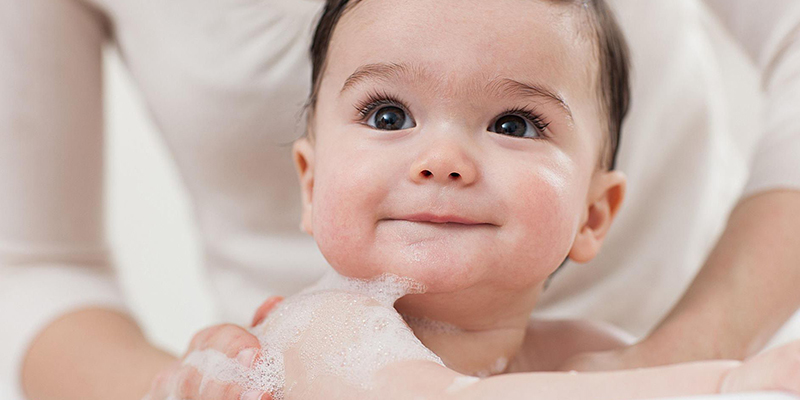
The fetus has the characteristics of habituation in the uterine cavity, so the fetus can start bathing at an appropriate time after birth. Bathing can not only clean the skin of newborns but also accelerate their blood circulation and promote their growth and development. So, when is it appropriate to bathe the newborn? Let’s get to know it together.
Q: When to bathe the newborn?
A: For healthy newborns, as long as conditions permit, they can take a bath once a day from the second day after birth. Newborn bathing can not only clean the skin but also accelerate blood circulation and promote growth and development. For newborns with lightweight and low living ability or newborns who bathe unconditionally every day due to low room temperature, wash their faces daily.
What is the newborn bath
Newborn bathing refers to bathing the baby within one month. Generally, the newborn refers to the baby from the umbilical cord ligation to the 28th day after birth. Pay special attention when bathing them. This is the same as bathing the baby or the child It is completely different, and some details need to be paid more attention to.
Newborn bathing is not a problem. Those who have just become parents need not worry too much. As long as they follow some principles and requirements, they will generally not harm the baby. Let’s teach you how to bathe your newborn.
What to do if newborns have nasal congestion and shortness of breath
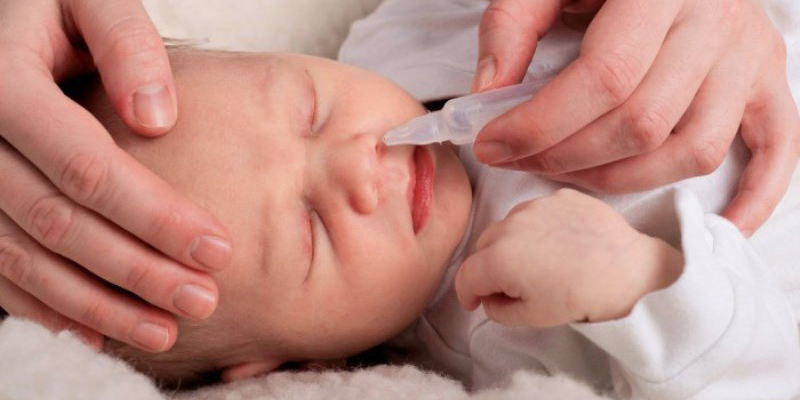
If neonatal nasal congestion causes shortness of breath, it is hypoxic. Novice parents should quickly take some measures to help the baby breathe. Use chopsticks or a small spoon to put it horizontally in the baby’s mouth so that the lips cannot be closed. , Relieve the symptoms of hypoxia through oral breathing. But this method is not a solution, because oral breathing is not a normal condition for newborns, so after the emergency rescue, they should be quickly sent to the hospital for timely diagnosis and treatment of the baby.
Nasal congestion newborns how to do

The baby’s nasal congestion will make him very uncomfortable, breathing difficulties, and even cause hypoxia in the newborn, which is harmful to health. Let us see how to deal with it.
Method 1: Clear the nasal cavity
If the nasal congestion is caused by the secretions in the nasal cavity, Bao Mom and Dad can gently roll out the secretions with a cotton swab. If the secretion is already dry, you can use a cotton swab dipped in water and apply it to the baby’s nostrils. Some ointments and eye drops can also have the same effect. When the secretion becomes soft, you can use a cotton stick to remove it.
Method two: hot compress
The nasal cavity of the baby can be smoothed by applying heat to the nose, because the nasal mucosa shrinks under heat, and the nasal cavity becomes smooth, and the sticky nasal mucus is easier to hydrate and flow out.
Method 3: Change the baby’s position
If the baby has a nasal congestion on the left side, lie on the right and the right nasal congestion on the left, which can reduce the nasal congestion. It can also be picked up vertically when the baby has a stuffy nose, which can also reduce the stuffy nose.
Method 4: Acupoint massage
Let the newborn baby lie supine, use thumb and index fingers to massage from top to bottom on both sides of the nose for 3 minutes, and then knead Yingxiang (both sides of the nose) for 1 minute. When the nasal cavity feels hot, the breath will pass. Do this every 2 to 3 hours to relieve baby’s nasal congestion.
Method 5: Pay attention to indoor ventilation
Keep a ventilated environment where your baby lives. When it’s cold, you should use an air conditioner or heater to change the room temperature to alleviate the symptoms of nasal congestion and runny nose.
Is the neonatal nasal congestion serious?
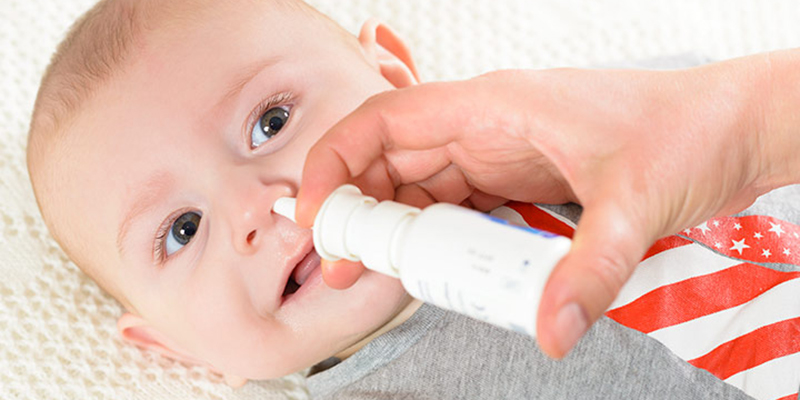
Neonatal nasal congestion is not a serious problem in most cases. Many babies will experience nasal congestion, but if some of the above methods can not be improved, and the nasal congestion takes too long to affect sleep, breastfeeding and mental state, Parents’ attention is about to be aroused. At this time, you should go to the otolaryngology department for an examination. Only further examination can determine whether the baby has other diseases. Early diagnosis can be effective and treatment. Don’t delay. If nasal congestion can be improved in a short period of time, parents and mothers will not have to worry too much, and it is not a serious problem.
Is neonatal nasal congestion a cold?
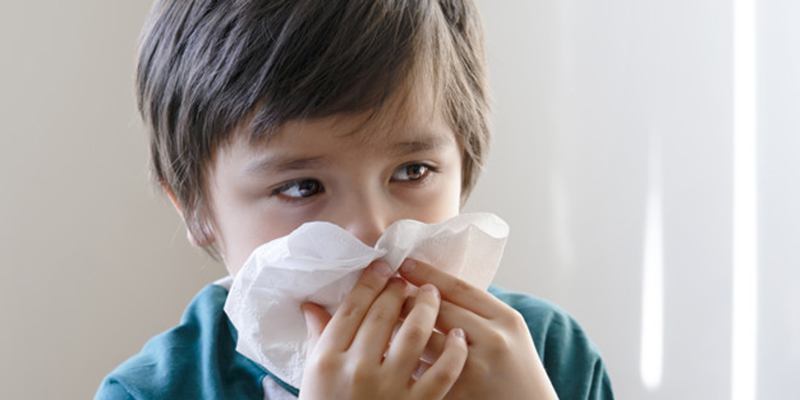
Sick kid blowing nose into a tissue, Unhealthy child suffering from running nose or sneezing and covering his nose and mouth, A boy catches a cold when season change, childhood wiping nose with a tissue
The stuffy nose of a newborn is not necessarily a cold, because the cold of a newborn baby is often not manifested as a stuffy nose, but mainly manifested as poor spirits, reduced milk intake, and crying. Since the newborn has just arrived in a new environment, we are accustomed to the environment is not suitable for him, external stimuli will affect the nasal mucosa, so neonatal nasal congestion, sneezing, etc. are normal phenomena, do not worry too much.
Newborns have symptoms such as nasal congestion and sneezing. Do not take cold medicine rashly. It will cause the baby’s nasal mucosa to dry out, reduce secretions, and further reduce the defense against external microbes. Microbes can invade and cause neonatal respiratory infections. The health impact is even greater.
What is the reason for newborn stuffy nose
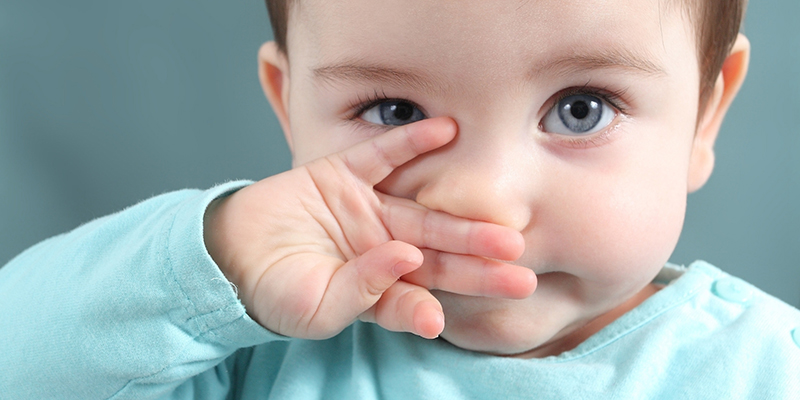
Stuffed nose in newborns is a common problem. Don’t think of it as a cold when you look at your baby’s nasal congestion. In fact, the prone to nasal congestion in newborns has a lot to do with his physiological structure. The nasal cavity of newborns is narrow, the nasal mucosa is soft, and the blood vessels and lymphatic tissues are relatively rich in adults. It is particularly prone to nasal congestion when the nasal mucosa is edema or obstruction of secretions.
Of course, neonatal nasal congestion may also be a cold and cold, because the newborn baby has not adapted to the environment and has poor immunity. If you do not pay attention to keeping warm, you will catch a cold and nasal congestion.
In addition to the above reasons, some body organ diseases can also cause nasal congestion in newborns. This is a point that everyone cannot ignore. Congenital atresia of the nostril, acute rhinitis, nasal polyps, nasal lumps, etc. may cause nasal congestion in newborns. In severe cases, you should go to the hospital to rule out these diseases.
How to prevent newborn milk from spilling
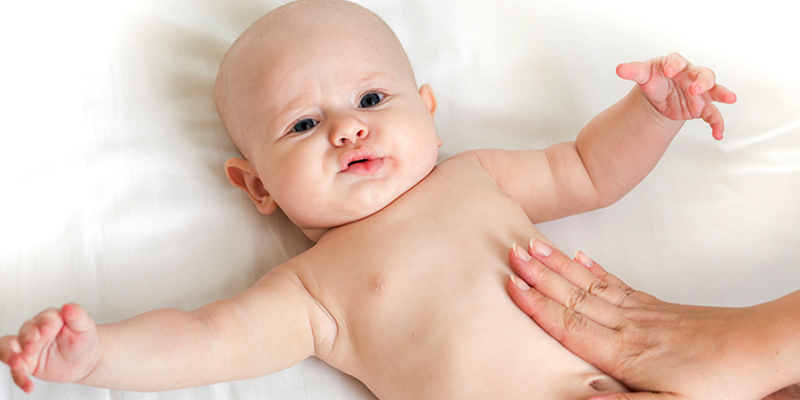
1. Avoid baby feeding too quickly. When breastfeeding, mothers can press several breast ducts of breast milk first, and the milk flow will slow down, so that the child will not eat too quickly.
2. Avoid starving your baby. If your baby is hungry for a long time, it is easy to eagerly allow you to suck when you feed again, which will easily swallow air into your stomach. Once gas enters the body, the baby will hiccup and spit out the milk.
3. Pay attention to the breastfeeding posture. Feeding the baby should keep the upper body straight, so as to help the baby drink the milk into the stomach without overflowing. Because the baby’s stomach is not the same as that of an adult, it is in a horizontal position. If the mothers feed in a lying position, there is definitely no way for the milk to enter the baby’s gastrointestinal tract smoothly.


