Feeding & Nutrition Tips: Your 1-Year-Old
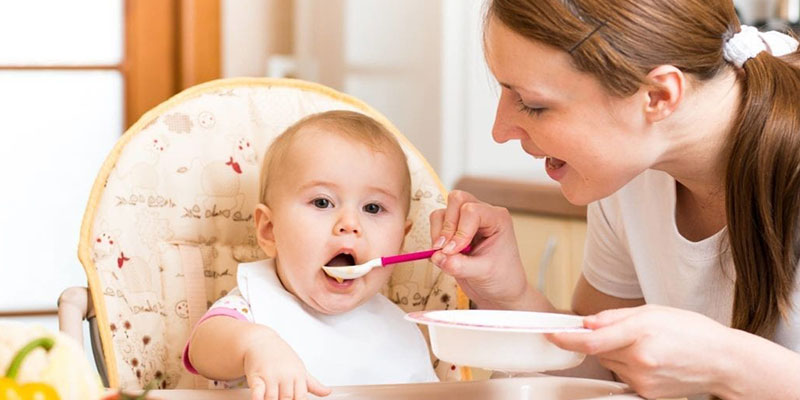
After your child’s first birthday, you’ll probably notice a sharp drop in his or her appetite. Maybe your child is suddenly turning his or her head away after just a few bites and/or is resisting coming to the table at mealtimes. Despite this behavior and increased activity, there’s a good reason for the change. Your child’s growth rate has slowed; he or she really doesn’t require as much food now.
Tips for Parents:
- One year olds need about 1,000 calories divided among three meals and two snacks per day to meet their needs for growth, energy, and good nutrition. Don’t count on your child always eating it that way though—the eating habits of toddlers are erratic and unpredictable from one day to the next! For example, your child may:
- Eat everything in sight at breakfast and almost nothing else for the rest of the day.
- Eat only the same food for three days in a row—and then reject it entirely.
- Eat 1,000 calories one day, but then eat noticeably more or less over the next day or two.
- Encourage, but don’t pressure or force your child to eat at a particular time. Hard as it may be to believe, your child’s diet will balance out over several days if you make a range of wholesome foods available.
- One year olds need foods from the same basic nutrition groups that you do. If you provide your child with selections from each of the basic food groups and let him or her experiment with a wide variety of tastes, colors, and textures, he or she should be eating a balanced diet with plenty of vitamins.
- Don’t restrict fats from your one-year-old’s menu. Babies and young toddlers should get about half of their calories from fat. Cholesterol and other fats are also very important for their growth and development at this age. Once your child has reached age two, you can gradually decrease fat consumption (lowering it to about one-third of daily calories by ages four to five). See Preschoolers’ Diets Shouldn’t Be Fat-Free: Here’s Why for more information.
- Be sure the food is cool enough to prevent mouth burns. Test the temperature yourself, because he or she will dig in without considering the heat.
- Don’t give foods that are heavily spiced, salted, buttered, or sweetened. These additions prevent your child from experiencing the natural taste of foods, and they may be harmful to long-term good health.
- Your little one can still choke on chunks of food. Children don’t learn to chew with a grinding motion until they’re about four years old. Make sure anything you give your child is mashed or cut into small, easily chewable pieces.
- Never offer peanuts, whole grapes, cherry tomatoes (unless they’re cut in quarters), whole carrots, seeds (i.e., processed pumpkin or sunflower seeds), whole or large sections of hot dogs, meat sticks, or hard candies (including jelly beans or gummy bears), or chunks of peanut butter (it’s fine to thinly spread peanut butter on a cracker or bread).
- Hot dogs and carrots— in particular—should be quartered lengthwise and then sliced into small pieces.
- Make sure your child eats only while seated and while supervised by an adult. Although your one-year-old may want to do everything at once, “eating on the run” or while talking increases the risk of choking. Teach your child as early as possible to finish a mouthful prior to speaking.
Last Updated 10/29/2020
Source Section on Obesity (Copyright © 2016 American Academy of Pediatrics)
The information contained on this Web site should not be used as a substitute for the medical care and advice of your pediatrician. There may be variations in treatment that your pediatrician may recommend based on individual facts and circumstances.
Selecting Snacks for Toddlers
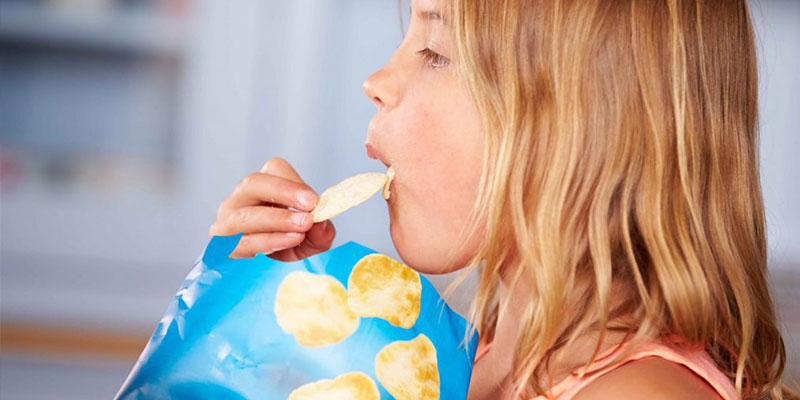
Toddlers use a lot of energy to grow and play, and their little stomachs can’t hold enough food to keep them from getting hungry between meals. Many young children need both a morning and an afternoon snack. These should be timed so they will still be hungry for lunch and dinner.
Snacks should include a balance of healthy foods. Children often come to think of a “snack” as a time to eat highly processed foods. You can help avoid this trap by serving freshly prepared foods to your children—even at snack time.
Healthy Snack Options for Toddlers:
Fresh fruits
- Apples, bananas, peaches, nectarines, pears (thinly sliced for safety)
- Cherries, grapes, plums (sliced or smushed and pitted)
- Orange or grapefruit sections (cut into pieces)
- Strawberries
Dried fruits
- Apples, apricots, peaches, pears (cut up)
- Dates, prunes (pitted, cut up)
- Raisins or cranberries
Vegetables
- Carrots, green beans (well cooked, diced)
- Steamed cauliflower, broccoli
- Yams or sweet potatoes (cooked and diced)
- Peas (mashed for safety; a child can inhale whole peas)
- Steamed, pureed spinach or greens
- Avocado slices or small cubes
Dairy products
- Cheese (grated or diced)
- Cottage cheese
- Yogurt, fresh or frozen
- Milk, including non-dairy milk alternatives
Breads and cereals
- Whole wheat bread
- Whole grain tortilla, pita, or bagels cut into small pieces
- Crackers (graham, whole grain)
- Whole grain dry cereals
- Rice cakes (for older toddlers)
Lean proteins
- Fish (canned tuna, salmon, sardines, whitefish)
- Peanut butter or other nut butters (smooth, spread thinly on whole grain bread or crackers)
- Edamame beans or chickpeas (steamed or mashed) or hummus spreads
- Cooked tofu cubes or tofu dip
- Hard boiled eggs
Snacks Toddlers Should Avoid:
Big chunks of any food are dangerous for children under than age 4 and pose serious choking hazards. For this reason, raw veggies and some fruits such as carrots, apples, whole cherry tomatoes, whole green beans, and celery should be cut into small pieces and/or cooked to minimize the choking risk. Nuts, peanuts, popcorn, and large amounts of sticky foods like peanut butter are also choking hazards. See Unsafe Foods for Toddlers for more examples.
Heavily processed foods should also be avoided; they tend to be low in nutritional value and high in salt and added sugar.
Last Updated 10/29/2020
Source Section on Obesity (Copyright © 2016 American Academy of Pediatrics)
The information contained on this Web site should not be used as a substitute for the medical care and advice of your pediatrician. There may be variations in treatment that your pediatrician may recommend based on individual facts and circumstances.
10 Tips for Parents of Picky Eaters(Part2)
- Variety: the spice. Offer a variety of healthy foods, especially vegetables and fruits, and include higher protein foods like meat and deboned fish at least 2 times per week. Help your child explore new flavors and textures in food. Try adding different herbs and spices to simple meals to make them tastier. To minimize waste, offer new foods in small amounts and wait at least a week or two before reintroducing the same food.
- Make food fun. Toddlers are especially open to trying foods arranged in eye-catching, creative ways. Make foods look irresistible by arranging them in fun, colorful shapes kids can recognize. Kids this age also tend to enjoy any food involving a dip. Finger foods are also usually a hit with toddlers. Cut solid foods into bite size pieces they can easily eat themselves, making sure the pieces are small enough to avoid the risk of choking.
- Involve kids in meal planning. Put your toddler’s growing interest in exercising control to good use. Let you child pick which fruit and vegetable to make for dinner or during visits to the grocery store or farmer’s market. Read kid-friendly cookbooks together and let your child pick out new recipes to try.
- Tiny chefs. Some cooking tasks are perfect for toddlers (with lots of supervision, of course): sifting, stirring, counting ingredients, picking fresh herbs from a garden or windowsill, and “painting”on cooking oil with a pastry brush, to name a few.
- Crossing bridges. Once a food is accepted, use what nutritionists call “food bridges” to introduce others with similar color, flavor and texture to help expand variety in what your child will eat. If your child likes pumpkin pie, for example, try mashed sweet potatoes and then mashed carrots.
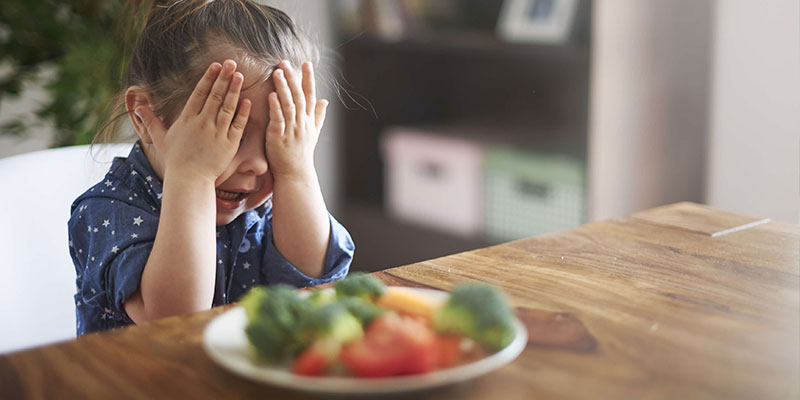
- A fine pair. Try serving unfamiliar foods, or flavors young children tend to dislike at first (sour and bitter), with familiar foods toddlers naturally prefer (sweet and salty). Pairing broccoli (bitter) with grated cheese (salty), for example, is a great combination for toddler taste buds.
Remember
If you are concerned about your child’s diet, talk with your pediatrician, who can help troubleshoot and make sure your child is getting all the necessary nutrients to grow and develop. Also keep in mind that picky eating usually is a normal developmental stage for toddlers. Do your best to patiently guide them on their path toward healthy eating.
Last Updated 4/26/2018
Source AAP Committee on Nutrition (Copyright © 2018 American Academy of Pediatrics)
The information contained on this Web site should not be used as a substitute for the medical care and advice of your pediatrician. There may be variations in treatment that your pediatrician may recommend based on individual facts and circumstances.
10 Tips for Parents of Picky Eaters(Part1)
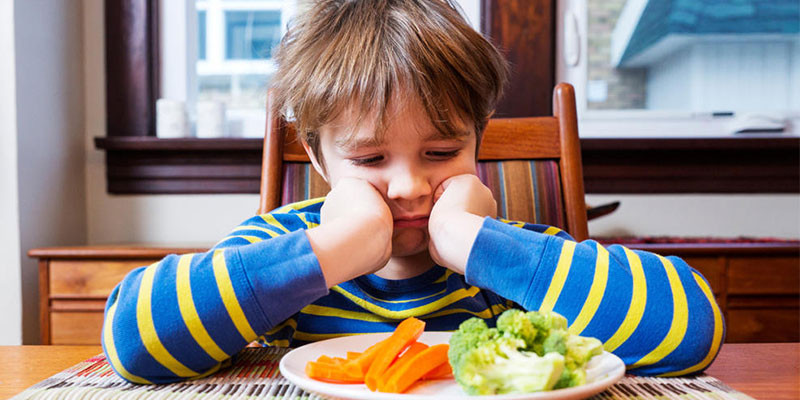
Picky eating is often the norm for toddlers. After the rapid growth of infancy, when babies usually triple in weight, a toddler’s growth rate – and appetite – tends to slow down.
Toddlers also are beginning to develop food preferences, a fickle process. A toddler’s favorite food one day may hit the floor the next, or a snubbed food might suddenly become the one he or she can’t get enough of. For weeks, they may eat 1 or 2 preferred foods – and nothing else.
Try not to get frustrated by this typical toddler behavior. Just make healthy food choices available and know that, with time, your child’s appetite and eating behaviors will level out. In the meantime, here are some tips that can help you get through the picky eater stage.
- Family style. Share a meal together as a family as often as you can. This means no media distractions like TV or cell phones at mealtime. Use this time to model healthy eating. Serve one meal for the whole family and resist the urge to make another meal if your child refuses what you’ve served. This only encourages picky eating. Try to include at least one food your child likes with each meal and continue to provide a balanced meal, whether she eats it or not.
- Food fights. If your toddler refuses a meal, avoid fussing over it. It’s good for children to learn to listen to their bodies and use hunger as a guide. If they ate a big breakfast or lunch, for example, they may not be interested in eating much the rest of the day. It’s a parent’s responsibility to provide food, and the child’s decision to eat it. Pressuring kids to eat, or punishing them if they don’t, can make them actively dislike foods they may otherwise like.
- Break from bribes. Tempting as it may be, try not to bribe your children with treats for eating other foods. This can make the “prize” food even more exciting, and the food you want them to try an unpleasant chore. It also can lead to nightly battles at the dinner table.
- Try, try again. Just because a child refuses a food once, don’t give up. Keep offering new foods and those your child didn’t like before. It can take as many as 10 or more times tasting a food before a toddler’s taste buds accept it. Scheduled meals and limiting snacks can help ensure your child is hungry when a new food is introduced.
Last Updated 4/26/2018
Source AAP Committee on Nutrition (Copyright © 2018 American Academy of Pediatrics)
The information contained on this Web site should not be used as a substitute for the medical care and advice of your pediatrician. There may be variations in treatment that your pediatrician may recommend based on individual facts and circumstances.
Sample Menu for a Two-Year-Old
By age two, your child should be eating three healthy meals a day, plus one or two snacks. He or she can eat the same food as the rest of the family. Do not fixate on amounts and do not make mealtimes a battle. Whenever possible, offer your child finger foods instead of soft ones that require a fork or spoon to eat. See the following sample menu ideas for a two-year-old.
Note: This menu is planned for a two-year-old child who weighs approximately 27 pounds (12.5 kg).
1 tablespoon = 3 teaspoons (15 mL)
1 tablespoon = 1⁄2 ounce (15 mL)
1 ounce = 30 mL
1 cup = 8 ounces (240 mL)
Breakfast
- ½ cup nonfat or low- fat milk
- ½ cup iron- fortified cereal or 1 egg
- 1⁄3 cup fruit (for example, banana, cantaloupe, or strawberries)
- ½ slice whole wheat toast
- ½ teaspoon margarine or butter or 1 teaspoon jelly
Snack
- 4 crackers with cheese or hummus or ½ cup cut-up fruit or berries
- ½ cup water
Lunch
- ½ cup low- fat or nonfat milk
- ½ sandwich—1 slice whole wheat bread, 1 ounce meat, slice of cheese, veggie (avocado, lettuce, or tomato)
- 2–3 carrot sticks (cut up) or 2 tablespoons other dark- yellow or dark-green vegetable
- ½ cup berries or 1 small (½ ounce) low-fat oatmeal cookie
Snack
- ½ cup nonfat or low-fat milk
- ½ apple (sliced), 3 prunes, 1⁄3 cup grapes (cut up), or ½ orange
Dinner
- ½ cup nonfat or low-fat milk
- 2 ounces meat
- 1⁄3 cup pasta, rice, or potato
- 2 tablespoons vegetable
Last Updated 12/21/2015
Source Caring for Your Baby and Young Child: Birth to Age 5, 6th Edition (Copyright © 2015 American Academy of Pediatrics)
The information contained on this Web site should not be used as a substitute for the medical care and advice of your pediatrician. There may be variations in treatment that your pediatrician may recommend based on individual facts and circumstances.
Notes on playing baby songs

Baby listening to music is a good thing that can stimulate brain development and cultivate sentiment, but everything should not be excessive. There are also points to note when playing baby songs:
Scientific research has shown that listening to music should not be excessive. Excessive listening to music for 1-2 year olds will affect their normal language ability and cause dissoluteness. Therefore, the baby must not listen to songs for too long a day or listen to them. Excessive music.
In the study, experts have investigated more than 200 1-2 year old babies and found that babies who listen to music for more than 2 hours a day or listen to music for more than 2 hours often have poor language skills. Language barriers are prone to occur. Compared with other children of the same age, they learn Chinese later.
Every parent wants to give their baby the best things. I believe that every parent will do their best to give the baby what is good for the baby. However, there is a limit to everything. You must know that the best thing is the best. Listening to music is the same, not that the more you listen, the more complete the brain function will be stimulated. Remember to do it in moderation.
Recommended baby songs

What are the songs suitable for babies? The editor summarized some for you today:
The baby before 3 months can play some beautiful music to him every day for no longer than 15 minutes. For babies around half a year old, you can appropriately extend the playing time of music, beautiful, light, soothing and smooth can be listened to by the baby.
The music that inspires babies’ intelligence includes Bach’s “Brandon Paul Concerto No. 2”, Beethoven’s “To Alice”, Mozart’s “Serenade”, “A Major Clarinet Concerto”, “Piano Concerto”, and “France No. 2″ Concerto” etc.
Music that helps babies sleep include Bach’s “Orchestral Suite No. 3”, Beethoven’s “Moonlight Piano Sonata Second Movement”, “Sorrowful Piano Sonata Second Movement”, and Baja’s “Minuet”.
Some people say that Mozart’s music is good for babies, is that really the case?

Mozart’s music is balanced and symmetrical, with a rigorous style, which is very helpful to the intelligence of rational analysis and cognitive intelligence of the brain. Pleasant sounds can stimulate the baby’s auditory nerve.
Mozart music has these characteristics. If you only listen to monotonous and highly repetitive pop music, it is not enough to stimulate your baby’s brain development. Music with multiple rhythms is needed to exchange auditory brainwaves. “Double Piano in D Major”, “French Horn Concerto No. 1 in D Major”, “Symphony No. 39 in E-flat Major K.543 Minuet”, etc., are music with multiple rhythms, which can exchange auditory brain waves, which is very suitable for babies Listen.
Baby song selection

When we play songs for little babies, we don’t play them randomly.
When choosing a song, be sure to play the corresponding song for the baby according to their state. The types of songs that babies need in different states are different, and the songs that suit their state are what they like and need.
For example, when the baby is awake, we can choose some brisk and rhythmic nursery rhymes, or some melodious world famous songs, and talk to the baby in the music, the baby will feel very happy.
When the baby can stand or walk and we listen to the nursery rhymes, he can perceive the rhythm and twist his body to follow the rhythm.
Or if we usually tell a story to the baby. When telling a story, you can use some music to match the story. The baby can be more integrated into it and sound more interesting.
In addition to these, we can also choose some rhythmic songs to stimulate the baby’s rhythm, but it must not be too intense.
Baby song

Do you all want to know if it is necessary to listen to music for babies?
In fact, our human brain development has been completed in the mother’s belly. In the next three months, it is the time when the baby’s brain development is growing rapidly. The more external stimuli, the faster the brain will develop. After birth, there is a golden period of brain development. At this time, the stimulation of music will promote the development of the baby’s brain nerves.
There are three fastest growing periods for a baby’s brain development, one is three months after the fetus, the other is around 18 months, and the third is when it is 3 to 4 years old. At these times, when the nerve synapses in the human brain just develop to be able to feel the sound, the more nerve synapses develop. The more complete the development of our human brain.
Therefore, at these times, the use of music to stimulate the baby’s sudden development will naturally enhance the baby’s diversified intelligence.
Which babies are not suitable for swimming

1. Premature babies with a gestational age of less than 32 weeks, or newborns with a birth weight of less than 2000g, are suitable for swimming after full-term (37-40 weeks, depending on the health and development of the baby) or weighing more than 5000g.
2. Babies who have neonatal complications or need special treatment.
3. Newborns with Apgar <8 points.
4. Babies with broken skin or infection.
5. Infections, colds, fever, diarrhea, leg cramps, physical abnormalities, immune system problems, respiratory infections (contagious).
6. Babies who have been injected with the vaccine for less than 24 hours are not suitable for swimming, and can bathe or swim after 24 hours.
7. Partial eczema infection or very serious is not suitable for swimming.
Precautions for baby swimming

Because babies do not have the ability to protect themselves, parents must consider the safety of various things when taking care of babies. Although baby swimming is a sport that is conducive to the health of the baby, if the parents accidentally take care of the baby during the baby’s swimming, it is very easy for the baby to drown or catch a cold and cause discomfort. If parents want their baby to swim, the following things should be noted.
1. Pay attention to whether the baby’s state is suitable for swimming
The best time for your baby to swim is one hour after breastfeeding. Gastrointestinal emptiness before breastfeeding, lack of physical energy, high physical energy consumption for swimming, which is easy to cause collapse, so it is not suitable for swimming; swimming immediately after breastfeeding will cause insufficient blood supply to the stomach and internal organs, which is not conducive to food digestion, and even cause gastrointestinal discomfort and nausea , Vomiting, so the baby is not suitable for swimming after the baby is full. Babies cannot swim when they are sick. Premature babies and babies who are too light are not suitable to start swimming early.
2. Pay attention to heat preservation
The best indoor temperature is 25°C~28°C. The water temperature is required to be 37°C. If it is a baby within 3 months, the water temperature should be around 38°C. Whether your baby is swimming at home or in a swimming pool, the water temperature should be kept as constant as possible.
3. Pay attention to the safety of the swimming pool with useful equipment
It is best to use professional swimming equipment instead of a bathtub. The swimming pool must be cleaned and filled with fresh water every time. The depth should be so that the baby’s feet cannot touch the bottom of the pool, but it should not be too deep.
4. Pay attention to the waterproof of the umbilical cord
For newborns whose umbilical cord stump has not fallen off, the umbilical cord should be waterproofed routinely before the baby swims. The treatment method can be simple and economical, that is, cover the umbilical cord stump with ordinary 3L medical glue. But in principle, for newborns within 5 days of birth, the umbilical cord should be waterproofed before swimming.
5. Pay attention to the baby’s swimming time
It is advisable to control the swimming time to 10-15 minutes. For babies over 4 months old, if you are used to swimming every day, you can extend it slightly to about half an hour.


