Baby swimming preparation
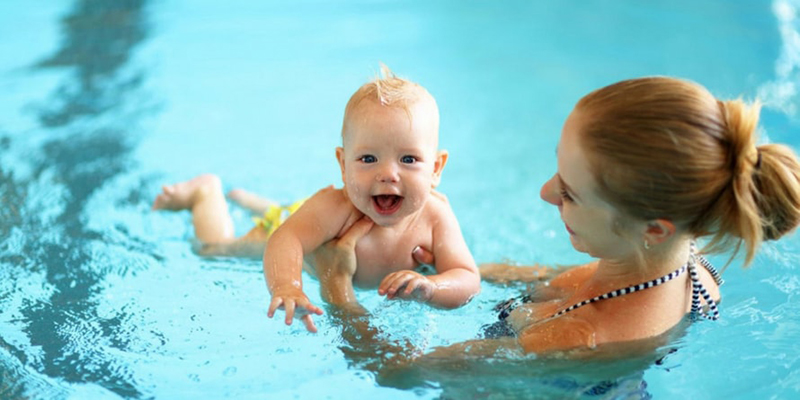
Most people should prepare swimsuits, water glasses, towels, bathing supplies and other items in advance when they go swimming, and pay attention to their physical condition when swimming. Baby swimming is not sloppy. Parents must prepare all the supplies and equipment needed for the baby to swim beforehand, and prepare someone to take care of the baby. What are the preparations for the baby to swim?
1. Before the baby swims, parents should observe whether the baby’s state is suitable for swimming. The preparation of the baby depends on whether the baby is full. Usually, the baby should be swimming for about half an hour to an hour after feeding. In addition, observe whether the baby is happy, whether it has just woke up, and what is uncomfortable. When the baby is in a happy mood, perform baby swimming operations.
2. Prepare your baby before swimming: baby’s special bath towel (it should be dry, not too big, so that it can cover the baby’s whole body is suitable); a small square towel and a dry towel for use; for babies whose umbilical cord has not fallen off, also Prepare 75% alcohol, sterile cotton swabs and other items for cleaning the belly button; baby shampoo, baby shower gel, baby touch oil, baby talcum powder; baby’s changing clothes, diapers, etc.; water temperature meter, 90% inflation A special swimming ring for babies and a toy that can float in the water.
3. The equipment environment for swimming must be prepared. You can choose the bathroom at home to facilitate the water supply and drainage of the baby when swimming; some parents think that the air in the bathroom is not good, so you can also choose the living room and balcony as the baby’s swimming place. However, it is recommended that parents still use the bathroom as the main one. First, the pool has a large capacity, and the second is the bathroom space is small. It is easier to ensure the temperature of the environment and prevent the baby from catching cold, especially in winter.
4. Nursing staff should be prepared. When the baby is swimming, it is best for parents to arrange two people to assist and watch the baby swimming. It is best for both of you to wash your hands beforehand, trim the edges of your nails, and remove the ornaments on your hands to avoid scratching your baby.
Benefits of baby swimming

The baby is born a master of swimming. When he is in his mother’s belly, he swims in the “amniotic pool” every day. Many parenting experts suggest that the baby should be allowed to swim properly after birth. This will not only help the baby adapt to the environment but also help the baby’s healthy growth. So what are the benefits of baby swimming?
1. After the baby is born, he leaves his mother and loses the original feeling of living in the amniotic fluid. Swimming can help him feel the environment in the mother’s body, thereby eliminating bad emotions such as “loneliness”, “anxiety” and “fear”.
2. In addition to the hunger and thirst of the “mouth” in the growth and development of infants, there are also “hunger and thirst” for skin, bones, joints, muscles, emotions, etc., which must be satisfied. Modern “baby swimming” is exactly what the baby needs. These needs.
3. Through skin contact with water as the medium and large-scale autonomous activities and passive swimming exercises of each joint, it can gently and naturally stimulate the baby’s vision, temperature, smell and touch, especially the stimulation and adaptation of the sense of balance.
4. Infant swimming will actively and passively stimulate the skin, limbs, joints, and bones of specific parts of the baby, and indirectly promote the internal organs and various nervous systems and development. Promote the digestion and absorption of food in newborns, weaken the stress response, and improve children’s disease resistance.
5. Baby swimming can comfort the baby’s body and mind, and cause a series of benign reactions in the whole body (nerve, endocrine, digestive and immune systems), thereby promoting the baby’s physical and mental health education.
6. Baby swimming can promote the establishment of normal sleep rhythm in children, reduce the formation of bad sleep habits, and reduce crying. In addition, it may be beneficial to the baby’s early intellectual development and the development and improvement of EQ.
What is baby swimming

Infant swimming is a specific and staged early human underwater health care activity that can be carried out on the day of birth by specially trained personnel under special infant safety protection measures. It is composed of two parts: water touch, passive swimming exercises and autonomous swimming for babies with order, location and skill.
“Baby swimming” is an early health care activity for infants based on the latest theory. This early infant health care activity is suitable for cesarean infants with normal full-term delivery, normal infants (from the day of birth to 12 months after birth), premature infants born at 32-36 weeks of gestation, and low birth weight infants. Generally premature babies or babies with certain physical defects are generally not suitable for swimming.
Baby swimming is an emerging baby care service. The principle is to allow babies to exercise autonomously in the amniotic fluid similar to the mother’s body, and to use gentle caressing with water waves to promote the intellectual development and healthy growth of newborns. The newborn infant period is an important period for brain development and cognition of the ability to respond to the outside world. Infant swimming can lay a good foundation for the development of infants’ intelligence and good physical fitness.
What should the baby eat during toddlers?

Only a smart mother can bring out a smart baby, and the abnormal leg shape of toddlers is mostly caused by improper baby-bearing! To prevent the baby’s legs from being abnormal, the hot moms are doing their best to seek the best way to prevent them. Does it really take so much effort? The editor believes that mothers who don’t know how to eat a balanced baby’s nutrition are not good mothers!
Which foods are both nutritious and the baby’s favorite? Hot moms who want to be good mothers are all optimistic!
1. Meat and related foods.
Eat meat, fish, eggs or related foods every day to ensure your baby’s protein needs.
2. Dairy products or legumes. Ingest at least 350 ml of whole milk or soy milk and other legumes a day to ensure the baby’s calcium supplement.
3. Fruits and vegetables
Ingest at least 5 servings of fresh fruits and vegetables a day to ensure the various vitamins and fiber needed for body development.
4. Cereal products and starchy foods
Eat at least one serving of grains or starchy foods such as wheat, corn, rice, etc. per meal. At the same time, do not give your baby too many whole grains.
5. Fat and sugar
A balanced diet should include plenty of fats and sugars, but avoid allowing your baby to consume refined sugar products and processed high-fat products.
Does a baby learn to loop legs early?

Children with round legs are angels with broken wings in their previous life! The lower limbs of people with looped legs are often deformed, with O-shaped legs or X-shaped legs. People with looped legs stand in the crowd, even if they do nothing, they can immediately become the focus of everyone’s attention. If the beauty-loving MM suffers from lap legs and tears are useless, let’s go home and find my mother for a good comment!
The culprit of ring legs?
1. Developmental factors. During physical development, due to malnutrition or intestinal diseases, the lack of nutrients such as calcium and phosphorus, bone development disorders, bone deformation or articular cartilage dysplasia, and knee varus changes.
2. Unbalanced factors. Due to long-term bad posture or incorrect exertion habits, the muscle mechanics that innervates the joints are imbalanced. The long-term muscle mechanics imbalance can cause the joints to shift and cause knee varus.
3. Looped legs caused by trauma or other diseases. In some cases, such as traumatic injury to the lateral collateral ligament and other damage to the stability of the knee joint, it can also lead to a looped leg.
How to correct my baby’s legs?
1. Instrument correction. The instrument mainly adjusts the medial and lateral ligaments of the knee joint, requiring active treatment, and determines the length of the correction cycle according to the patient’s physique and perseverance.
2. Minimally invasive needle knife. The main reason is to loosen the unbalanced soft tissue of the contracture, because most of the soft tissue imbalance in the leg is caused by the abnormality of the lower limbs. The human body is a whole body and must be adjusted as a whole, the spine, pelvis, knee joints, and ankle joints.
3. Use orthopedic insoles. The orthopedic insole is high on the outside and low on the inside. It can give the calf an outward rotation force when walking or standing, and can prevent the aggravation and formation of the looped leg due to poor walking posture.
4. Positive splint and leggings. This method adjusts the ligaments at the knee joint through the pressure generated by splinting and binding.
5. Surgery. It is suitable for babies with skeletal deformities. Through surgical osteotomy + internal fixation and correction, the normal limb strength and appearance can be restored immediately.
Does baby toddlers affect leg shape early?
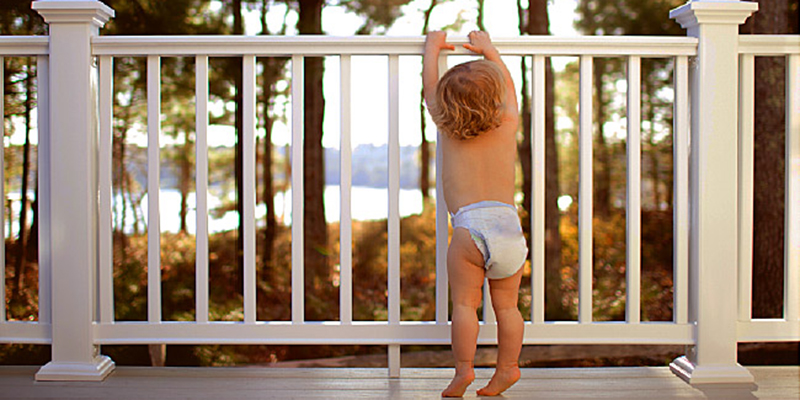
Hot moms get along with their babies every day, don’t just play with them, the little guy’s legs look like, and the mothers can’t overlook it. If the baby’s legs are abnormal, it must be corrected as soon as possible. What are the signs of deformed legs in toddlers?
1. O leg
Many babies have O-shaped legs when they are just born, but many mothers think that this is a common phenomenon for babies because they will no longer have O-shaped legs when they are three years old. Pay attention. But if it looks like an O-leg when the baby is 2 years old, it’s a cause for concern.
2. X-shaped legs
The X-shaped leg is also called knee valgus. The lower limbs are completely exposed and straightened, so that in a neutral position, the femoral medial condyles of the two knee joints can be brought together, but there is still a certain distance between the medial malleolus of the two ankle joints, and the whole leg shape looks like “X” .
Hot moms should also know that normal feet are straight, and when the knees are close together, the inner ankles should also be close together. When it cannot be close and the distance is more than 2 cm, it can be called X-shaped leg.
3. Flat feet
If a toddler is standing on the ground with the entire foot plate pressed, and can see a little arch when he is picked up, it is a sign of flat feet! At this time, if you don’t have time to correct it, your baby will feel pain in his feet when he grows up or walks for a long time. Hot moms quickly look at the baby’s feet!
How to choose a baby walker
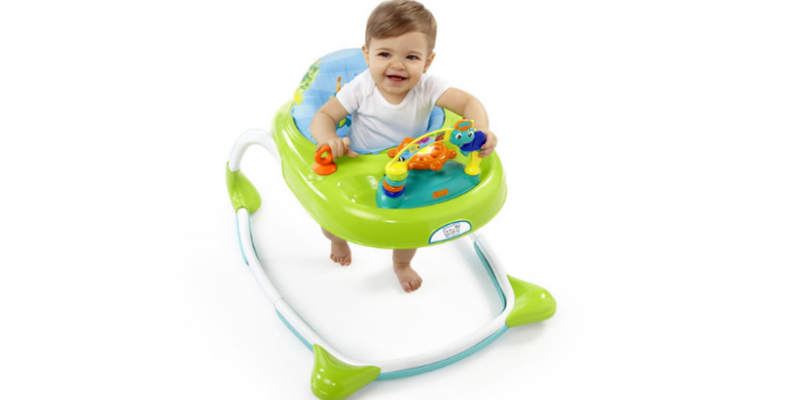
There is a saying called “Parents in the world.” Even if the hot moms are true tiger moms, they can’t stop the proliferation of their mother’s love. If the cute baby falls inadvertently, the hot moms will be more heart-warming. Everyone hurts, so the “great mission” of ensuring the safety of the baby appeared gloriously.
Baby walkers can moderately assist babies in learning to walk. They can be described as the top leaders of hot moms with babies, but is it really profitable and harmless? The worried editor tells you that a walker is not a good toy!
Some experts have found that babies who use walkers start crawling, stand alone and walk later, three to four weeks later than those who do not use walkers! This shows that the sooner the baby walker is used, the better. When should I use the walker? how to use? Hot moms quickly look over!
1. The baby is at least eight months old and has normal development.
2. Keep a safe distance so that the baby cannot approach other dangerous objects.
3. Just sit for a short time at the beginning, and then gradually extend it.
4. It is not recommended to give the baby a walker. The best way to walk is to bend over and lead the baby.
How old does the baby start to walk
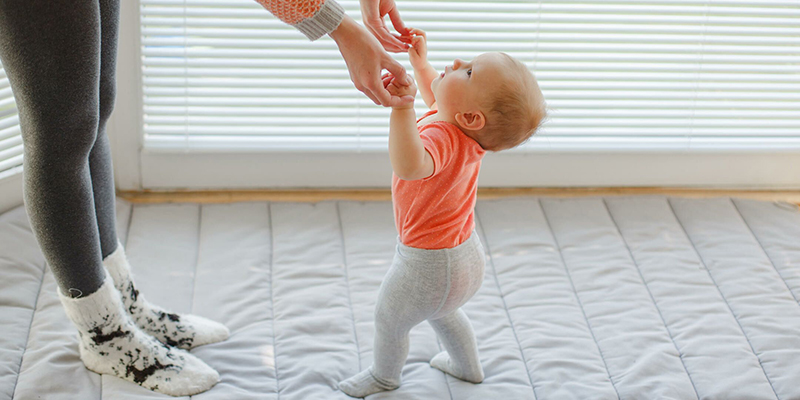
In the last October, the hot moms worked so hard to conceive, but they did not expect that the next October, the baby’s toddler period will come again! Before she had time to work out and lose weight and call friends and friends, the little baby leaned on the head of the bed and muttered to stand up and “turn over to be the master”! Hot mom wake up, you don’t have much time to travel around by yourself, delaying the baby’s most important growth period, do you have the face to help your baby choose a partner after you become a mother?
When does your baby start learning to walk? The editors who worry about the following 5 stages can’t wait for hot moms to recite them ten times a day.
The first phase from October to November
This stage is the first stage when the baby starts to learn to walk. When the baby is stable enough to stand, he can even stand alone for a while, then he can start to practice walking.
Phase 2 12 months
Squatting is an important developmental process at this stage. The baby is anxious to train the squat and coherent movements of the standing, so that the muscles of the baby’s legs will be stronger, and moreover, the coordination of the baby’s body should not be lost.
Phase 3 More than 12 months
At this time, the baby can walk with things in a good manner. Next, he must become a “tiger mother”, let go of the baby’s hand cruelly, let the baby walk in three steps and two steps, and strengthen the baby’s balance training.
Phase 4 About 13 months
At this time, in addition to continuing to train the baby’s leg muscle strength and the coordination between the body and the eyes, we should also focus on training the baby’s ability to adapt to different ground.
The fifth stage 13-15 months
The baby can already walk very well, and the curious baby does not forget to open his eyes while walking and take a look at it. Hot moms and babies should pay attention to it. Don’t take a nap, your family. The baby fell and cried!
Can the baby walk without crawling?
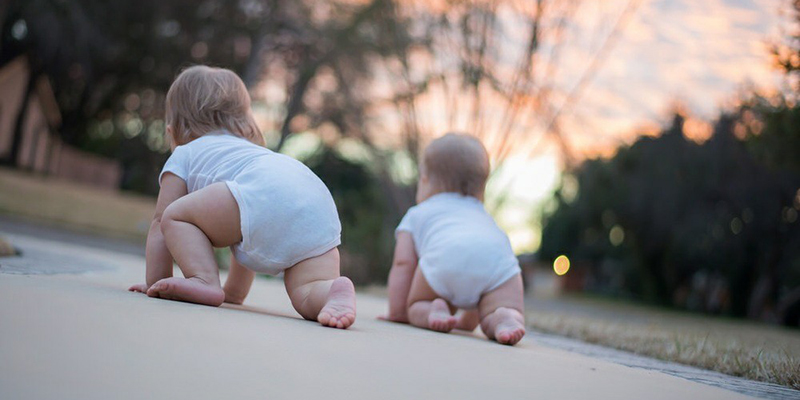
Can the baby walk without crawling? This depends on the specific situation.
Generally speaking, it is not good for a baby to walk without crawling, because crawling is beneficial to the baby. For example: crawling can promote the coordination and balance of the children’s limbs and body, so that the whole body muscles can be exercised; crawling can also promote the development of children’s perception (such as depth perception), and help improve three-dimensional understanding and judgment, such as being careful to prevent falls.
For some children who can walk without crawling, the effect is not big, as long as the children do not have abnormal posture, asymmetry, uncoordinated movements, and obvious backward motor skills.
In summary, it is not a serious matter that a baby can walk without crawling. Therefore, if parents find this problem, don’t panic, observe the baby’s condition first, and then proceed to the next step.
What to do if the baby can’t crawl
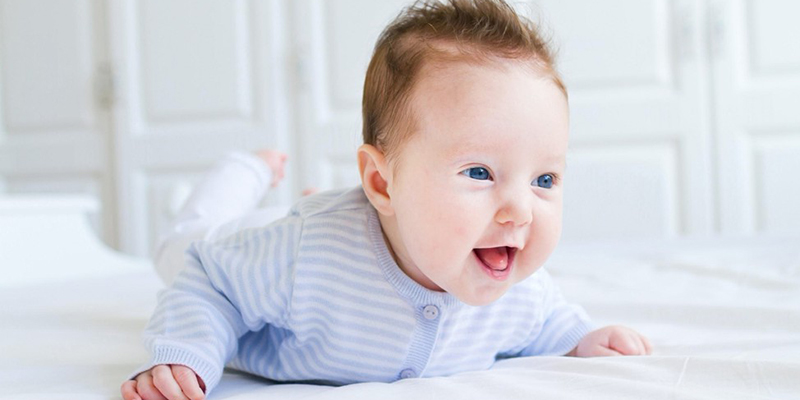
What should I do if the baby can’t crawl? First of all, parents must be patient and must not fall into distress or depression just because the baby can’t crawl. The following Mawang Encyclopedia introduces several ways to guide the baby to crawl, as follows:
1. Provide more opportunities: When the baby is three or four months old, if the baby is always placed in the stroller, it is difficult for the baby to have the opportunity to crawl.
2. Imitating crawling: Some babies can’t crawl, maybe because they don’t know how to do it. The baby has a strong ability to imitate. At this time, you can find a kid who can crawl to play, and the two babies are together to encourage them to crawl. When the baby sees other little friends crawling, he will imitate and learn to crawl quickly.
3. Appropriate assistance: When some babies can’t crawl, then parents should help a little bit! How to coordinate the movement of the limbs when babies crawl is the biggest problem. They often care about their hands but not their feet. At this time, the parents can stand behind the baby with two palms on the bottom of the baby’s feet, push the baby one foot, and when he crawls forward a little, push the other foot, so as to assist him and help him get through the crawl level.
The above three conditions are only effective when the baby is in good health. If the baby is crawling, one side of the body is weak, and the other leg needs to be dragged forward, accompanied by other slow development of movement The mother must consider whether the baby’s physical condition is in trouble. It is best to go to the hospital for an examination as soon as possible to rule out neurological development disorders and some brain damage.
Precautions for babies to learn to crawl
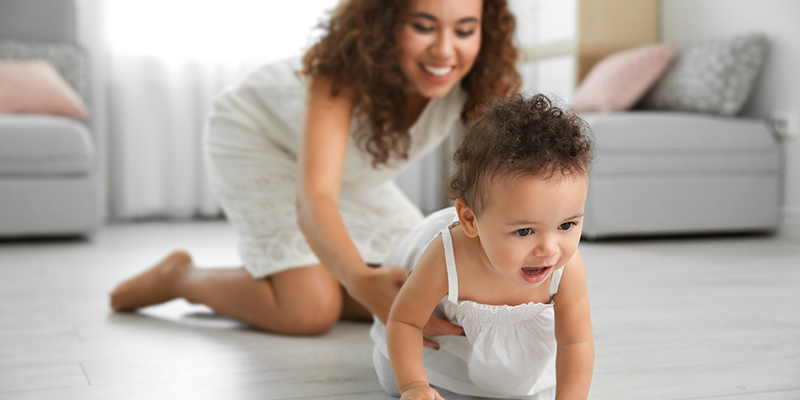
The most worrying thing about babies learning to crawl is the safety issue. As long as they are not paying attention, they will touch here and there, which makes people feel distressed. So, how can we avoid this problem for babies? Just look at the precautions for babies to learn to crawl, as follows:
1. The floor should be smooth
If children are crawling on the floor at home, it is best to let them crawl on the smooth floor. Because the uneven floor will make the child easy to knock and bruise, and may cause the skin to be scratched, so when letting the child crawl, parents should put a layer of soft cushion on the crawling area to avoid the child’s Knee injury. Floors laid with cement, grindstones, tiles, etc., for babies learning to crawl, are prone to accidentally falling, which can cause irreparable regrets. In order to avoid danger, you can lay soft cushions on the hard floor, but pay attention to use a thicker cushion to play its function, and avoid buying soft cushions with many small patterns to prevent babies from picking up the small patterns to eat.
2. Wrap sharp objects
When children crawl, it is best to keep them away from tables and chairs, and wrap the corners of the home with cotton cloth to prevent the children from hitting sharp corners and causing injuries. Of course, it is best for mom and dad to limit the crawling area of the children, restrict them to a large room, and separate the children from the tables and chairs with partitions to ensure their safety. Or put cushions on all corners of the table or cabinet, even if the baby accidentally hits it, it can minimize the damage; when the child is crawling, make sure that there are no sharp objects on the floor, such as Nails, or needles, ensure that the child will not get stuck and injured when crawling.
3. Cover the socket
If there are babies in the house, they should cover all the sockets at home when they crawl to prevent the children from touching them out of curiosity. It will cause very serious consequences. It is easy to get an electric shock or other tragedies. During the crawling process, babies may crawl near the socket. If they are not careful, there is a risk of electric shock. Parents can use the protective cover of the electric socket to install this device on the unused socket or use a safety socket.
4. Keep trash cans away
Do not place trash cans in the crawling area of children. Children will be curious to turn over the trash cans, causing various bacteria on their hands, and even eating dirty garbage, causing bacteria to enter the body, causing diarrhea and sickness.
5. There are 5 ways to prevent falls
First, don’t leave your baby alone in the bed, sofa, baby rocking chair, dining chair, changing table, or any other place where he might fall off.
Second, install guardrails, baffles, and safety nets on windows, terraces, and porches. If you use blinds, choose drawstrings with buckles.
Fourth, for houses with duplex structures, protective doors should be installed at both ends of the stairs.
Fifth, if the width of the railing exceeds 10 cm, it should be blocked with a plastic gardening fence, plexiglass (plastic), or other things.
What are the benefits of baby learning to crawl
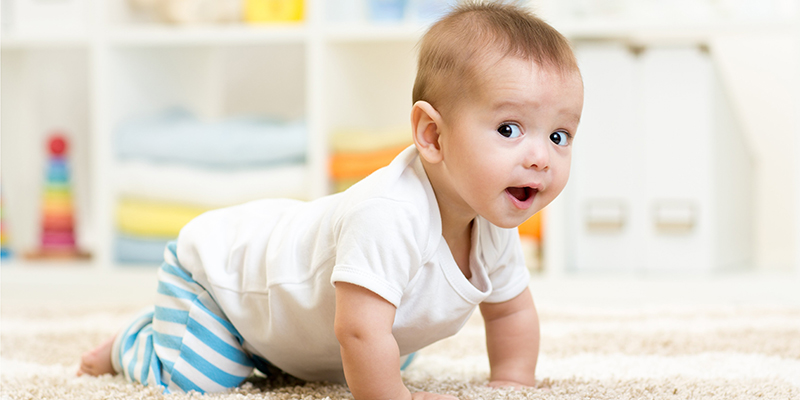
What are the benefits of baby learning to crawl? The benefits are naturally very numerous. The most basic is to improve the baby’s mobility, followed by the ability to enhance the baby’s physical fitness, as well as to improve the baby’s intelligence and so on. Let’s take a look at the specific benefits:
1. Improve activity
In addition to exercising the strength of the baby’s large muscle activities and the coordination and flexibility of the limbs, crawling can also help the development of the sense of sight and hearing, the sense of space position, and the sense of balance, and promote the coordination of the body; it can also make blood circulation smooth. And promote the growth and development of muscles and bones, which can improve the baby’s ability to move as a whole.
2. Enhance physical fitness
One of the benefits of training your baby to crawl is that it can exercise the strength of the chest muscles, back muscles, abdominal muscles and limb muscles; and it consumes more energy during crawling, which helps the baby eat more, sleep well, weight, and grow faster.
3. Improve parent-child relationship
Training babies to crawl can improve communication between mother and child. After the baby can crawl, the experience of success under the guidance of the parents continues to increase, and the experience of excitement, success, and failure can be obtained in crawling. These experiences can enrich the baby’s emotions. Studies have shown that the excitement state of the baby who often crawls when seeing their parents is significantly higher than that of the baby who does not crawl.
4. Promote brain development
When training a baby to crawl, close cooperation between the big and cerebellum is required. More crawling can enrich the neural connection between the big and cerebellum and promote the growth of the brain. The crawling movement is reflected by the initial crawling, through the intermediate links such as raising the head, turning over, rolling, and crawling, and finally develops into a real crawling. It requires multiple learning and practice; each learning and practice is a mobilization of the brain’s enthusiasm And inspire. Therefore, learning to crawl is actually an intensive training for the function of the brain and nervous system, which has an irreplaceable special effect on the development of the brain.
5. Cultivate a good character
Crawling has brought a lot of unexpected fun to the baby, and “touching, crawling and rolling” also exercises the baby’s will and courage, which is conducive to the development of the baby’s personality.
6. Cultivate the desire to explore
The baby’s motor and nervous systems are fully exercised during crawling. This not only helps babies develop their bones, muscles, nerves, and brain, but also lays a good physical and psychological foundation for them to understand the world earlier and better. These learning experiences will be turned into curiosity, allowing babies to have the courage to explore, and cultivate the ability and confidence to solve problems independently in the future.


