How to train your baby to crawl
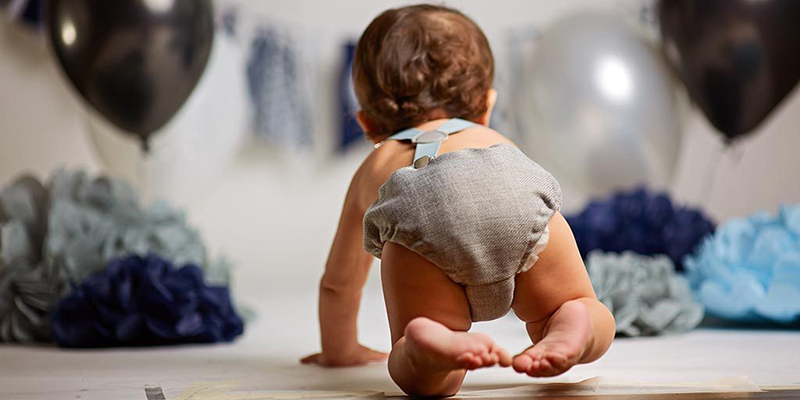
Crawling is a very important job for babies to face in life, and it is also a preparation for babies to learn to walk. For novice parents, it is inevitable that there will often be such confusion: “How do babies learn to crawl?” The following Mawang Encyclopedia introduces three methods for baby training to crawl, for reference only:
Method One: Mat Guide Method
1. Roll the small mat at home into a round shape. (The mat is flexible and easy to unfold)
2. Let the baby lie on the mat and press one side of the mat under the body.
3. The mother pushes the mat so that the baby crawls forward as the mat unfolds.
Method 2: Parental guidance method
1. The baby crawls on the ground or on the bed.
2. One person is in front of the baby and the other is behind the baby.
3. The person in front holds the baby’s right hand, and the person behind pushes the baby’s left foot. When holding the baby’s left hand, push the baby’s right foot.
Method 3: Parents’ Joint Assistance Method
The mother lies on the bed, the baby lies on one side, the father is on the other side of the mother, the father holds the baby’s right hand, and the mother pushes the baby’s left leg, and vice versa, assisting the baby to climb from his side to the father’s side.
Baby can learn to crawl for a few months
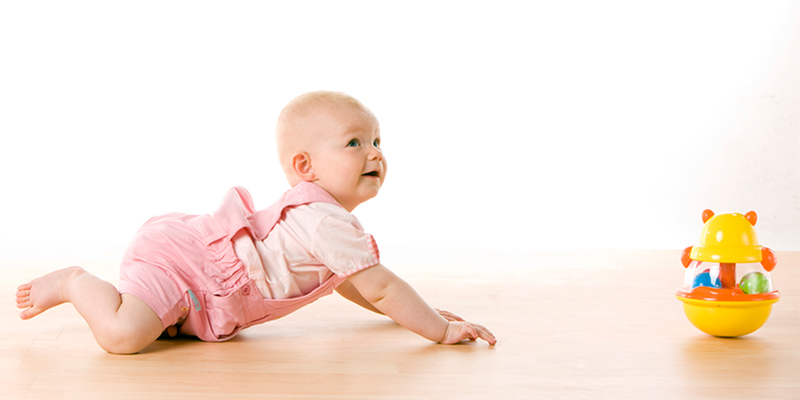
How many months can babies learn to crawl? Generally speaking, starting from 5 months old, parents can guide the baby to learn to crawl. But the baby learns to crawl through a stage, for different stages, the baby’s crawling skills will gradually increase. Let’s take a look at the three stages of a baby learning to crawl:
1. When the baby is 5 to 6 months old, the parents will prepare for the baby’s crawling. He will lie on the bed, center on the abdomen, and move the body to the left and right. Gradually, he will crawl, but the abdomen Still stuck to the bed, stroked irregularly, often not crawling forward but backing. At this time, parents should patiently guide the baby to learn to crawl correctly.
2. When the baby is 6 to 7 months old, he can sit firmly without the support and may start crawling soon. The baby will lift his head and look around. At this time, the muscles of his arms, legs, and back are also strong enough to prevent falling when supporting the body with his hands and knees. At this time, parents should actively encourage the baby to crawl more and let the baby crawl as soon as possible.
3. At 9 to 10 months, the baby will find that he can move forward with the help of his knees. As the movements become more and more proficient, the baby can also learn to switch from a crawling position to a sitting position. Babies can even master an advanced crawling technique: cross crawling, which is to move one arm and the leg on the other side when crawling forward, instead of moving the arms and legs on the same side at the same time. After this, parents should be more diligent in training with the baby, as long as more practice, the baby can make perfect.
Which sleeping position is best for newborns
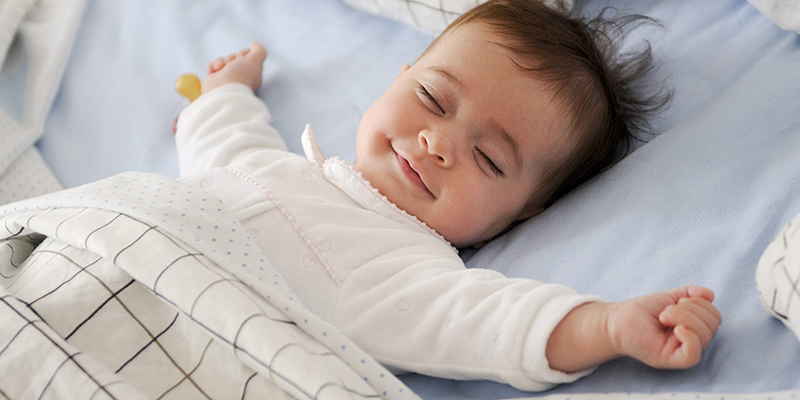
The three sleeping positions of babies have their own advantages and disadvantages, so which sleeping position should be adopted for the baby? Experts suggest that the sleeping position of babies, especially those under one year old, should alternately sleep on their backs, prone, and sideways, and one posture should not always be fixed every day. If you can’t take care of you at any time, you should lie on your back. When someone is taking care of you, you should lie on your stomach. When your baby is sick (such as a cold or fever), your physical muscles will become weak. It is best to sleep on your back.
Newborn Prone all right?
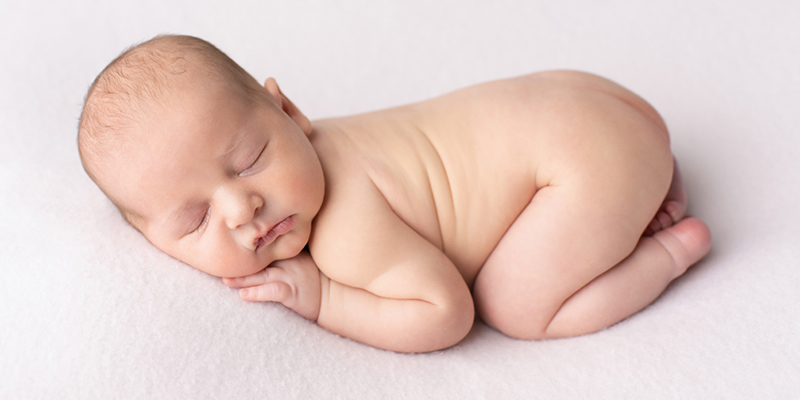
Most parents have this prejudice. They think that a baby sleeping on his stomach can easily hinder the baby from breathing and cause suffocation. In fact, the newborn baby has the ability to defend itself. When he lies on his stomach, he will instinctively hold his mouth. The nose is exposed, breathing comfortably. Sleeping on your stomach not only does not affect the development of the chest and lungs but on the contrary, helps the growth and development of the chest and lungs. Because the baby’s chest compresses the bed when lying on the tummy, the bed will give a counteract pressure to massage the baby’s chest, which can increase the baby’s vital capacity and promote the development and maturity of the respiratory system, especially for newborns who are not a full moon. If the baby spits up milk, it will flow out along the corner of the mouth, so that the vomit will not be inhaled into the trachea and cause suffocation danger. Therefore, in many countries, it is liked to let the child fall asleep in a prone position.
Most people think that babies sleeping on their stomachs can easily obstruct their breathing and cause suffocation. Features of prone: 1. It is not easy for parents to observe the baby’s skin color and expression; 2. The baby and saliva are easy to swallow, causing the saliva to escape; 3. The mouth and nose are easily blocked by foreign objects such as bedding and cause breathing difficulties; 4. The baby’s limbs Inconvenient activities.
Can the newborn lie on the side?
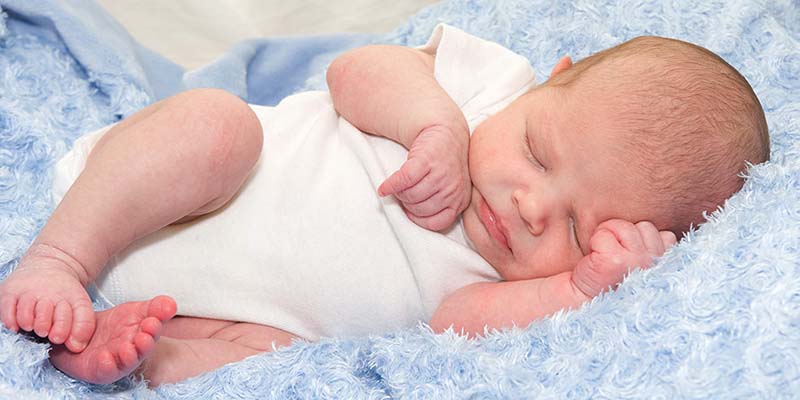
Lying on the side is also a common sleeping position for babies. Novice parents should use the right side position when placing the baby on the side. This can avoid heart pressure and prevent spitting up, especially after breastfeeding. Lying on the right side is conducive to the smooth flow of food in the stomach into the intestines, even if milk overflow occurs, it will not cause suffocation.
The disadvantages of lying on the side are:
1. If you always sleep on your side, it is easy to develop asymmetrical development on both sides of the face and tilt your head, which may also cause tilt;
2. It is not easy for the baby to maintain a side-lying posture;
3. Lying on the left side can easily cause vomiting or milk overflow.
Newborn supine alright?
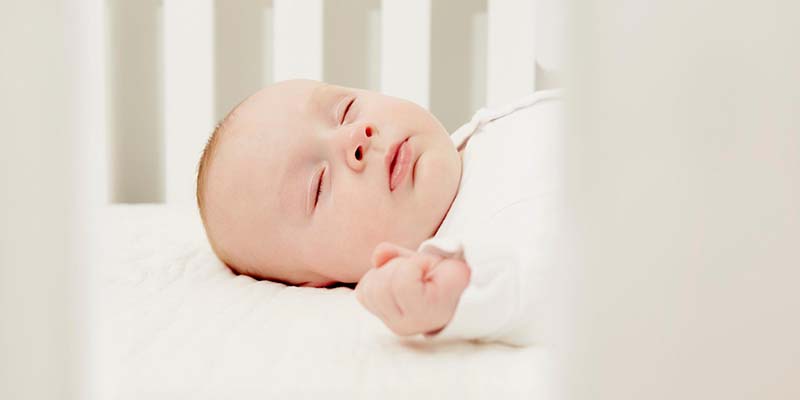
The supine sleeping position is the sleeping position that parents are more accustomed to adopting for their babies. Sleeping on the back allows parents to directly observe the expression on the baby’s face. The baby’s brain is low and flat, forming a so-called “square head and big face”. The internal organs of the baby are affected. With less pressure, the baby’s limbs can move freely. Sleeping on the baby’s back is also helpful for parents to directly observe whether there is an excessive secretion in his mouth and nose, whether there is vomiting, etc. so that the care is more timely and meticulous.
Generally, parents are accustomed to letting babies sleep on their backs, but there are some disadvantages when babies sleep on their backs. 1. It is not good for the baby’s breathing. Due to gravity, the larynx will block the breathing airflow from entering and exiting the trachea. Once the airflow resistance increases, the baby will have a noise (snoring) when breathing on his back, causing breathing difficulties. It is not suitable for infants who cannot breathe smoothly; 2. The baby is prone to vomiting. After the food refluxed from the stomach to the esophagus is vomited, it will accumulate in the baby’s throat, not easily discharged from the mouth, and more likely to choke into the trachea and lungs. The danger occurs; 3. The weaker side of the baby’s body is exposed, and it is easy to catch cold, psychologically insecure, and difficult to be familiar with.
Newborn sleeping position
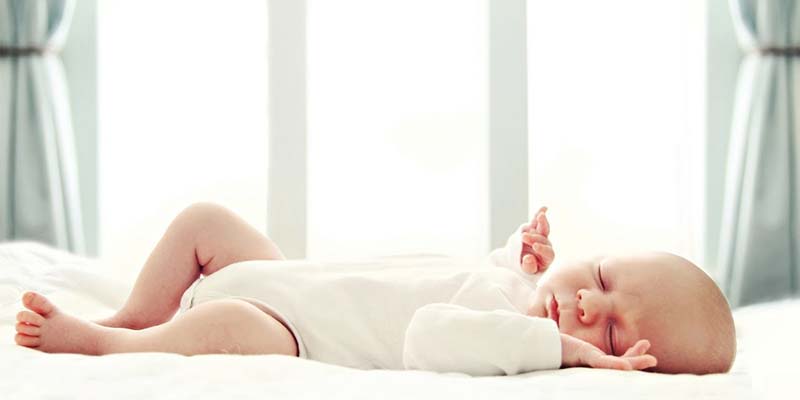
Pediatricians generally advise parents not to let their babies sleep on their stomachs. Because the baby is sleeping on the stomach, the chance of sudden infant death is relatively high. Although the sleeping position itself is not a necessary condition for Sudden Infant Death Syndrome, it is still related to some extent. Because babies in this period cannot raise their heads, turn their heads, or turn over, and have no ability to protect themselves. Therefore, accidental suffocation occurs when sleeping on their stomachs.
In addition, sleeping on your stomach will oppress the internal organs, which is not conducive to the growth and development of your baby.
If dad and mom care about the shape of the baby’s head, I suggest you try to let the baby sleep on its side. Generally speaking, it is difficult for babies to sleep on their own sides. You can put a pillow on the baby’s back to help support their backs to maintain the side sleeping position. When babies are sleeping on their sides, they should put their hands in front. In this way, even if you turn over, you will turn to sleep on your back instead of sleeping on your stomach.
Newborn care and feeding

The feeding of newborns is great knowledge. The doctor’s recommendation is that breastfeeding is as early as possible after birth, usually about half an hour after birth. Breastfeeding should take the “upright hold” position. If the mother does not secrete milk temporarily when the baby is born, try to let the newborn suck the nipples to promote milk secretion and increase the relationship between the mother and the baby. It is beneficial to the mother’s postpartum caused by delivery Wound healing. When breastfeeding, it is best to suck and feed on one breast and then change to the other breast next time to prevent residual milk from accumulating in the breast. If there is excess milk after one breastfeeding, it is best to squeeze it out, In order to promote the normal lactation of the breast and avoid milk stasis or secondary infection.
Precautions for newborn care
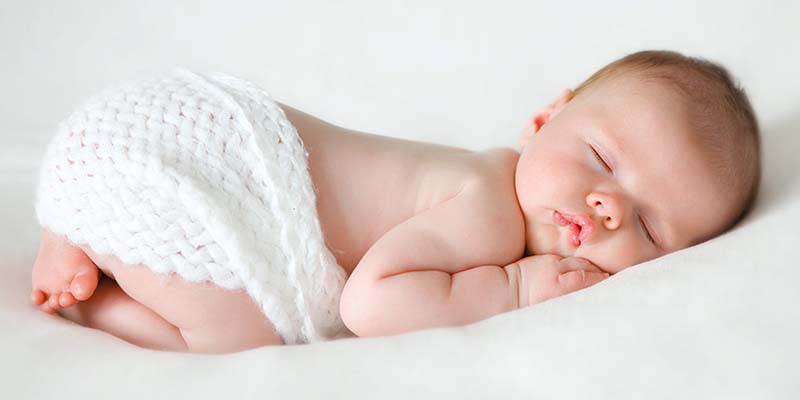
Precautions for newborn care are to pay special attention to the baby’s warmth during the newborn period. It is most appropriate to control the room temperature at about 27°C, and to check the baby’s body temperature frequently. If abnormalities occur, they must be dealt with immediately. It is best for mothers to adopt a lateral position when feeding, which can prevent the baby from spilling milk or suffocating. Newborns have many eye secretions, so special eye drops can be used for nursing. According to temperature changes, novice mothers should learn to add or remove clothes for their babies in time. Ensure that your child has enough sleep. Make sure that the indoor air is fresh and quiet enough when you are at home so that children cannot adapt to noisy and polluted places. Be gentle when it comes in contact with your baby’s skin. If you find residual urine stains or other dirt, you need to clean up in time. When taking care of the baby’s umbilical cord, mothers should pay attention to cleaning and dehumidifying, ensuring that the umbilical cord is always dry and disinfecting on time.
Newborn care products
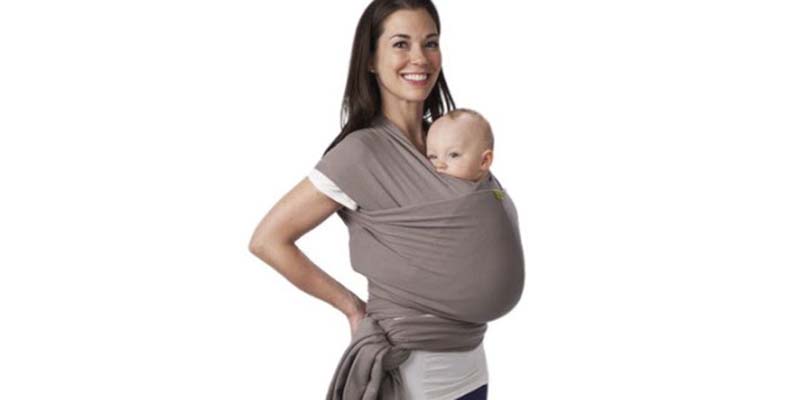
There are many newborn care products. I will list some common things here. You can cut or add them according to your needs. You don’t need to copy them mechanically to avoid buying things that are not practical.
When talking about newborn care products, we must first talk about nursing products. Mainly include milk bottle, nipple, milk bottle brush, milk bottle sterilizer, milk bottle clamp, breast pump, breast milk storage bag, milk powder box, milk warmer, milk powder.
Newborn care also needs to prepare toiletries. A slightly larger special baby bath can be used for bathing and playing with water, and the bath rack can be hung on the bath for use. Bath supplies, including body wash. Shampoo, soap, talcum powder, diaper cream, emollient oil, etc. For two bath towels, large and medium-sized, choose pure cotton products, preferably Baotou. Also, prepare bath toys.
Baby clothes are mainly prepared: underwear, diapers, diapers, wraps, bibs, hats, socks, outing clothes (cloaks, jumpsuits, small shoes, sweaters, and trousers, etc., depending on the season), sleeping bags.
What is the knowledge of newborn care
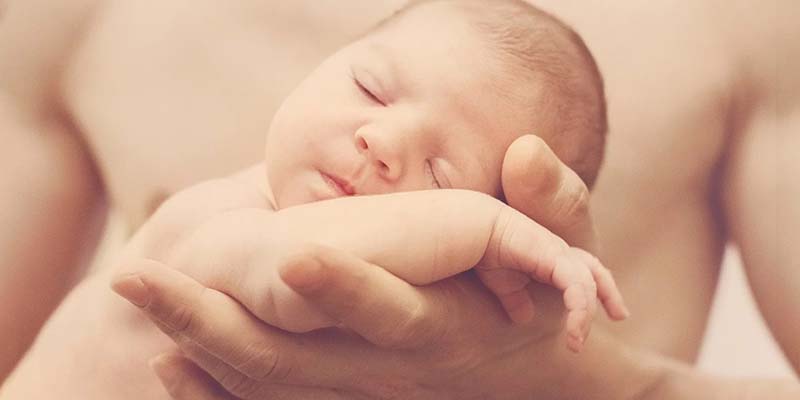
To understand “what is neonatal care knowledge” let us first understand what the neonatal period means. The neonatal period is mainly the adaptation period from the mother’s womb to the outside world. During this period, the neonatal organs of various systems have not matured, the immune function is low, and the body temperature regulation function is poor, so they are susceptible to infection. Care must be careful, scientific and reasonable.
Newborn care knowledge is mainly to observe the growth environment, usually choose the quality of baby clothes and diapers, so that the baby can keep enough sleep, pay special attention to the appetite and posture when feeding the baby, pay attention to the skin care, and prevent colds .
Sequelae of neonatal asphyxia
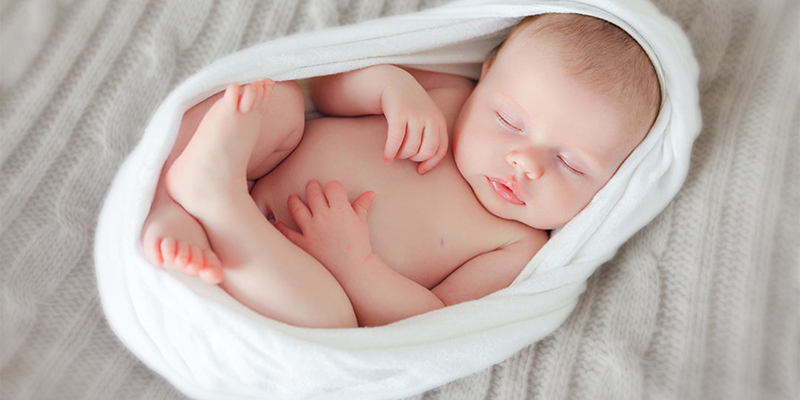
After 10 months in the mother’s belly, the baby will “break the shell”. What’s not perfect is that some newborn babies will have suffocation problems. The doctor will perform an Apgar score on the newborn baby to determine whether the baby is hypoxic or suffocated. If the Apgar score is too low, it means that the baby is suffering from hypoxia. The sad thing is that once the baby is suffocated, it is likely to have sequelae. What are the sequelae of suffocation?
An Apgar score of 8 or above indicates that the baby is quite normal. 4-7 points are mild asphyxia, 0-3 points are severe asphyxia. Babies with low levels of hypoxia can recover in a short period of time. Babies with severe asphyxia and hypoxia need emergency resuscitation, otherwise, it will be difficult to survive. If the baby cannot establish effective breathing, the longer the brain is deprived of oxygen, the more serious the damage of brain cells will be. Even if the rescue is successful, the baby may have sequelae such as mental retardation, hare lips or dyskinesia. After some babies grow up, they react slowly, or babies of four or five months old can’t stand their heads up. These can all be suffocation sequelae.


